Best Dog Training Clicker
As an Amazon Associate we earn from qualifying purchases. Details
The best dog training clicker is a small, consistent sound tool that you press at the exact moment a behavior happens. Most listings in this group are push-button clickers with a strap, and the differences are mostly about how the strap is worn, how many come in a pack, and whether a treat pouch is attached. This guide compares seven clicker listings from seven brands, using the title and first bullet points on each Amazon page. It also explains what the marker-training research does and does not show for pet dogs.
Quick answer
- Choose the strap for how you train. A wrist strap leaves the hand free for a leash or treats, while a finger strap suits a quick one-handed press.
- Check the pack count and colors if more than one person trains the dog. The Frienda listing gives 18 pieces, and the Ruconla listing gives a six-pack in six colors.
- Pair every click with a reward. A clicker works by marking a behavior and then rewarding it, and the AKC describes the clicker as a tool that can make positive reinforcement training more efficient.
- Do not expect a clicker to fix training on its own. The best recent study we opened tested detection dogs, and its authors said the evidence for marker training in general was limited before that work.
What a clicker does, and what the research shows
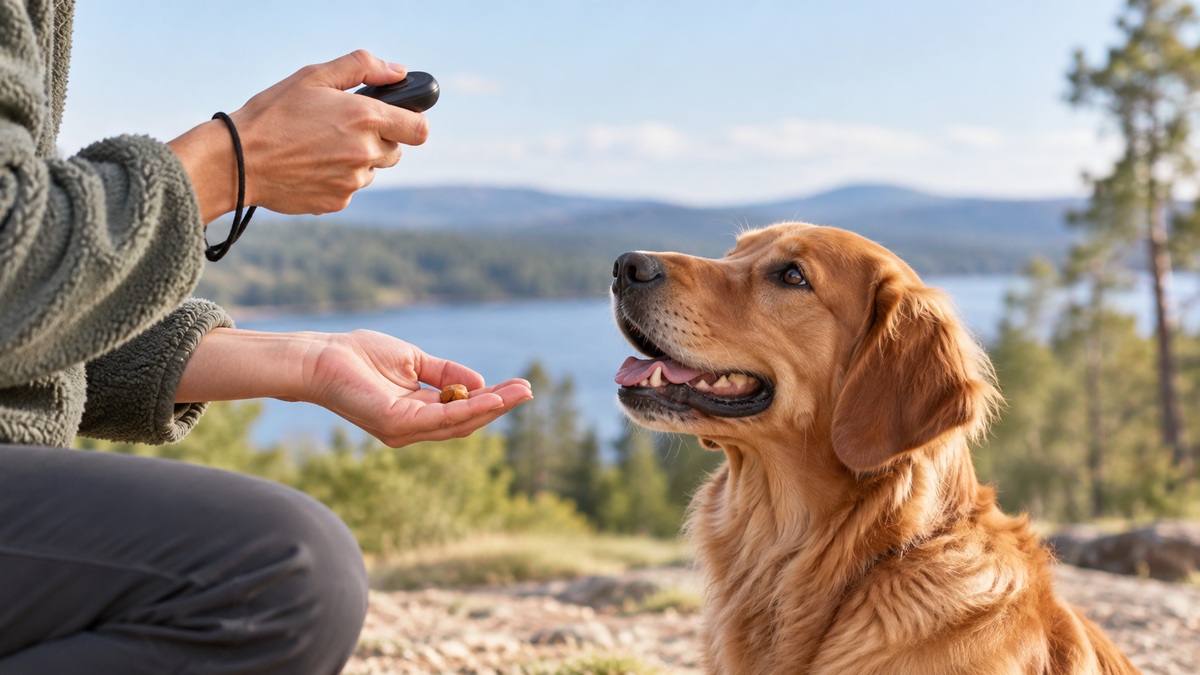
A clicker is a marker. It is a short, distinct sound that tells the dog which behavior earned the reward, and it is useful because it can arrive before the treat is in your hand. The Give Shelter clicker handout describes the same idea: the sound is used to indicate the exact behavior right away, and then the reward follows. The AKC describes the clicker as a tool that can make positive reinforcement training more efficient, which is a practical claim rather than a medical one.
The strongest study we opened is a 2025 paper indexed in PubMed Central. It trained 28 candidate detection dogs to find and alert to a target odor, with 14 dogs using a clicker as a marker and 14 using only a reward. The marker group finished training in fewer trials. It also alerted more accurately in an odor test, pinpointed the odor source more precisely in searches, and kept responding longer when the main reward was withheld.
Those findings are useful, but they come with limits. The study uses working detection dogs, not household pets, so it does not settle what a clicker does for a pet dog learning to sit or walk nicely. The authors also noted that evidence for the benefits of marker training in general was lacking before their study. The study describes the marker as a signal that predicts reward and bridges the delay between the behavior and the reward. That is the reason the reward should follow the click without a long pause, though the sources we opened do not give a number of seconds.
What the seven listings have in common
All seven listings are sold as dog or pet training clickers, and several also name cats, birds, horses or puppies in the title. The sources we opened cover dogs in general, not those other animals, so treat the other species as the seller’s claim. Each listing includes some kind of strap: a wrist strap, an elastic wrist band, a keychain ring with a bracelet, or a finger strap. Each one uses a push button, and the bullets describe the sound as loud or distinct without giving a decibel figure.
The listings differ in how many you get. Frienda lists an 18 piece set in multiple colors, and Ruconla lists a six-pack in six colors. HoAoOo lists a two-piece set in black and blue. The other four are single clickers. The Clink Design listing adds a treat pouch and dispenser, so it is a clicker and a treat storage unit in one body.
The listings, one by one
The Frienda 18 piece set is the largest pack in the group. The bullets say it includes 18 clickers in 14 different colors, a metal clicker that the listing says will not rust or fray, and a keychain ring and elastic bracelet for carrying. A pack this size suits a household with several trainers, a dog trainer who needs spares, or a family that wants one clicker in every room.
The HoAoOo spring wrist clicker comes as a black and a blue unit. Its bullets give a spring wrist length of 16 cm, stretching to 25 cm, and say the package holds one of each color. The title lists many animals, but the bullets focus on dog training. Because it is a spring strap, the fit adjusts between the two lengths on the page rather than being a single fixed size.
The Educator finger clicker in red is a manual clicker with a Velcro finger strap of about 5 inches. Its bullets say it has no electronics and no batteries, and that it is separate from remote training systems that the same product family may include. The bullets also advise introducing the clicker gradually, since animals respond differently to clicker sounds. Choose this one if you want a small clicker that sits on a finger.
The OYEFLY wrist clicker has a simple push button and an elastic wrist band that can be clipped to a leash or a belt loop. Its bullets describe a distinct clicking sound and give a list of behaviors to teach, such as sit, fetch, roll over and lie down. The bullets also say to reward with a treat after each click, which matches the marker logic described above.
The ABSONE clicker has a large button, a wrist strap and a lightweight body. The bullets describe a sharp, consistent sound and a design meant for puppies and cats as well as dogs. The sound level is not given. This is a plain single clicker for a trainer who wants one button and a strap.
The Ruconla six-pack gives six clickers in black, red, white, blue, pink and orange. Its bullets describe a big button, a palm-sized body and a clicker that the seller says can train several kinds of animal. Use the pack for a household where each person wants a clicker in a different color, or keep spares in a bag.
The Clink Design unit combines a clicker with a treat pouch and dispenser. The title gives a weight of 2.36 ounces. The bullets describe a wrist strap, one-hand use and a treat storage feature. Because the clicker and the pouch share one body, you can keep both in one hand, which is the main reason to choose it over a plain clicker.
Choosing by how you train
If you walk the dog and need your hand free for the leash, choose a wrist strap model like the OYEFLY, ABSONE or HoAoOo unit. If you want the click on the thumb or finger, the Educator finger clicker is the only finger-strap option in the set. If you train with treats in a pouch and want fewer items on your belt, the Clink unit puts the clicker and the storage together. If several people train the dog, a pack of six or 18 gives each person a clicker and reduces the chance that the clicker gets lost.
A clicker is a tool for marking the moment, so the most useful test is whether the dog reliably connects the click with a reward. The sources do not say which clicker works best for a given dog. What they do describe is consistent timing and a consistent sound. Keep the same clicker for a training block where possible, and avoid switching between a loud clicker and a soft one in the same session.
How to use a clicker well
Click at the moment of the behavior, then give the reward. The handout and the AKC article both describe the clicker as a signal tied to a reward, so the click is only useful when a reward follows. If you click without giving the reward, the sound stops meaning anything to the dog.
Start in a quiet place with a few seconds of practice, not a long session. The Educator bullets advise introducing a clicker gradually, and that advice fits any sound-based tool. Watch the dog’s reaction. If a dog flinches or leaves the room at the sound, try the clicker from farther away, or pause and try again later. The sources we opened do not give a method for noise-sensitive dogs beyond gradual introduction.
Keep the click for behaviors you have chosen. A clicker can mark anything, so decide in advance which behaviors you will reward, such as sit, come or a loose-leash step, and click only those. This keeps the marker clear and makes the sessions easier to repeat.
Mistakes to avoid
- Clicking without a reward. The marker predicts a reward, so an unpaid click confuses the dog.
- Assuming a clicker is a fix for every training problem. The research we opened shows benefits in detection dogs and says the broader evidence was limited before that work.
- Buying a clicker because the title names cats, birds or horses. The sources we opened cover dogs, and the seller’s claims for other animals are not covered there.
- Using the clicker for a behavior you have not chosen, which blurs the marker.
- Treating a combined clicker and pouch as a substitute for a separate treat bag, since the sources do not compare the two designs.
How we chose
We searched Amazon.com for dog training clickers in Chrome on 21 October 2026 and read the first results page. We kept products that are clickers for training. We set aside treat pouches that do not include a clicker, and we did not include training kits that bundle several items, because the bundle would turn the comparison into a set review. The Clink listing is included because its main function is a clicker, and the pouch is an extra.
We read each listing’s title and its first bullet points. We chose one listing per brand, so the set includes seven brands. Where a brand had a second listing on the page, such as another Educator color or a second Ruconla pack, we kept the first listing for each brand. Our order follows the search order on the page.
Our criteria were the strap type, the pack size, the extras stated in the bullets, and whether the listing is a clicker in its main use. We did not rank by price, ratings or sales figures, because those were not captured from the pages.
What we could not verify
- The loudness of any clicker, since none of the bullets gives a decibel figure, and sound tolerance varies by dog.
- Whether the detection-dog results apply to pet dogs in a home or a class.
- The durability of each metal or plastic body, the strength of each strap, and whether the wrist bands wear out.
- The full contents of each pack, since the captured bullets do not list every color or piece.
- Claims about cats, birds, horses or puppies made in the titles and bullets, which the sources we opened do not cover.
- Price, stock, delivery and ratings. None of these was captured from the pages.
- Anything below the first bullet points. Several bullets were cut off at capture, so their detail is not covered here.
A short clicker session
A clicker session works best when it is short and follows the same pattern each time. Choose one behavior, decide what the dog must do for a click, and decide how many rewards you will give before you start. The 2025 study we opened tracked training in set numbers of trials, and its marker group completed training in fewer trials than the reward-only group. That result is a reason to plan trials in advance rather than to run long, unstructured sessions.
Keep a simple log for each session. Record the behavior, the number of clicks, the number of rewards, and whether the dog offered the behavior before the click. A log shows whether the click is landing on the right moment, which is the timing that both the Give Shelter handout and the study point to. Keep the log in the same place every time, so that one trainer’s notes do not get mixed into another’s.
When more than one person trains the dog, agree on the behavior, the click and the reward before the first session. A pack of clickers lets each person keep their own, but the shared rule for the click matters more than the color. The Frienda and Ruconla packs give a household one clicker per person, and the Clink unit keeps the clicker and the treats in one hand for a solo trainer.
What a clicker cannot tell you
A clicker marks a moment. It does not show whether the dog understands the cue. The study measured accuracy in an odor test and in searches, and it measured how long dogs kept responding when the reward was withheld, but it did not give a rule for when a pet dog has learned a behavior. The sources we opened also do not give that rule. Watch whether the dog offers the behavior again without a click, and treat that as a sign the training is holding, rather than relying on the click alone.
FAQ
Does a clicker work better than a spoken marker word?
The study we opened compared a clicker marker with reward-only training. It did not compare a clicker with a spoken word, so the sources we opened do not say which marker works better. Choose the one your dog responds to and that you can use the same way every time.
Should I use a clicker with a dog that is sensitive to noise?
Introduce the clicker gradually and watch the dog’s reaction. The sources we opened do not give a full method for noise-sensitive dogs, so keep sessions short and stop if the dog is distressed.
How soon should I give the treat after the click?
The study describes the marker as a bridge across the delay between the behavior and the reward, so the reward should follow the click without a long pause. The sources we opened do not give a number of seconds, so follow the click with the reward promptly and consistently.
Do I need a clicker to train my dog?
No. The AKC describes a clicker as a tool that can make training more efficient, not as a requirement. A clicker is one way to mark a behavior, and a verbal marker or a reward alone can also work, though the sources we opened do not compare these methods directly.
Can a clicker help with potty training?
The Clink listing says its clicker suits potty routines, which is the seller’s claim. The sources we opened do not cover clickers for potty training, so treat that use as unverified.
Bottom line
Choose a strap style that fits how you hold the leash and treats, buy a pack only if several people will train the dog, and pair every click with a reward. Treat the research as encouraging but limited for household dogs.
For reward ideas to use with a clicker, see our treat-dispensing toy guide. For a training walk with a collar, our no-pull collar guide covers that gear.
1. Frienda 18 Pcs Dog Training Clicker with Wrist Strap for Pets, Multicolor (Multicolor pack of 18 metal clickers with wrist straps)
Specs from the listing (checked ):
- Pack count: 18 pieces (bullet)
- Attachment: keychain ring and elastic bracelet (bullet)
- Material: metal clicker (bullet)
Pros
- The bullets state 18 pieces in 14 colors, enough for several trainers or a family
- The bullets describe a keychain ring and elastic bracelet for carrying
Cons
- The captured bullets give no weight or size for the metal clicker
- The captured bullets do not list which colors come in the pack
Best for: A household with several trainers who want spare clickers
Skip if: You want one clicker with a treat pouch attached
View on Amazon (affiliate link)
2. Dog Training Clicker with Sring Wrist and Keyring – Pet Dog Training Clickers for Puppy, Cat (Spring wrist clicker sold as one black and one blue)
Specs from the listing (checked ):
- Wrist strap length: 16 cm (6.3 inches), can stretch to 25 cm (9.84 inches) (bullet)
- Package: Black and Blue, one of each (bullet)
Pros
- The bullets give a spring wrist length of 16 cm that can stretch to 25 cm
- The bullets say the package includes one black and one blue clicker
Cons
- The title names many animals, but the bullets cover dog training only in general terms
- The bullets say to press the clicker to mark behavior but give no sound level
Best for: A trainer who wants a clicker and a backup in a second color
Skip if: You need a finger clicker for one-handed use
View on Amazon (affiliate link)
3. Educator E-Collar Dog Training Finger Clicker, Red (Red finger clicker with a Velcro strap and no electronics)
Specs from the listing (checked ):
- Strap: approximately 5-inch adjustable Velcro strap (bullet)
- Color: Red (title)
- Electronics: none, per the manual-clicker bullet
Pros
- The bullets describe a manual clicker with no electronics or batteries
- The bullets describe an approximately 5 inch adjustable Velcro finger strap
Cons
- The bullets say animals respond differently to clicker sounds and advise a gradual introduction
- The product sits in an e-collar product family, which may confuse a first-time buyer
Best for: A trainer who wants a small clicker worn on the finger
Skip if: You need a wrist strap instead of a finger strap
View on Amazon (affiliate link)
4. OYEFLY Dog Training Clicker with Wrist Strap Durable Lightweight Easy to Use, Pet Training Clicker (Elastic wrist clicker with a simple push button)
Specs from the listing (checked ):
- Strap: elastic wrist band (bullet)
- Button: simple push button with a distinct clicking sound (bullet)
Pros
- The bullets describe a simple push button with a distinct click
- The bullets describe an elastic wrist band that can clip to a leash or belt
Cons
- The bullets list cats, birds, chickens and sheep alongside dogs, which the sources we opened do not cover
- The bullets give no pack count and no sound level
Best for: An owner who wants a basic one-button clicker that clips to a leash
Skip if: You want a pack of several clickers
View on Amazon (affiliate link)
5. ABSONE Dog Clicker for Training with Wrist Strap, Dog Clicker Trainer Tools (Lightweight clicker with a large button and wrist strap)
Specs from the listing (checked ):
- Strap: wrist strap (bullet)
- Button: large button (bullet)
- Material: sturdy, lightweight materials (bullet)
Pros
- The bullets describe a large button for one-press use
- The bullets describe a lightweight build with a convenient wrist strap
Cons
- The bullets say it suits cats, puppies and birds, a broad claim the sources we opened do not cover
- The bullets describe a sharp, consistent sound but give no decibel figure
Best for: A trainer who wants a single clicker with a large button
Skip if: You need a pack or a treat pouch
View on Amazon (affiliate link)
6. Ruconla Pet Training Clicker with 6 Pack for Dogs/Cats/Horses/Birds or Other Animals – Clickers (Six-pack of clickers in six colors)
Specs from the listing (checked ):
- Pack count: 6 (title and bullet)
- Colors: black, red, white, blue, pink, orange (bullet)
Pros
- The title and bullets give a six-pack in black, red, white, blue, pink and orange
- The bullets describe a big button and a body that fits in the palm
Cons
- The bullets name horses, birds, sheep and mice, which the sources we opened do not cover
- The captured bullets do not say whether the strap can be removed
Best for: A household with several trainers who wants a color for each person
Skip if: You need a finger clicker or a treat pouch
View on Amazon (affiliate link)
7. Clink Design Dog Training Clicker & Dog Clicker with Treat Storage, Purple | Clicker Dog Trainer (Clicker with a treat pouch and dispenser in one unit)
Specs from the listing (checked ):
- Weight: 2.36 oz (title)
- Feature: treat storage pouch and dispenser (bullet)
- Strap: secure wrist strap (bullet)
Pros
- The bullets describe a treat storage pouch and dispenser in the same unit
- The title gives a weight of 2.36 oz and the bullets describe a secure wrist strap
Cons
- The bullets make potty-routine and puppy-training claims that the sources we opened do not cover
- The bullets describe the unit as 2-in-1, a combined design the sources we opened do not compare with separate tools
Best for: A trainer who wants a clicker and treat storage in one hand
Skip if: You want the lightest plain clicker, since this unit adds a pouch
View on Amazon (affiliate link)
Sources
- PubMed Central, Effectiveness of marker training for detection dogs (2025): https://www.ncbi.nlm.nih.gov/pmc/articles/PMC11885294/
- American Kennel Club, Clicker Training: Mark and Reward Dog Training Using Clickers: https://www.akc.org/expert-advice/training/clicker-training-your-dog-mark-and-reward/
- Give Shelter, Guide to Clicker Training (handout): https://www.giveshelter.org/assets/pet-handouts/Clicker-Training.pdf