Best Way to Clean a Dog Collar, by Material
As an Amazon Associate we earn from qualifying purchases. Details
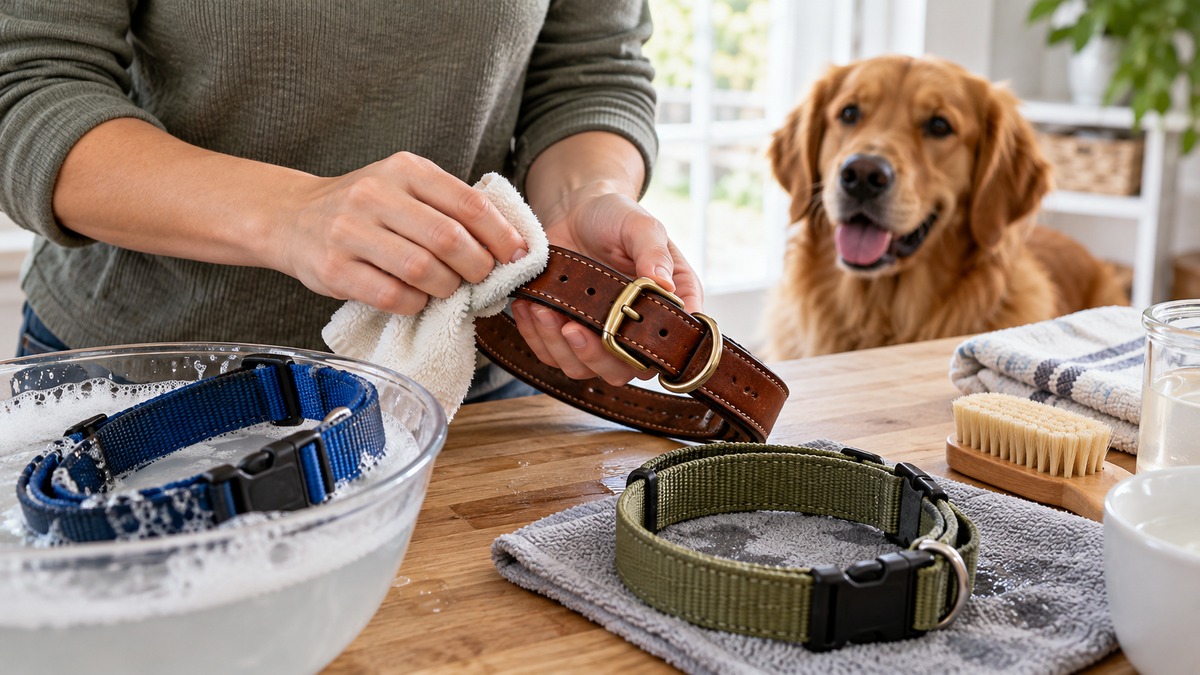
The best way to clean dog collar gear is to match the method to the material. Wash fabric and nylon collars in warm water with a mild dish soap or dog shampoo, rinse them well, and let them air dry. Clean leather with a baking soda and vinegar paste applied with a toothbrush, and never soak it. Clean chain collars with dish soap and warm water, and wipe neoprene or biothane with warm water. Dry every collar completely before it goes back on your dog.
Quick answer
- Clean the collar whenever your dog gets a bath. The AKC collar guide gives this as its general rule.
- Use the method for the material. Nylon, chain, neoprene and biothane need different care than leather.
- Keep furniture cleaners and shoe cleaners away from any collar your dog wears. The AKC collar guide says those chemicals can be toxic for dogs.
- Dry the collar fully before you buckle it back on. The AKC pages we opened say to air dry.
- Check the buckle, ring and closures while you clean. The AKC harness guide advises inspecting and cleaning closures and hardware regularly.
Why a dirty collar matters
A collar sits in one place on the body for long periods, so dirt gathers under it. The AKC collar guide says that keeping the collar clean does more than make it look nice. It says a clean collar can also prevent skin irritation, fur loss and chafing. That is the main reason to add collar cleaning to your bath routine, rather than waiting until the collar looks grimy.
The same AKC page makes a practical point: if your dog is dirty, the collar is probably dirty too. A bath is the natural time to clean both.
Step 1: Identify the material
Before you pick a cleaner, look at what the collar is made of. The AKC collar guide organizes cleaning by material, so the table below follows its structure.
| Collar material | What the AKC collar guide says | What to avoid |
|---|---|---|
| Nylon or other fabric | Not stated in the collar guide; the AKC leash guide uses warm water and dog shampoo for nylon | Furniture and shoe cleaners |
| Leather | Mix baking soda and vinegar and spot clean with a toothbrush | Furniture and shoe cleaners; soaking |
| Chain-link | Dish soap and warm water | Not stated |
| Neoprene | Warm water to wipe off mud and dirt | Not stated |
| Biothane | Warm water to wipe off mud and dirt | Not stated |
| Lightweight aluminum | Wipes off clean | Not stated |
The AKC page describes neoprene as a material that resists dirt and debris, and it describes biothane as a polyester blend. The guide does not say how hard each material can be scrubbed, so start with the gentlest method and move up only if needed.
How to clean a nylon or fabric collar
Nylon is the most common everyday collar material. The sources support this approach:
- Remove the ID tag if it is removable, so you can clean under it.
- Fill a bowl with warm water and add a small amount of mild dish soap or dog shampoo.
- Soak the collar, then scrub the dirty areas with a soft brush. Give extra attention to the inside surface, where the collar touches the fur.
- Rinse the collar thoroughly until no soap remains.
- Press out the water with a towel.
- Air dry the collar away from direct heat.
The AKC leash guide describes the safest way to wash nylon leashes as hot water with a little dog shampoo, followed by a thorough rinse and air drying. A collar is a smaller item, so warm water is a reasonable choice for everyday dirt. The sources we opened do not give one temperature that works for every nylon collar, so follow the care label if your collar has one.
Machine washing is a separate question. The AKC leash guide says that some nylon leashes can go in a mesh laundry bag and into a washing machine, but only if the manufacturer’s tag says so. Without that instruction, hand washing is the safer choice.
How to clean a leather collar
Leather needs the most careful handling. The AKC collar guide warns against using leather cleaners made for furniture or shoes, because their chemicals can be toxic for dogs. The guide suggests a mixture of baking soda and vinegar instead. Apply it with a toothbrush and spot clean the collar, rather than soaking the whole thing.
The AKC leash guide says leather does not benefit from a water bath, and the same caution applies to a leather collar. Wipe it with a damp cloth, let it air dry, and keep it out of direct heat. The sources we opened do not name a conditioner for leather collars, so this guide does not recommend one.
How to clean a chain or metal collar
Chain-link collars are the easiest to clean with a soapy solution. The AKC collar guide suggests dish soap and warm water for chain-link. Rinse the collar, then dry it fully before it goes back on the dog.
The AKC collar guide says lightweight aluminum wipes off clean, so a damp cloth is enough for most dirt on that material. The guide does not describe how to clean the buckle on a metal collar, so check the buckle by hand for dirt and debris.
How to clean a neoprene or biothane collar
Neoprene and biothane are the simplest materials to care for according to the AKC collar guide. For both, the guide says warm water is enough to wipe off mud and dirt. A soft cloth works well. The guide describes neoprene as resistant to dirt and debris, and it names neoprene as a good choice for dogs with longer hair that mats easily. Dry both materials fully after cleaning.
Drying the collar
Drying is the step most people skip. The AKC pages we opened say to air dry, and the leash and harness guides both describe air drying after washing. The sources do not give a drying time for each material, so this guide gives none. The practical rule is that the collar should be completely dry before it goes back on your dog.
Hang the collar or lay it flat on a towel, and turn it over so both sides dry.
Check the collar and hardware
When you clean, look at the collar closely. The AKC harness guide says closures should be inspected and cleaned regularly, and it advises checking hardware for cracks or areas where the fabric may be frayed or damaged. Those checks apply to collars as well. A cracked buckle or a frayed strap should be replaced rather than cleaned.
The AKC collar guide also notes that studs or sewn-on decorations can cause skin irritation or get snagged on something while your dog plays. If your collar has decorations, check the area around them each time you clean, and remove any loose piece that could catch.
Common mistakes
- Using a furniture cleaner or shoe cleaner on a leather collar. The guide advises against this step.
- Soaking leather. The AKC leash guide says leather does not benefit from a water bath.
- Skipping the rinse after soap. Rinse the collar thoroughly before drying.
- Putting a damp collar back on the dog. Dry it fully first.
- Skipping the buckle and stitching. The AKC harness guide advises checking closures and hardware regularly.
- Assuming every collar is machine washable. The AKC leash guide says machine washing applies only when the manufacturer’s tag allows it.
How we chose
We opened three independent AKC pages on 2026-10-23: the collar guide, the leash guide and the harness guide. We read the text of each page and checked every quoted sentence against the page text before using it. We did not use product listings, cleaning brand pages or retailer guides as sources for any cleaning step. We do not recommend any collar or cleaning product in this guide.
What we could not verify
- The sources we opened do not give a specific detergent brand, water temperature or soak time for each collar material. This guide uses warm water and a mild cleaner, and it does not name a best product.
- The sources do not give a drying time for each material.
- The sources do not give a cleaning schedule beyond the rule of washing at each bath. They do not give a number for dogs that swim or roll in mud.
- The sources do not say how much soap residue is a problem, so this guide says only to rinse thoroughly.
- The sources we opened do not say whether any specific cleaning product is safe for every dog. If your dog has sensitive skin, ask your veterinarian before you use a new product on the collar area.
FAQ
How often should I clean my dog’s collar?
The AKC collar guide says to wash the collar whenever your dog gets a bath. The sources do not give a schedule beyond that rule, so check the collar more often if your dog is especially dirty.
Can I put a dog collar in the washing machine?
The sources we opened do not recommend it as a general rule. The AKC leash guide says some nylon items can go in a machine only when the manufacturer’s tag says so. For most collars, hand washing with warm water and mild soap is the safer choice.
What should I use to clean a leather dog collar?
The AKC collar guide advises against furniture and shoe cleaners because their chemicals can be toxic for dogs. The guide suggests a baking soda and vinegar mixture applied with a toothbrush. Spot clean the collar, do not soak it, and let it air dry.
Is soap safe to use on a dog collar?
The AKC collar guide suggests dish soap and warm water for chain-link collars, and the AKC leash guide suggests a little dog shampoo for nylon. Rinse the collar thoroughly after any soap.
What if my dog’s neck looks irritated after I clean the collar?
The AKC collar guide says a clean collar can help prevent skin irritation, fur loss and chafing. It does not describe treatment for existing irritation. If the skin looks red, sore or raw, ask your veterinarian to look at it rather than switching cleaners.
Should I remove the ID tag before cleaning?
The sources we opened do not address ID tags. Removing a removable tag lets you clean the area under it, and it is a practical step for any collar with a tag ring.
Bottom line
Wash the collar at every bath, match the cleaner to the material, and dry it fully before it goes back on. Keep furniture and shoe cleaners away from leather, and check the buckle and closures while you clean. For more on choosing collars and related gear, read is a collar or harness better for a dog and best collars for pitbulls that pull. If you need a collar for a strong puller, best no pull collar for German Shepherd covers that use case.
Sources
- AKC, Finding and Choosing the Right Dog Collar for Your Dog: washing at each bath, skin irritation, dish soap for chain-link, leather cleaners to avoid, baking soda and vinegar for leather.
- AKC, Dog Leashes 101: Choosing the Right Dog Leash for Your Dog: hot water and dog shampoo for nylon, machine washing only if the tag allows it, leather not soaked.
- AKC, How to Find the Right Dog Harness for Your Dog: closures and hardware inspection, mild detergent, air drying for nylon and neoprene.