Best Dog Training Collars for Safe, Effective Teaching
As an Amazon Associate we earn from qualifying purchases.
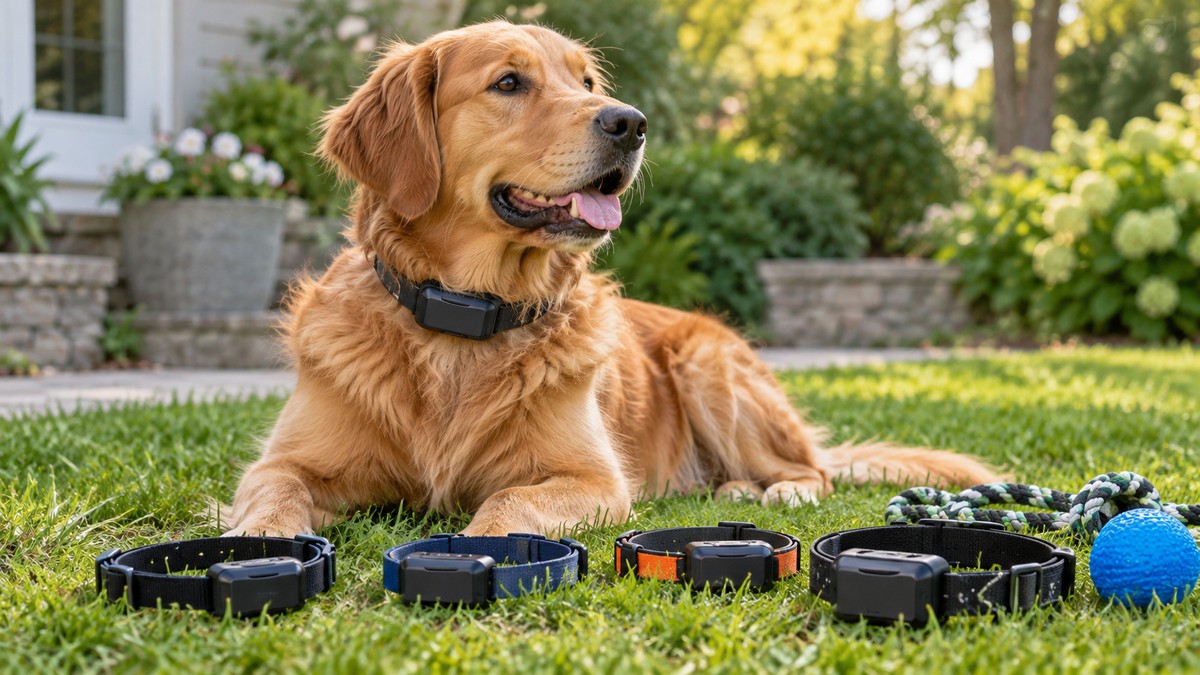
The best dog training collars are the ones that match the problem you are trying to solve, whether that is pulling on the leash, a dog that slips its collar, or barking, and the eight listings below cover each of those. This guide groups them by type: two Wolfgang buckle collars, two martingale-style collars, two head collars, a Starmark limited-slip collar, and two electronic collars (one with a remote, one bark-only). Details come only from the listings, and anything a listing does not state is marked as not stated.
Quick answer
- Dog that slips a flat collar: a martingale such as the Country Brook Petz (nylon, no buckle) or the Wolfgang Heavy Duty Martingale tightens a limited amount when pulled.
- Dog that pulls: head collars (Beaphar Gentle Leader, PetsProMax) attach the leash to a nose strap; the Starmark Pro-Training collar is listed as a no-pull design.
- Barking: the FAFAFROG is a bark collar; the Colofrog combines bark control with a remote.
- Any electronic collar: talk to a veterinarian or certified trainer first, and read the manual before use.
Which type solves which problem
Flat buckle collars
A flat collar holds tags and attaches a leash, and the two Wolfgang buckle collars described here are built for everyday walking and training. They do not stop pulling by themselves. They suit a dog who already walks politely, or one you are teaching with treats and practice.
Martingale collars
A martingale has a loop that tightens when the dog pulls, but only up to a limit. The Country Brook Petz listing says the limited closure keeps the collar from becoming too tight and that the dog cannot slip out, which is why martingales are common for dogs with narrow heads. The listing also says it is a training collar and not for tie-out.
Head collars
A head collar fits behind the ears and over the muzzle, and the leash attaches under the chin. The idea, as the Beaphar listing puts it, is that where the lead goes the dog follows. Most dogs need time to accept one. The PetsProMax listing says not every dog enjoys it right away and describes an adjustment period. Fit matters a great deal, so use the size chart on the page.
Electronic collars
Remote and bark collars use beeps, vibration or electrical stimulation. The Colofrog listing describes three training functions: beep, vibration and what it calls safe shock. Electronic collars are controversial and not right for every dog. Fearful, anxious or aggressive dogs can be made worse by them. A vet or a certified trainer can tell you whether one makes sense, and whether a different tool would work better.
General rules for any training collar
- Use it for supervised training only. The Starmark listing says never to leave a training collar on an unattended dog.
- Measure the neck, then compare with each listing’s size range.
- Pair the tool with training. A collar alone teaches nothing.
- Stop if the dog shows pain, fear, skin irritation or loses interest in walking. Ask your vet.
Comparison table
| Collar | Type | Listed size or fit | Material (specs) | Notable per listing |
|---|---|---|---|---|
| Wolfgang Heavy Duty Martingale, Medium | Martingale with quick-release buckle | Medium, 1 inch wide, 14-18 inch | Polyester webbing | Welded steel D-ring; listed to over 800 pounds of pull strength |
| Starmark Pro-Training, Small 15-inch | Limited-slip, no-pull | 15 inches, small to medium breeds | Polymer links | Watchband link sizing; backup nylon slip collar; supervised use only |
| Wolfgang Adjustable, Medium | Flat buckle collar | Medium, 1 inch wide, 12-18 inch | Polyester | Quick-release nylon buckle; welded steel D-ring |
| PetsProMax No-Pull Headcollar, Large | Head collar | L fits 18-24 inch neck; S, M, L, XL offered | Cotton | Padded nose strip, solid steel leash hooks, 30-day warranty |
| Colofrog 2-in-1 | Remote e-collar and bark collar | 10-150 lbs, necks 8-25 in | Nylon | 3300 ft range, IP67 waterproof collar, 2-year warranty |
| Beaphar Gentle Leader, Medium | Head collar | Small, medium, large; from 8 weeks old | Nylon | Spot clean |
| Country Brook Petz Martingale, Medium | Martingale, no buckle | 1 inch wide, 15-21 inch neck | Nylon webbing | Made in the USA, machine washable |
| FAFAFROG Bark Collar | Bark collar | 8-150 lbs, necks 8-25 in, over 6 months | Nylon | 5 sensitivity levels, IP67, 2-year warranty |
The eight collars
Country Brook Petz Martingale, Medium: the buckle-free slip-proofer
This is a 100% nylon webbing collar that slips over the head and tightens gently when the dog pulls. The listing says there is no buckle, the closure is limited so it does not become too tight, and the hardware is nickel plated steel with colorfast dye. The medium is 1 inch wide and fits a 15 to 21 inch neck, and the listing names Corgis, Pugs and Dalmatians as examples. It is made in the USA, machine washable, and the manufacturer recommends it for dogs 6 months and up.
It is marked as a training collar and not for tie-out. Best for: dogs that back out of flat collars, and for service-dog style gear.
Wolfgang Heavy Duty Martingale Collar, Medium: the strong-dog martingale
Wolfgang’s martingale combines a quick-release nylon buckle with polyester webbing and a welded, powder-coated steel D-ring. The listing says it is designed to withstand over 800 pounds of pull strength and that UV and stain-resistant materials hold up in the rain. The specs list a medium size of 1 inch by 14 to 18 inches, a weight of 3.52 ounces, and a care method of warm water and dish soap. A one-year limited warranty is stated.
Best for: owners who want a martingale with a quick-release buckle and a sturdy ring for a dog that pulls, with the usual caution that the figure is a hardware strength claim, not a safety guarantee.
Wolfgang Adjustable Dog Collar, Medium: the plain everyday collar
The same maker offers a non-martingale version with a nylon buckle and a welded steel D-ring, in a printed polyester webbing. The specs list a 1-inch width with a 12 to 18 inch range, 1.92 ounces, and hand wash. The warranty line reads no warranty. It is a good fit for a dog that already walks on a loose leash and needs a sturdy collar for tags and a leash.
Best for: general walking and training where a martingale is not needed. For walking tools that discourage pulling, look at the head collars below.
Starmark Pro-Training Dog Collar, Small 15-inch: the link-sized collar
The Starmark is built from polymer links that you add or remove to size it, which the listing calls the watchband link system. The listing describes a patented design developed by Starmark Academy trainers, with rounded tips and a martingale-style action meant to discourage pulling and lunging with gentle correction. A backup nylon slip collar is included, and the listing states the collar is for supervised training only. The specs describe it as small-to-medium breeds, 15 inches, 2 ounces, hand wash, and call the collar type a pinch collar, so read the page closely and decide if this style suits your dog.
The listing does not state a weight range or a neck measurement beyond the 15-inch length. Best for: owners working with a trainer who recommends this style. If you are not sure, ask a certified trainer first.
PetsProMax No-Pull Dog Headcollar, Large: the redesigned head collar
This head collar is cotton with a padded nose strip, an adjustable behind-head buckle and solid steel leash hooks. The size chart lists four neck ranges: S 12 to 15 inches, M 15 to 18, L 18 to 24 and XL 24 to 33. The listing says it was redesigned after sizing confusion, adjusted the nose strap length, and includes an adjustable buckle on both sides to keep the chin piece from sitting oddly. It says the headcollar works for training and everyday walks and warns that dogs may resist at first. The warranty is 30 days.
The listing’s language is very confident (“instantly”, “absolutely not”), so treat that as seller wording and introduce the headcollar slowly with treats. Best for: strong pullers when fit is carefully checked.
Beaphar Gentle Leader Head Collar, Medium: the classic head collar
The Gentle Leader fits behind the neck and across the nose. The listing describes it as working three ways: pressure on the back of the neck, pressure around the muzzle, and halter-style steering. It says it is available in small, medium and large, in black or red, for dogs from 8 weeks old, and endorsed by behaviorists. It is nylon with a buckle, and the care instruction is spot clean.
The product description makes claims about instinctive relaxation responses; those are the seller’s statements, and the listing does not provide a neck measurement chart, so check sizing guidance on the page. Best for: a dog that pulls on walks and whose owner will commit to the fitting period.
Colofrog 2-in-1 Dog Shock and Bark Collar: the remote plus bark collar
The Colofrog works with or without a remote. The listing describes three modes (bark control, training and all), a remote with beep (1 to 8 levels), vibration (1 to 16 levels) and what it calls safe shock (1 to 99 levels), five bark sensitivity levels, and a bark-recognition chip meant to avoid accidental activation. Range is stated as 3300 ft, the collar is IP67 waterproof (with the remote kept dry), and it fits dogs of 10 to 150 lbs with necks of 8 to 25 inches. Charging takes about two hours; standby is up to 35 days for the collar and 50 for the remote. It comes with a test bulb, a manual, metal prongs and a two-year manufacturer warranty.
This is the most powerful tool in the group, and the one with the most risk if misused. Start at the lowest setting, read the manual, and talk to a vet or certified trainer, especially before using stimulation on a young, fearful or aggressive dog. Best for: owners guided by a professional who want remote and bark control in one device.
FAFAFROG Dog Bark Collar: the bark-only collar
This collar has no remote. It has four working modes and five sensitivity levels, with a recognition chip that uses two conditions: continued barking and vocal cord vibration. A protect mode stops activation for 30 seconds after six activations in a row. The listing says a full charge takes two hours and lasts about 15 to 20 days, IP67 waterproofing, and a 27 inch length fitting 8 to 25 inch necks and dogs of 8 to 150 lbs, ideal for dogs over 6 months. The specs list a two-year manufacturer warranty, metal prongs and silicone covers.
The listing calls the collar “a tool of love, not punishment”. That is marketing language. Barking has causes such as boredom, fear or separation distress, and a collar does not address them. Ask your vet or a trainer first. Best for: a persistent barker where a professional has confirmed a bark collar is appropriate.
How to choose between them
- Name the problem. Slipping out, pulling, lunging, barking or recall are different problems. A martingale stops slipping. A head collar addresses pulling. A bark collar addresses barking. None teaches recall on its own.
- Measure first. Neck size drives the fit. The PetsProMax gives four ranges, the Country Brook gives 15 to 21 inches for medium, and the electronic collars give 8 to 25 inches.
- Prefer the least intense tool that works. Start with a martingale or head collar and reward-based practice before considering electronics.
- Check upkeep. Nylon martingales may be machine washable (Country Brook), others are hand wash or spot clean. Electronic collars need charging and contact point checks.
- Know what the warranty says. The listings range from none (Wolfgang adjustable) through 30 days (PetsProMax) to two years (the electronic collars).
- Get fit help. A trainer can show you how a head collar should sit in about ten minutes, which is worth more than any listing.
Mistakes to avoid
- Leaving a training collar on an unattended dog.
- Using a martingale or slip collar for tie-out.
- Buying a head collar by breed instead of neck and muzzle measurement.
- Skipping the manual on an electronic collar.
- Expecting a collar to fix fear or anxiety.
- Using a collar sized for a weight range the dog is not in.
Related reading
If a collar is only part of the kit, our page on the best dog leash for training pairs well, and the guide to martingale dog collars: fit, materials and limits goes deeper on that style.
FAQ
What is the safest type of training collar?
No listing can promise safety, since it depends on fit, use and your dog. Flat and martingale collars are the least intense tools in this group. Whatever you pick, supervise it, and ask a vet or certified trainer about your dog.
Are head collars good for dogs that pull?
The Beaphar and PetsProMax listings are built around that purpose. Both mention an adjustment period. Fit it carefully and reward calm walking.
What is a martingale collar for?
It prevents a dog from backing out of the collar by tightening a limited amount. The Country Brook listing says the limited closure keeps it from getting too tight.
Do bark collars work?
The listings say they detect barking and respond with beeps, vibration or stimulation. They do not say whether any given dog will stop barking, and they do not address the reason for the barking. A trainer can help work out the cause.
What size collar does my dog need?
Measure the neck with a soft tape and compare it with the listed range: 15 to 21 inches for the Country Brook medium, 18 to 24 inches for the PetsProMax large, and 8 to 25 inches for the Colofrog and FAFAFROG. If your dog is between sizes, read the product page.
Can a puppy use a training collar?
Some listings give minimum ages: Beaphar from 8 weeks, Country Brook from 6 months, and the FAFAFROG for dogs over 6 months. Ask your vet before using any training tool on a puppy.
Bottom line
Start with the mildest tool that fits the problem: a martingale for slipping, a properly fitted head collar for pulling, and electronics only on professional advice. Measure the neck, follow the listed size ranges, supervise every use, and pair any collar with reward-based training.