Dog Safe Foods for Lick Mat
As an Amazon Associate we earn from qualifying purchases. Details
A lick mat is only as safe as what you spread on it. The foods owners reach for first, peanut butter and yogurt, share one label risk that can turn a calming snack into an emergency: xylitol. This guide sorts foods into three groups using pages from the AKC and the ASPCA that we opened and read: foods those pages describe as acceptable in moderation, foods they call dangerous, and foods the pages do not cover. It also covers the 10% treat rule, mat safety and cleaning, so you can fill a mat quickly without guessing. If your dog has a health condition, your vet decides what goes on the mat.
Quick answer
Start with plain, unsalted, xylitol-free spreads: unsalted peanut butter (read the label every time), plain yogurt with no added sugar or sweetener, and low-sodium broth that you freeze on the mat. Keep the portion small, because mat fillings count as treats. Never use anything with xylitol, and skip chocolate, grapes, raisins, macadamia nuts, and onion or garlic seasoning. If a food is not on a source we opened, treat it as unknown and ask your vet before using it.
Foods the AKC and ASPCA pages describe as acceptable
The AKC lick mat page (updated Aug 3, 2026) names a short list of fillings. The AKC page on people foods (updated Aug 17, 2026) and the AKC peanut butter page (updated Mar 25, 2026) add the conditions that matter. The table below only repeats what those pages say.
| Filling | What the source says | Read before you use it |
|---|---|---|
| Peanut butter | The AKC lick mat page calls it a solid choice, in moderation. The AKC peanut butter page names three safest options: unsalted, dog-specific, or homemade. | Check the label for xylitol. Salt is also flagged, because “high sodium levels can be problematic for dogs.” |
| Plain yogurt | Acceptable in moderation, and the AKC lick mat page mentions probiotics. | Avoid versions with artificial sugars or flavors. The AKC people foods page describes yogurt as suited to dogs that digest dairy well. |
| Low-sodium broth | The AKC lick mat page says chicken, beef or vegetable broth can be frozen on the mat for a cold treat. | Choose low sodium, and check that the broth has no onion or garlic. The ASPCA lists onion, garlic and chives as risks. |
| Honey | The AKC pages describe it as nutritious in small amounts. | A thin smear is enough. Ask your vet first if your dog has diabetes or weight problems. |
| Wet food or kibble | The AKC lick mat page suggests wet food for a teething puppy and dry kibble for one section of a divided mat. | Count it as part of the meal, not as an extra. |
| Cottage cheese or mozzarella | The AKC people foods page says small to moderate amounts of lower-fat cheeses are acceptable. | Skip it if your dog is lactose intolerant. |
| Cooked egg, plain | The AKC people foods page says eggs must be fully cooked. | Raw egg whites are flagged for biotin deficiency. |
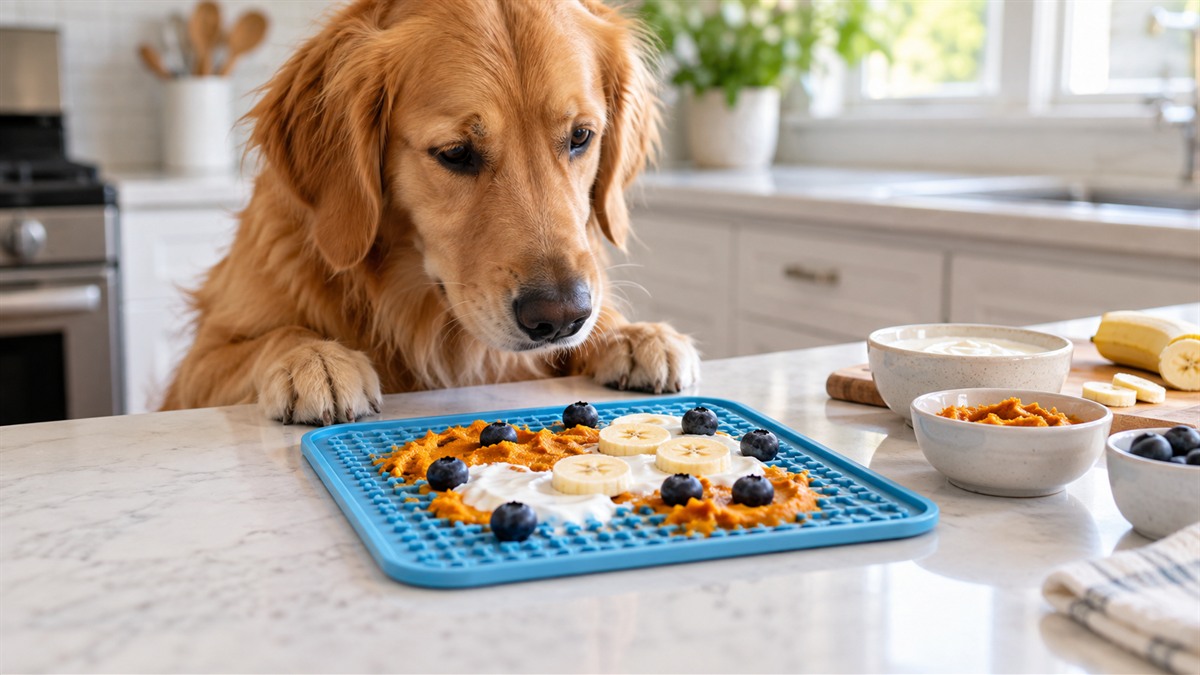
Those sources do not cover pumpkin puree, banana, blueberries, carrot puree or sweet potato, so this guide does not call them safe or unsafe. Ask your vet if you want to use one.
Foods to keep off the mat
Xylitol is the one to learn first
The AKC peanut butter page calls xylitol a sugar substitute that is “toxic to dogs” and says some peanut butter makers have switched to it. It reports that low blood sugar can begin 10 to 60 minutes after a dog eats xylitol, and it lists weakness, collapse, staggering and seizures as warning signs. The ASPCA page adds that liver damage can follow within 12 to 24 hours depending on the amount. Read the ingredient list on every jar, every time, because makers change recipes.
Other foods the sources warn about
- Chocolate, coffee and caffeine. The ASPCA names methylxanthines and lists vomiting, tremors and seizures among the risks.
- Grapes and raisins. The ASPCA says they can lead to kidney damage.
- Onion, garlic and chives. The ASPCA links them to red blood cell damage. The AKC says garlic is significantly more toxic to dogs than other Allium plants.
- Macadamia nuts. The AKC calls them one of the most poisonous foods for dogs, and the ASPCA says signs usually appear within 12 hours.
- Salt and seasoned foods. The ASPCA warns that excess salt can cause thirst, abnormal blood electrolytes, vomiting, tremors or seizures.
- Ice cream and sugary spreads. The AKC people foods page says ice cream is high in sugar and can cause lactose problems.
If your dog eats something on this list, the ASPCA page tells owners to note the amount and contact a veterinarian or poison control. It prints the ASPCA Poison Control number as (888) 426-4435.
How much is too much
The AKC peanut butter page applies the 10 percent rule: treats should not exceed 10% of the diet. A lick mat filling is a treat, even when it feels like a hobby. The page also warns that too much peanut butter can lead to obesity and pancreatitis, and it advises asking a vet about the right amount for dogs with diabetes or food sensitivities.
Worked example: counting the filling
Our planning example, not a standard: suppose a vet has set a 20 lb dog at 400 calories a day. Ten percent of 400 is 40 calories, so the filling plus all other treats that day must fit inside 40 calories. Now suppose a 50 lb dog is on 1,000 calories a day. Ten percent is 100 calories. A 10 lb dog on 200 calories a day has only 20 calories of treat room. Every calorie figure here is made up for the sum; use your own dog’s number from your vet and the calorie count on the jar. If the mat takes 40 calories of that budget, count the training treats too, then reduce the dog’s dinner by the same amount if the day is heavy on treats.
Mat safety and cleaning
- Food-grade matters. The AKC lick mat page says “food-grade” means the item may contact food, and that non-food-grade mats can leach dyes, chemicals and other toxins into food. It also notes food-grade does not mean the mat is suitable for eating.
- Supervise. The same page says there is no leave-it-and-forget-it toy. Plan a short supervised session, for example 15 minutes after a walk, and stay in the room. Our example only: if the mat is still in use after 30 minutes, check on your dog.
- Retire damaged mats. The AKC advises discarding a mat with eroding material, punctures or jagged ridges, and stepping in if your dog tries to eat or destroy it.
- Clean after every use. The AKC says to wipe or wash with warm soap and water to prevent mold and bacteria. Some food-grade silicone mats are dishwasher safe, and boiling may melt or warp some mats, so check the product description first.
- Freezing. The AKC says broth on the mat takes a few hours to freeze into a cold treat.
A simple filling checklist
- Read every ingredient on the label for xylitol, sweeteners and onion or garlic.
- Choose unsalted or low-sodium versions.
- Spread a thin layer, not a thick one.
- Subtract the filling from the day’s treat budget.
- Stay with your dog and check the mat for damage afterwards.
If your dog mainly needs a way to slow down meals, a bowl may fit better than a mat. Our guide to bowls for fast-eating dogs, the slow feed bowl for wet food post and the bowl for dogs that eat fast post cover that. They are the closest topics on this site, since we have no live post about lick mats yet.
FAQ
Is peanut butter safe on a lick mat?
The AKC calls it a solid choice in moderation. It recommends unsalted, dog-specific or homemade peanut butter and says to check the label for xylitol. If the label lists xylitol, do not use it.
Can I put yogurt on a lick mat?
The AKC says plain yogurt is acceptable in moderation, with no artificial sugars or flavors. Some dogs digest dairy poorly, so start with a small amount.
Can I freeze a lick mat?
The AKC says low-sodium broth can be frozen on the mat for a cold treat, and that it takes a few hours. Check the mat’s product description first, because heat and cold limits differ between mats.
What foods are dangerous for dogs on a lick mat?
Xylitol, chocolate, caffeine, grapes, raisins, macadamia nuts, and onion, garlic or chives are all flagged by the AKC or ASPCA pages we opened. Salty and sugary foods are flagged too.
How often can I use a lick mat?
The sources do not give a number of uses. They say fillings are treats, that treats should stay under 10% of the diet, and that your vet can set the amount for your dog.
What if my dog eats a toxic food?
Note what and how much was eaten, and call your veterinarian or poison control right away. The ASPCA page lists its poison control line as (888) 426-4435.
How do I clean a lick mat?
The AKC says to clean after each use with warm soap and water, even when the mat looks clean. Check the product description before using a dishwasher or boiling water.
Bottom line
Use short ingredient lists, check every label for xylitol, keep portions inside the 10% treat budget, and stay with your dog while the mat is in use. When a food is not covered by a source you trust, ask your vet instead of guessing.
Sources
- AKC, Lick Mats for Dogs (updated Aug 3, 2026): fillings, food-grade mats, supervision, cleaning, freezing
- AKC, Can Dogs Eat Peanut Butter? (updated Mar 25, 2026): xylitol, salt, the 10 percent rule
- AKC, People Foods Dogs Can and Can’t Eat (updated Aug 17, 2026): acceptable foods and dangerous foods
- ASPCA, People Foods to Avoid Feeding Your Pets: toxic foods and the poison control line. All sources were opened on 2026-10-18.