How to Introduce Dog to Crate: A Step-by-Step Guide
As an Amazon Associate we earn from qualifying purchases. Details
The short answer on how to introduce dog to crate is this: leave the door open, toss a few treats just inside, and let your dog walk in on its own. Then move the treats farther back, add a short cue such as “go to your bed,” and close the door only after your dog stays calm inside. The steps below follow the common method in guidance from the ASPCA, the American Kennel Club (AKC) and Whole Dog Journal, and they are written for puppies and adult dogs alike.
Quick answer
- Start with the door open and treats just inside, so the crate becomes a place your dog chooses to enter.
- Begin sessions with a hungry, recently exercised dog and small treats cut into pea-sized pieces, as the ASPCA suggests.
- Close the door only after your dog stays calm inside for about 10 seconds, then step away, and open it again before your dog gets anxious.
- Leave the crate door open when you are not actively training, and keep the crate sized so your dog can stand, turn and lie down.
Who this method is for
The ASPCA says crates are ideally introduced when dogs are puppies, but it also notes that “even adult dogs without previous crating experience can learn to be comfortable in a crate.” That matters for rescue dogs and older dogs who have never used a crate. The method does not change much with age. What changes is how quickly a dog settles, and that varies from dog to dog. Whole Dog Journal makes the same point from the other side: “Puppies can be crate trained with relative ease, so start early.”
Adult dogs who arrive with a fear of enclosed spaces need a slower pace. If your dog shows strong distress at the first step, go back to the previous step and stay there longer. The sources we opened do not describe how to handle a dog with a serious fear of confinement, so for that case, a vet or a certified trainer is the right next call.
Set up the crate before the first session
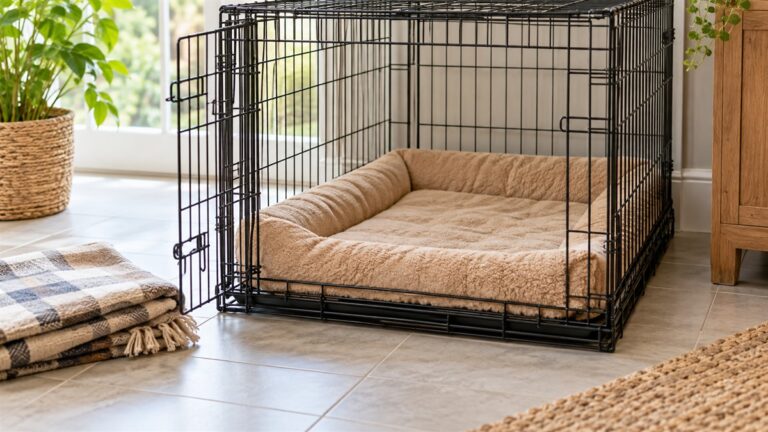
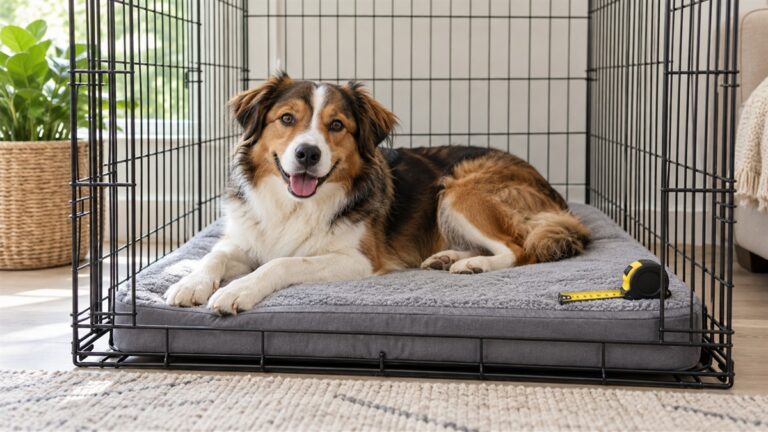
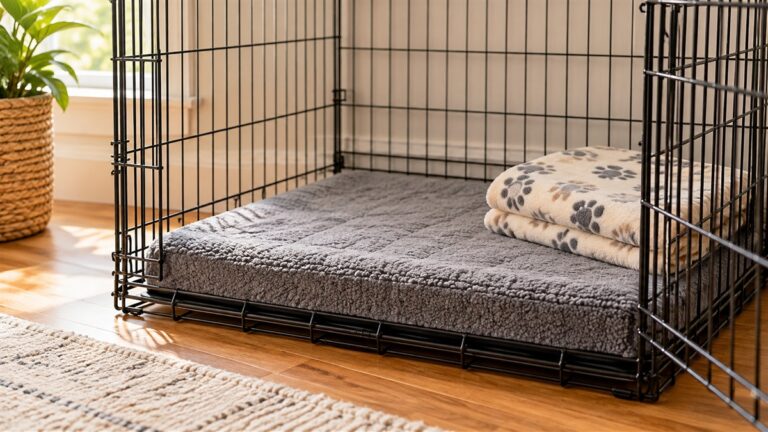
Before you begin, the crate itself matters. Whole Dog Journal says crates “should be just large enough for your dog to stand up, turn around, and lie down comfortably.” A crate that is too large can work against house training. The AKC explains that if a crate is too large, a puppy “can eliminate in one end and sleep in the other.” The ASPCA says the same thing in its own words: if the crate is larger, the dog may pee or poop at one end and sleep at the other. For a puppy, that often means buying a crate sized for the adult dog and using a divider until the puppy grows.
Collar placement is the next detail. The AKC’s step-by-step guide says, “whenever your dog is in their crate, you should remove their collar.” Its nine-step guide repeats the point: “always take your dog’s collar off when they’re in the crate.” Take the collar off before the dog goes in and put it back on when the dog comes out.
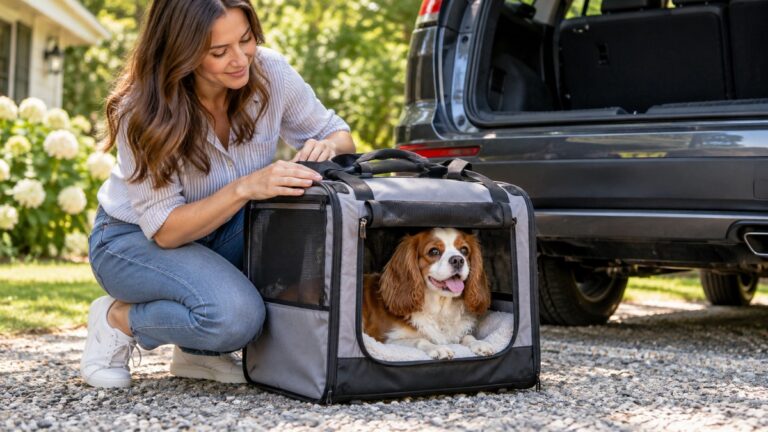
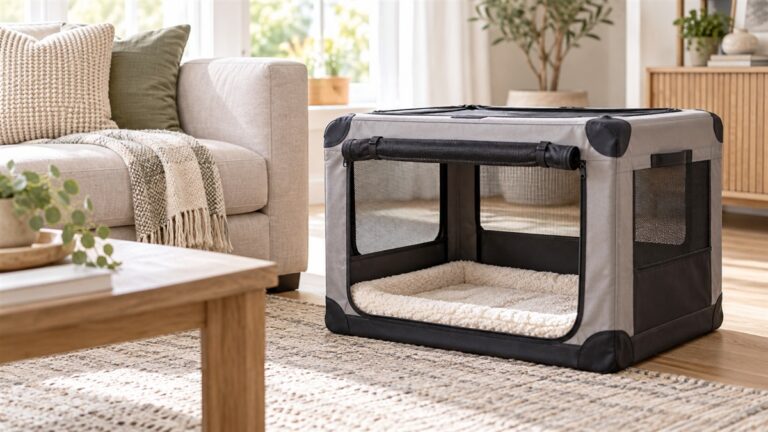
Crate style also affects how a dog settles. The AKC notes that “some dogs prefer a wire crate so they can see the world around them, while others settle better in a darker, more den-like crate.” If you are unsure which type suits your dog, watch which spot your dog chooses in the room and how calm the dog looks inside.
The step-by-step method
Step 1: Door open, treats just inside
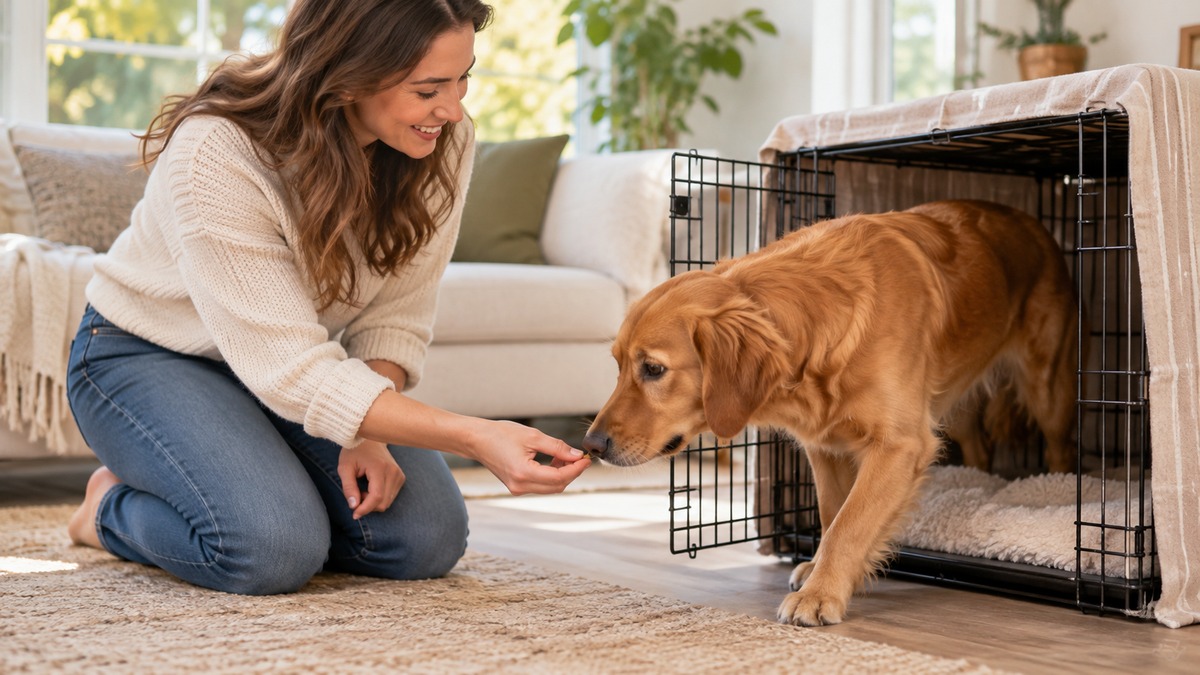
Put the crate in a quiet spot where your family spends time, so the dog does not feel cut off. Keep the door open. Toss a treat just inside the crate and wait for your dog to eat it. The ASPCA suggests starting with a hungry, recently exercised dog and a large supply of treats cut into pea-sized pieces or smaller, because small treats let you repeat the step many times without filling the dog up.
Do not push the dog in and do not drag the dog by the collar. The goal is for the dog to walk in by choice. If your dog will not approach at all, stay at this step and toss treats closer to the door for several short sessions.
Step 2: Move the treats farther back
Once your dog eats treats just inside without hesitation, move the treat a little deeper. The ASPCA describes this as a repeated pattern: “Repeat several times, each time tossing the treat a little further inside the crate.” Your dog will eventually step all the way in to get the last treat. Keep each session short, and stop while your dog is still happy about the game.
Step 3: Add a cue
Once your dog goes in reliably, add a cue. The ASPCA suggests words such as “go to your bed” or “kennel up,” said as the dog moves toward the crate. Give the treat only after the dog enters. Over time, the cue alone should be enough to send your dog toward the crate. The sources we opened do not say how long this takes, so watch your dog’s response rather than the calendar.
Step 4: Praise every entry
Each time your dog goes into the crate, praise your dog. The ASPCA’s wording is direct: “When the dog runs into their crate, praise them, and then toss in a few extra treats!” The extra treats are useful because they give your dog a reason to stay for a moment instead of leaving at once.
Step 5: Short closed-door sessions
This is the step where many owners move too fast. Whole Dog Journal says to close the door only when the dog “is staying in the crate with the door closed for at least 10 seconds without any signs of anxiety.” When that happens, close the door and latch it, then step away from the crate. Stay in view at first, so your dog can see you and does not panic. Open the door again before your dog shows signs of stress.
Build the time gradually. Start with a few seconds, then a little longer, then a little longer again. The AKC’s step-by-step guide has a section on building time inside the crate, and it follows the same logic: short, successful sessions first, longer ones later.
Step 6: Longer stays with a chew
When your dog can stay calm between treats for a while, switch to something that lasts. The ASPCA advises this: “When your dog can remain calm for 10 to 15 seconds between treats, switch to giving a super yummy chew, such as a stuffed toy or a chew bone, to enjoy for longer periods in the crate.” A chew gives your dog something to do during longer closed-door time, which is what most owners need when they leave the house.
Step 7: Leave the door open when you are not training
Whole Dog Journal’s advice is simple: “When you are not actively training, leave the crate door open.” An open door lets your dog use the crate for rest on its own terms, which is the purpose the AKC describes: a space for relaxation.
Common mistakes
Closing the door too soon. The 10-second rule from Whole Dog Journal is a minimum before you latch the door, not a goal to rush past. Going back a step costs little, while a panicked dog can take longer to recover.
Leaving a dog in the crate for long periods early on. The ASPCA says that “crating your dog when left unsupervised or overnight should only be the norm until your dog has learned where to eliminate and what not to chew.” That sentence sets the order: learn the crate first, then build toward longer absences.
Crating a dog who is wound up. The AKC trainer quoted in its nine-step guide says it is unfair to expect a dog “to relax or sleep if there’s a lot of commotion or excitement.” Start a session when your dog is already calm or sleepy, not right after play or a visitor arrives.
Leaving the collar on. As noted above, the AKC says to remove the collar whenever the dog is in the crate.
Letting the crate get too big. A crate much larger than the dog can let a puppy use one end as a toilet. Use a divider or a smaller crate if needed.
Ignoring signs of panic. The AKC warns that “some dogs with separation anxiety may panic in a crate and risk injury while trying to escape.” If your dog claws at the door, tries to dig out, or hurts itself, stop closed-door sessions, go back to the open-door steps, and ask a vet or trainer for help.
How we chose these steps
We wanted a method that is easy to follow and that matches what the main sources say, not a set of tricks. We opened four pages on 2026-10-23: the ASPCA crate introduction page, the AKC step-by-step crate guide and its nine-step guide, and Whole Dog Journal’s crate training tips. We added PetSafe’s crate tips as a fourth point of comparison. We checked each quoted sentence against the text of the page it came from before we used it.
Where the sources agreed, we kept the step. The open-door start, the treats moved farther back, the cue, the praise, the short closed-door sessions and the longer chew all show up in more than one source, though the wording differs. Where a source gave an unclear figure or a claim we could not confirm on the page itself, we left it out. This guide does not list products and does not rely on prices, ratings or seller claims.
What we could not verify
- A fixed number of days or weeks. The sources we opened do not give one number for how long introduction takes. Progress depends on the dog, so move on when your dog is ready.
- Crate covers and bedding brands. The pages we opened do not compare crate covers, and this guide does not recommend any product.
- Every possible cue word. The ASPCA gives two examples. The sources do not say which word works best.
- A full list of stress signs. The pages we opened name panic and risk of injury, but they do not give a complete checklist of signs for every dog.
- Whether the method fits every breed and age. The sources describe general dogs. They do not address breed-specific needs in detail.
FAQ
Can an adult dog learn to use a crate?
Yes, according to the ASPCA. It says adult dogs without previous crating experience “can learn to be comfortable in a crate,” although crates are ideally introduced when dogs are puppies. Use the same steps and expect the process to be slower if the dog is unfamiliar with confinement.
How long should my dog stay in the crate while I am away?
The ASPCA says crating a dog when it is unsupervised or overnight should only become the norm after the dog has learned where to eliminate and what not to chew. The sources we opened do not give one time limit for every dog. Build up from short absences, and check how your dog behaves when you return.
Should the crate be used as a punishment?
No. The AKC describes the crate as a space that can help a dog relax, saying “a crate can also provide an adult dog with space for relaxation and time away from stressful situations.” Using it as a punishment works against the calm association the steps above are building.
What if my dog panics in the crate?
Stop closed-door sessions and return to the open-door steps. The AKC warns that some dogs may panic in a crate and risk injury while trying to escape. Ask a vet or a certified trainer for help if the panic continues, because the sources we opened do not offer a fix for severe distress.
Does my dog need a crate cover?
The sources we opened do not say whether a cover helps or hurts. If you use one, watch whether your dog settles better with the cover on or off.
Is a crate a safe place for a dog to sleep?
The ASPCA says dogs often keep enjoying their crate as a safe place to sleep, even after they no longer need it for training. Keep the crate free of loose items your dog could chew, and remove the collar before the dog goes in, as the AKC advises.
Bottom line
Introduce the crate at your dog’s pace: door open, treats just inside, treats moved farther back, a cue, praise for every entry, and only short closed-door sessions after the dog stays calm for about 10 seconds. If your dog panics or tries to escape, go back a step and get professional help rather than pushing ahead.
Next steps
Once your dog is settled, you can read our guides on blankets over a dog crate at night and setting up a puppy crate with no bedding. Both cover the crate after the introduction steps are finished.
Sources
- https://www.aspca.org/node/66489
- https://www.akc.org/expert-advice/training/crate-training-step-by-step/
- https://www.akc.org/expert-advice/training/how-to-crate-train-your-dog-in-9-easy-steps/
- https://www.whole-dog-journal.com/totw/crate-training-tips/
- https://www.petsafe.com/blog/crate-training-tips/