Best Way to Clean a Dog Harness, by Material
As an Amazon Associate we earn from qualifying purchases. Details
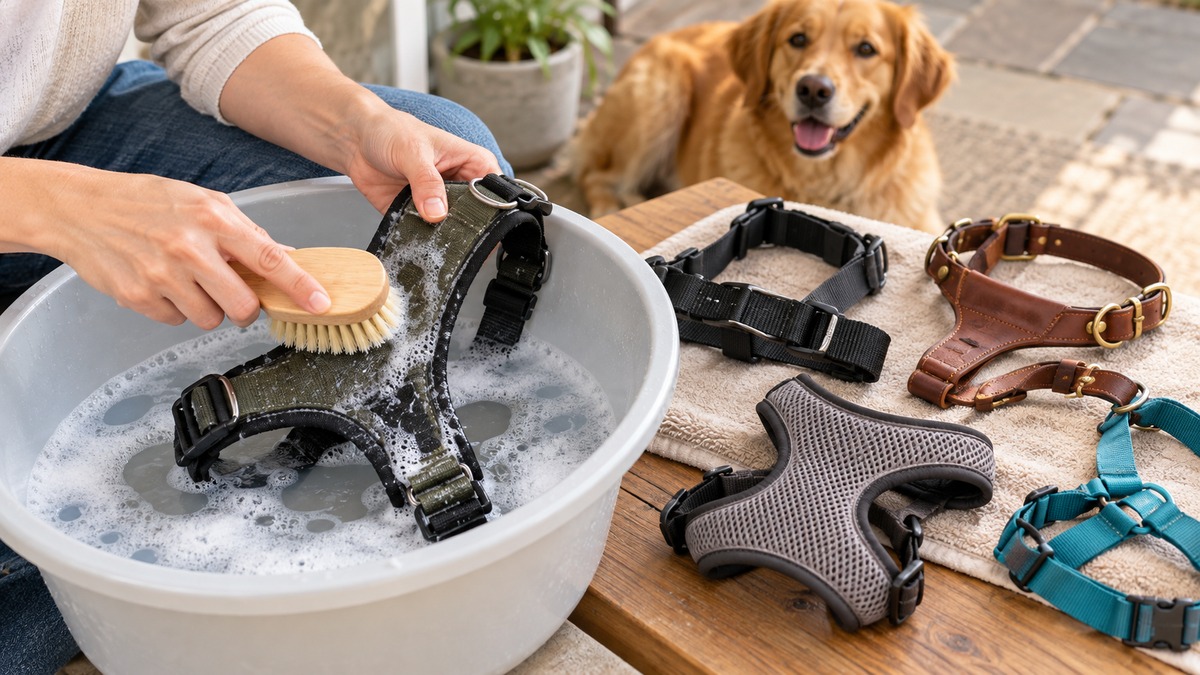
The best way to clean dog harness gear is to match the method to the material. The AKC harness guide says the cleaning method depends on the material. For nylon and neoprene, use a mild detergent in warm water, soak the harness, rinse it well and let it air dry. For mesh, hand wash it gently. For leather, wipe it with a damp cloth to loosen dirt, and never use furniture or shoe cleaners. Pay extra attention to the Velcro closures, because fur can get stuck in them.
Quick answer
- Clean the harness when it gets dirty or smelly, especially after swimming or rolling in mud. The AKC harness guide gives both of these as reasons to clean it.
- Nylon and neoprene: mild detergent in warm water, soak, rinse well, and air dry.
- Mesh: hand wash gently to remove dirt.
- Leather: wipe with a damp cloth. Keep furniture and shoe cleaners away from it, because the AKC collar guide says those chemicals can be toxic for dogs.
- Clean the closures too. The AKC harness guide says fur and other materials can get stuck in Velcro hooks and loops and make the harness less secure.
Why harness cleaning is different from collar cleaning
A harness sits on the chest and body, not just the neck, so it is a different item to clean than a collar. The AKC harness guide notes that harnesses can get dirty and smelly with use. It also says it is important to keep them clean, especially if your dog goes swimming or rolls in the mud.
The guide also points out that harnesses have more than one closure. Each closure is a place where dirt and fur can collect, which is why this guide spends time on the closures. A harness that is clean on the outside but dirty at the buckles is not fully clean.
Step 1: Identify the material
The AKC harness guide describes several common harness materials, and each has its own care rule. Check the label first if your harness has one, then use the method below.
| Harness material | What the AKC harness guide says | Notes |
|---|---|---|
| Nylon | Mild detergent in warm water, soak, rinse, air dry | Durable and lightweight |
| Neoprene | Mild detergent in warm water, soak, rinse, air dry | Padded, and can be soaked in water |
| Mesh | Can be gently hand washed to remove dirt | Breathable, but less padding |
| Leather | Wipe with a damp cloth to loosen dirt; the guide also mentions a water, vinegar and baby soap mixture | Needs regular maintenance |
The guide does not name a single cleaner for every material. It describes one method for nylon and neoprene, one for mesh and one for leather, so the table reflects that structure.
How to clean a nylon harness
Nylon is the most common harness material. The AKC harness guide gives this method for nylon and neoprene harnesses:
- Mix a mild detergent into warm water. The guide suggests a detergent of the kind used for handwashing clothing.
- Put the harness in the solution and soak it.
- Rinse the harness well.
- Let it air dry.
The AKC leash guide takes a slightly different approach for nylon leashes, using hot water with a little dog shampoo. Both guides describe soaking, rinsing and air drying, so the core steps are the same. The sources we opened do not say which temperature is best for a nylon harness, so use warm water unless the care label says otherwise.
Some nylon items can go into a washing machine, but only when the manufacturer’s tag says so. The AKC leash guide makes that point for leashes, and the same rule is the safe default for harnesses. Without a label that allows machine washing, use hand washing.
How to clean a neoprene harness
The AKC harness guide describes neoprene harnesses as padded for comfort and able to be soaked in water. That is useful for dogs that swim. It also says neoprene is not breathable and may trap heat and moisture.
For cleaning, neoprene follows the same method as nylon: a mild detergent in warm water, a soak, a thorough rinse and air drying. Make sure the harness is fully dry before you use it again. The guide does not give a drying time, so this guide does not give one either.
How to clean a mesh harness
Mesh harnesses are breathable and lightweight, according to the AKC harness guide. The guide also notes that they are less durable and have less padding, which can lead to chafing or rubbing against the skin. That is a reason to be gentle when you clean them.
The guide says mesh harnesses can be gently hand washed to remove dirt. Hand washing is the approach the sources support for mesh.
How to clean a leather harness
Leather needs different handling. The AKC harness guide says you can wipe leather with a damp cloth to loosen dirt. For a homemade cleaning and conditioning option, the guide suggests a mixture of water, vinegar and baby soap. The guide also says leather needs regular maintenance to avoid drying and cracking.
The AKC collar guide warns against leather cleaners made for furniture or shoes, because the chemicals can be toxic for your dog. The same caution applies to a leather harness, since it also sits on the dog’s body. Choose the gentle, homemade option the harness guide describes, and do not soak the leather.
How to clean the closures
Closures are where a harness most often needs attention. The AKC harness guide says that whether the closures are Velcro, plastic or metal, it is a good idea to inspect and clean them regularly. It also says to check the hardware for cracks or areas where the fabric may be frayed or damaged.
Velcro needs particular care. The guide notes that fur and other materials can get stuck in the hooks and loops, which makes the harness less secure. Pick the hair out of the hooks and loops before you wash the harness. Then check that the Velcro fastens properly after it dries.
The AKC harness guide points to cracks and fraying as the damage to check for. A harness with visible damage should be checked before it is used again, and the sources do not say whether cleaning changes that.
Drying the harness
Air drying is the method the AKC harness guide describes for nylon and neoprene. The guide does not give a drying time, so the practical rule is to let the harness dry completely before it goes back on the dog. Hang it or lay it flat, and make sure the straps and the inside of the padding are dry.
The guide does not say how to dry leather or mesh specifically, so for those materials stick to the cleaning methods above and check the care label for drying instructions.
How often to clean the harness
The AKC harness guide does not give a fixed schedule. It says to keep harnesses clean, especially after swimming or after rolling in mud. In practice, that means cleaning the harness after any of those events, and checking the closures during regular grooming. The sources we opened do not give a set number of weeks or walks between cleanings.
Common mistakes
- Skipping the closures. The AKC harness guide says to inspect and clean them regularly.
- Letting fur build up in the Velcro. The guide says fur can get stuck in the hooks and loops and make the harness less secure.
- Putting a leather harness in water. Soaking is the step the harness guide’s leather method avoids.
- Using furniture or shoe cleaners. The AKC collar guide warns that those chemicals can be toxic for dogs.
- Putting a damp harness back on. Let it dry fully first.
- Machine washing a harness without checking the label. The AKC leash guide says machine washing applies only when the manufacturer’s tag allows it.
How we chose
We opened three independent AKC pages on 2026-10-23: the harness guide, the leash guide and the collar guide. We read the text of each page and checked every quoted sentence against the page text before using it. We did not use product listings, harness brand pages or retailer guides as sources for any cleaning step. This guide does not recommend any harness.
What we could not verify
- The sources we opened do not give a drying time for any harness material.
- The sources do not name a detergent brand, a water temperature for every material, or a soak time.
- The sources do not say how often to clean a harness beyond the swimming and mud cases.
- The sources do not describe how to clean reflective trim or added accessories. Check the care label for those parts.
- The sources do not say whether a specific harness is machine washable. Read the manufacturer’s tag, which is the only source that can answer that question for a given harness.
- The sources do not give a treatment for skin irritation under a harness. If the skin looks red, sore or raw, ask your veterinarian.
FAQ
How often should I clean my dog’s harness?
The AKC harness guide says to keep harnesses clean and says to clean them after swimming or rolling in mud. The sources do not give a fixed schedule beyond that, so check the harness whenever it looks dirty or smells.
Can I put a dog harness in the washing machine?
The sources we opened say machine washing applies only when the manufacturer’s tag allows it. Without that instruction, hand washing in a mild detergent and warm water is the safer method for nylon and neoprene.
How do I clean the Velcro on a dog harness?
The AKC harness guide says fur and other materials can get stuck in Velcro hooks and loops, which makes the harness less secure. Pull the strips apart, pick out the hair, and check that the Velcro fastens properly after the harness dries.
What can I use to clean a leather dog harness?
The AKC harness guide suggests wiping leather with a damp cloth and, for a homemade option, a mixture of water, vinegar and baby soap. The AKC collar guide warns against furniture and shoe cleaners because their chemicals can be toxic for dogs.
Is it safe to soak a dog harness in water?
For nylon and neoprene, the AKC harness guide describes a soak in mild detergent and warm water, followed by a rinse and air drying. Leather should not be soaked, according to the AKC leash guide.
What if my dog’s skin looks irritated under the harness?
The sources we opened do not describe treatment. Stop using the harness until you have checked it, and ask your veterinarian to look at the skin if redness, soreness or rawness continues.
Bottom line
Match the method to the material: nylon and neoprene in mild detergent and warm water, mesh by gentle hand washing, and leather with a damp cloth. Clean the Velcro and check the closures every time, and let the harness dry completely before it goes back on. For more on harness choices, read best rated dog harness for large dogs or best adjustable dog harness for growing puppy. If you need a harness for pulling, best dog harness for cart pulling covers that use case.
Sources
- AKC, How to Find the Right Dog Harness for Your Dog: cleaning method by material, mesh hand washing, leather wipe-down, Velcro hooks and loops, closure and hardware checks.
- AKC, Dog Leashes 101: Choosing the Right Dog Leash for Your Dog: hot water and dog shampoo for nylon, machine washing only if the tag allows it, leather not soaked.
- AKC, Finding and Choosing the Right Dog Collar for Your Dog: leather cleaners to avoid because their chemicals can be toxic for dogs.