Best Dog Harness for Small Dogs That Pull: Fit and Front-Clip Guide
As an Amazon Associate we earn from qualifying purchases. Details
The best dog harness for small dogs that pull is one that fits the chest and neck first and gives you a front leash point second. Pulling is the problem most owners bring to a harness search, but a harness that does not fit will not help, whatever its label says. This guide explains how to measure a small dog, why AKC treats the harness as a safer choice than a collar when a dog pulls, and how to read the no-pull claims on a listing. It compares two harnesses that describe no-pull features, and it shows the size questions you need to settle before you order.
Quick answer
Measure your dog’s chest and neck, then choose a harness whose stated size covers those numbers. AKC says a harness can prevent potential throat damage if a dog pulls, which is why a harness is usually the safer choice for a puller. Both picks below describe a no-pull feature, but each has a size conflict on its listing. One lists a small size with a weight range that contradicts it, and the other lists a large size with smaller sizes in its bullets. Confirm the size with the maker before you order. If your dog pulls hard, use a front leash point and a leash of a suitable length, and train with short, rewarded sessions.
What pulling does to a small dog’s gear
A small dog that pulls puts strain on whatever holds it. A collar pulls on the neck, and AKC notes that a harness can prevent potential throat damage when a dog pulls. That is the main reason a harness is the common recommendation for pullers, and it is why the fit matters so much.
Pulling also changes how a harness moves. A harness that is too loose can shift toward the throat or slide back over the ribs when the dog lunges. A harness that is too tight can be painful, especially in hot weather. AKC makes both points, and a fit check after each walk is a simple way to catch a problem early.
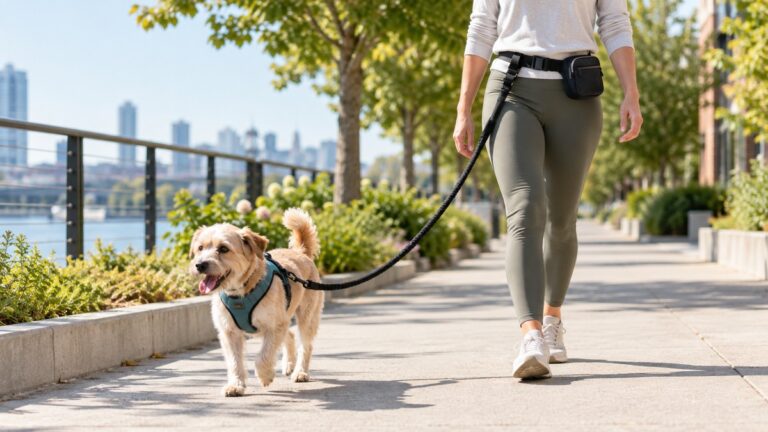
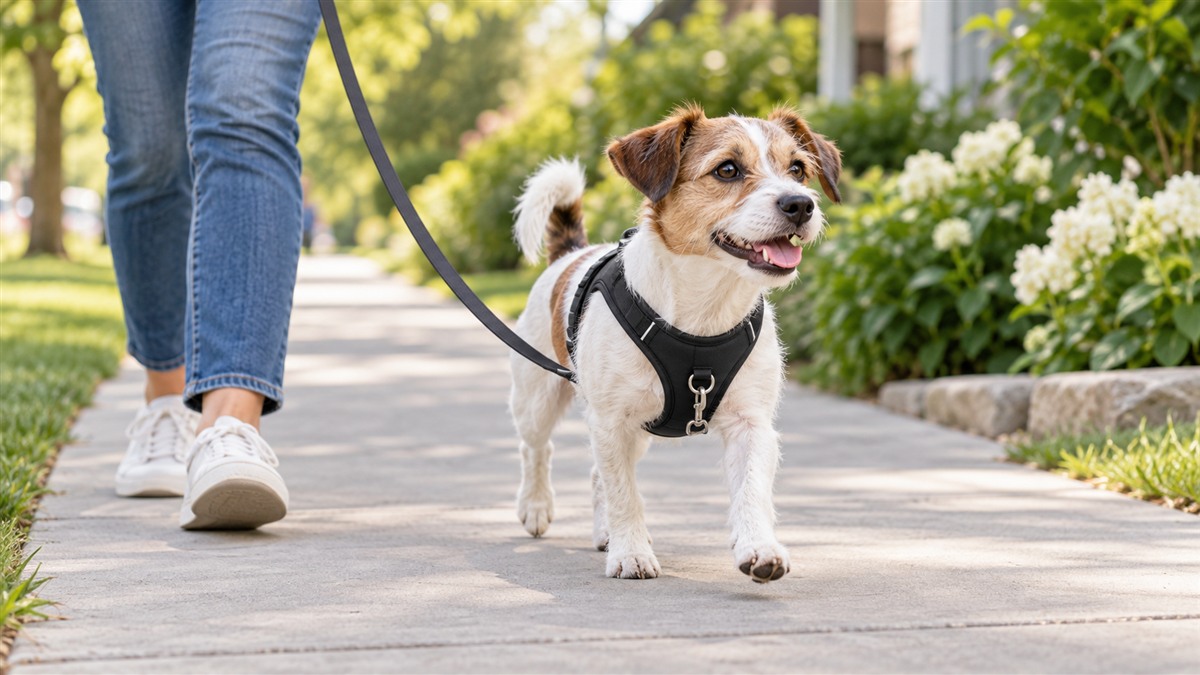
A front leash point is the main no-pull design on most of these listings. A ring on the chest lets the leash guide the dog’s front toward you, rather than letting the dog drive forward. The listings describe that feature in different words, so read the bullets for the exact claim and the location of the ring.
Measuring a small dog for a harness
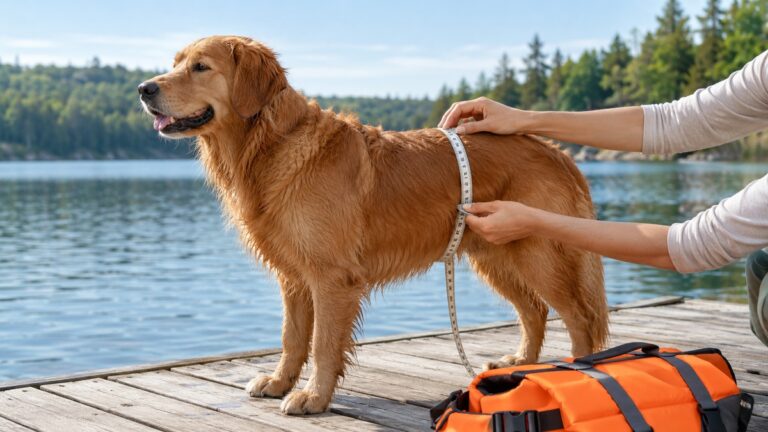
Measure the chest first. Chest girth is the measurement around the largest part of the dog’s rib cage, usually just behind the front legs. AKC describes it as typically the most important measurement for clothing and harnesses. Keep the tape snug but not tight, and slip two fingers between the tape and the dog.
Measure the neck next. Most harnesses rely on a neck strap as well as a chest strap, so a neck figure helps you check that both straps can reach the right size. A string, ribbon or shoelace can replace a tape. Mark the point where the string meets itself, then lay it flat against a ruler.
If your small dog also slips out of its harness, the guide to harnesses for small dogs that escape covers that fit problem. Write both numbers down before you compare listings. Compare the chest number with the listing’s chest range, and the neck number with its neck range. If a listing gives only a size label, look for a chart or a figure before you buy.
Measure the dog standing still. A dog that is moving, sitting or curling up gives a reading that is too large or too small. Repeat the measurement once to check it.
Front leash point, back ring and leash choice
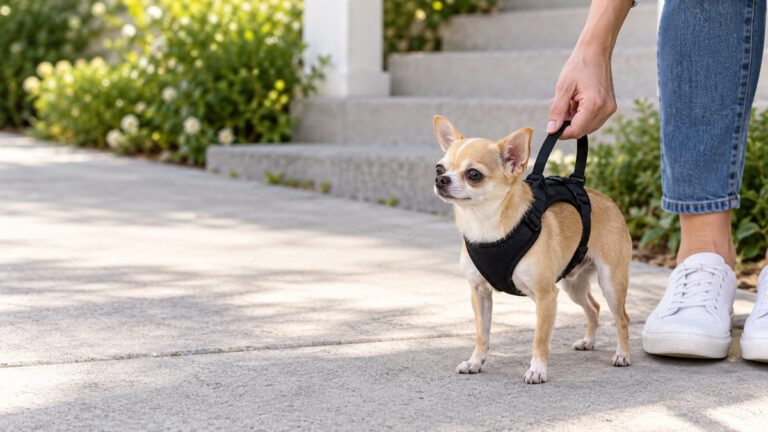
A front chest ring is the no-pull feature to check first. It helps guide a pulling dog’s front toward you. For a dedicated small-dog option, see the best small dog no pull harness guide. A back ring suits calmer walks, and some harnesses offer both. Choose the ring that matches how you walk your dog, and test the clip at home before you go out.
AKC advises avoiding retractable leashes and choosing a lightweight six-foot leash for loose-leash training. A retractable leash gives a puller room to build speed, and it can snap back at the harness. A fixed leash keeps the dog close and gives you a steadier grip.
AKC also suggests beginning leash training as soon as you bring a puppy home, because leash walking is a trained skill. For a dog that already pulls, the same idea applies. Use a marker word or a clicker, follow it right away with a treat, and reward eye contact and attention while the leash is attached.
A harness does not replace training. It gives you a safer tool to use while the dog learns to walk beside you. Short sessions with rewards work better than long, frustrating walks.
Reflective trim and visibility
Reflective trim helps you see a small dog at dusk. It does not produce light on its own.
High-visibility color helps in daylight. Yellow and orange are the most common high-visibility colors, and the listings here use several other colors. Choose one you can see easily on your dog’s coat and on the walks you take.
Do not rely on visibility alone at night. Add a separate light to the leash or the harness if you walk after dark.
Materials and washing
Nylon is a synthetic polymer with amide linkages, and it can be melt-processed into fibers and films. Many harnesses use nylon webbing, and the listing states the material when it uses it. Check the material against your dog’s activity and the care line before you buy.
If you want to compare a different style of pulling gear, the best nose harness for dogs that pull guide covers that product type. Polyester is also common in harness webbing and lining. Polyesters are used extensively in clothing, and most commercial polyesters are not biodegradable. That tells you about the material’s origin, not about how a harness will handle pulling.
Care matters. Read the care line on the listing before you order. Several harnesses in this group say hand wash only, and some say machine wash. Follow the line you find on the listing you buy, and let the harness dry fully before you use it again.
How to choose: rules for a small puller
Choose a harness whose stated chest and neck ranges cover your dog’s measurements with room to adjust. A common rule of thumb is to avoid a size at the very edge of its range, because a dog that gains weight or fills out may outgrow it.
Choose a harness with a front chest ring if your dog pulls toward the front. Check where the ring sits on the listing, and test the clip on a dry dog before the first walk.
Choose a harness with a stated weight range if your dog is near the lower end of the scale. If the listing gives a weight range that conflicts with its size field, treat both as unconfirmed.
Choose a harness whose size field matches the size you intend to buy. If the size field and the bullets disagree, ask the seller before you order, and do not rely on the label alone.
Skip any harness whose size field or weight range leaves you unsure which size applies to your dog. Skip a harness whose neck strap cannot be tightened enough to hold the harness in place. Skip a harness whose care line does not match how you will wash it.
Use the product cards below to compare the two picks. Each card shows the specs the listing states, the pros and cons that come from those specs, and who should skip it.
1. ShawnCo Essential Dog Harness, No-Pull Pet Vest (Oceanic Blue,S) (Small size with three leash points)
Specs from the listing (checked 2026-10-11):
- Size: S
- Dog Breed Size: Small
- Weight Range: 50 lbs and above
- Breed Recommendation: Large Breeds
Pros
- The bullets describe three reinforced rings for leash attachment points, which gives more than one way to walk the dog
- The bullets say the harness goes on and off in under 3 seconds, and the chest and belly straps are both fully adjustable
- The listing names a reflective chest strap and reflective trim lining
Cons
- The Weight Range field reads 50 lbs and above, which conflicts with a size S and a Dog Breed Size of Small, so the listing gives no reliable small-dog weight range
- The Breed Recommendation field says Large Breeds, while the item highlight says for small, medium and large dogs
- The bullets say the harness fits small, medium and large dogs, but the specs give no chest or neck range
Best for: Owners of a small dog that pulls who want three leash points on a size S harness, and who will confirm the weight field with the seller.
Skip if: Skip it until the seller confirms whether the size field or the weight field applies to your dog, or if you need a chest range in the specs.
View on Amazon (affiliate link)
2. Annchwool No Pull Dog Harness with Soft Padded Handle,Reflective Strip Escape Proof and Quick Fit (No-pull front strap, XS to XL sizes)
Specs from the listing (checked 2026-10-11):
- Size: L
- Breed Recommendation: Small Breeds
- Dog Breed Size: Large
- Material Type: Nylon
Pros
- The bullets say the front strap helps prevent the dog from rushing, and the title names a no-pull harness with a soft padded handle
- The bullets say the harness comes in five sizes, with XS 1 inch wide and S through XL 1.5 inches wide
- The listing names an O-ring and a D-ring that can hold a leash, ID tags and similar items
Cons
- The Size field reads L, the breed recommendation reads Small Breeds, and the bullets describe XS and S, so the listing does not confirm one size
- The closure type field reads n, so the specs do not state a closure type
- The specs give no weight range and no chest range, so the size must be checked against the bullets
Best for: Owners who want a no-pull front strap in a harness that comes in XS through XL, and who will confirm the size with the maker first.
Skip if: Skip it if you need the Size field to match the size you buy, because the Size field reads L.
View on Amazon (affiliate link)
Worked example: harness weight and strap width
The ShawnCo harness’s item weight is 5.28 ounces and the Annchwool harness’s is 5.6 ounces, so the Annchwool is 0.32 ounces heavier (5.6 – 5.28 = 0.32). The Annchwool XS is 1 inch wide and its S through XL sizes are 1.5 inches wide, so the wider sizes are 0.5 inch broader (1.5 – 1 = 0.5). The ShawnCo Weight Range field reads 50 lbs and above, so that field alone rules it out for a dog under 50 lbs.
Common mistakes
- Buying on the words no pull. A no-pull label does not give a size, and the fit decides whether the harness works.
- Measuring a dog that is moving. A moving dog gives a reading that is too large or too small.
- Ignoring a conflicting weight range. If the weight field and the size field disagree, the listing does not tell you which applies.
- Using a retractable leash with a puller. AKC advises against retractable leashes for leash training.
- Skipping the fit check. A harness that shifts toward the throat during a pull can cause problems, so check the fit after the first walk.
- Choosing a harness that does not match the dog’s size. Read the size field and the bullets together before you add to cart.
Fit check at home
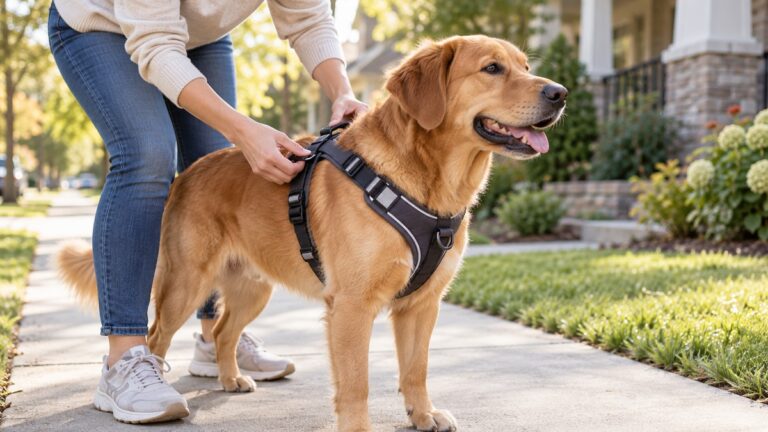
Fit the harness on a dry dog before the first walk. Fasten every buckle, then check that you can slip two fingers under each strap. Check the chest strap and the neck strap separately.
Watch the dog walk a few steps and sit down. A harness that slides up toward the throat or back over the ribs needs adjusting or a different size. AKC notes that a harness that is too big can let a dog wiggle out, and one that is too tight can be painful, especially in hot weather.
Repeat the check after the first walk and after any rain or wash. Straps can stretch, and a harness that fit on a dry day may fit differently after use.
FAQ
What is the best dog harness for small dogs that pull?
The best harness is the one whose stated size fits your dog and whose front leash point suits how your dog pulls. Measure the chest and neck, then compare the listing’s ranges before you choose.
Is a harness better than a collar for a dog that pulls?
AKC says a harness can prevent potential throat damage if a dog pulls. A collar puts the pull on the neck, so many owners of pullers choose a harness for that reason.
What measurement do I need for a small dog harness?
Chest girth is the main measurement, and neck girth is the second. Measure both while the dog stands still, and compare them with the listing’s ranges.
Should I choose a front clip or a back clip?
A front clip helps guide a pulling dog’s front toward you. A back clip suits calmer walks. Choose the one that matches your dog’s habit, and test the clip before the first walk.
Can I use a retractable leash with a no-pull harness?
A fixed leash gives you steadier control.
Does reflective trim make a small dog visible at night?
Reflective trim helps when a light shines from near the viewer. It does not light the dog on its own, so add a separate light for walks after dark.
How do I stop a small dog from pulling?
Training helps more than the harness alone. Use a marker word or a clicker, follow it with a treat, and reward eye contact while the leash is attached. A harness gives you a safer tool while the dog learns.
Bottom line
Measure your small dog’s chest and neck, choose a harness whose listed size fits both figures, and check the front leash point before you order. Confirm any size or weight conflict with the seller, because both picks in this guide have one. A harness is the safer choice for a puller, and training is what changes the walk. If the listing does not give a clear size, keep looking rather than guessing.
Sources
- AKC, dog harness vs collar: a harness can prevent potential throat damage if a dog pulls, and a harness that is too big can let the dog wiggle out
- AKC, teach your puppy to walk on leash: avoid retractable leashes, choose a lightweight six-foot leash, and reward with a marker word or clicker
- AKC, measuring dog gear: chest girth is typically the most important measurement for clothing and harnesses
- Wikipedia, retroreflector: a retroreflector reflects light back toward its source with minimal scattering