Best Dog Cooling Vest: Seven Listings Compared by Cooling and Fit
As an Amazon Associate we earn from qualifying purchases. Details
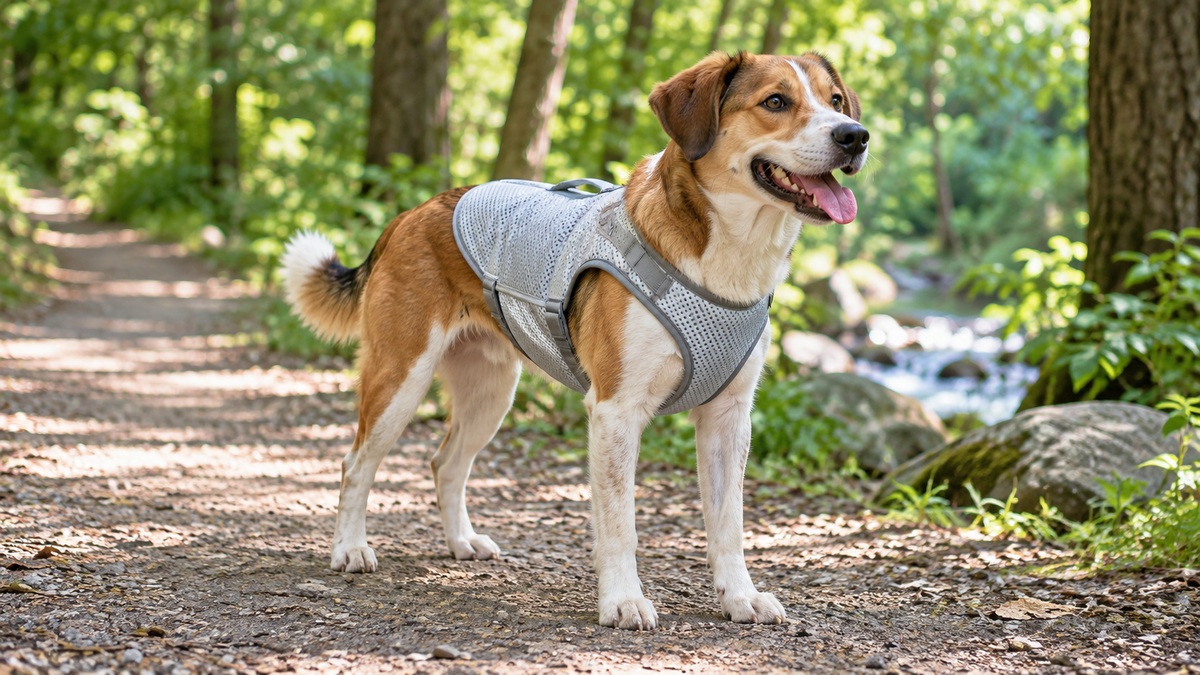
The best dog cooling vest is the one whose cooling method suits your dog’s routine and whose chest measurement matches your dog. A person typing best dog cooling vest wants to know which vest keeps a dog cooler on a warm walk, and whether a freezer or ice pack is safe to use. This guide compares seven cooling vest listings from six brands by the method each one uses, the size and weight each one gives, and what the veterinary and American Kennel Club sources we opened say about cooling. Most of the listings rely on soaking and wringing, one uses a gel-pack insert, and one uses a frozen insert.
Quick answer
- Soak-and-wring vest for an active dog: the SGODA vest and the Spark Paws vest both describe evaporative cooling and both list a Large size.
- Dry option with an insert: the HODDOGS harness is the only listing here that uses gel packs and names a Small size.
- Lightest vest: the DOGZSTUFF listing gives the lowest weight in this set, 3.87 ounces.
- Before you freeze anything: the AKC heatstroke page says to use tepid or cool water, not ice or extremely cold water, so read that advice before you use a frozen insert or a freezer step.
How cooling vests work and where they fall short
Every vest in this guide lowers heat in one of three ways. Most of the listings use evaporation. You soak the vest, wring it out and put it on the dog, and the water that dries from the fabric carries heat away. The SGODA bullets describe this as the “phase transition from liquid water to water vapor.” The second method is a gel pack held against the skin. The HODDOGS listing says its gel vest “cools by direct contact, not evaporation.” The third is a frozen insert in a pocket, which the LUCOLOVE ice-pack vest uses.
Evaporation depends on the air around the vest. The HODDOGS bullets say evaporative vests “quit the moment humidity climbs,” which is the seller’s claim about the other method rather than a test result. The sources we opened do not measure how much any evaporative vest cools a dog in humid air, so treat that point as a question to weigh rather than a settled fact.
A vest does not change how a dog’s body sheds heat. Cornell’s heatstroke page explains that “Unlike humans, dogs only have sweat glands on their paws and must rely on panting to cool down.” The same page says that “Short-muzzle breeds (also known as brachycephalic breeds), as well as older or overweight dogs are at a higher risk for heat stroke.” A cooling vest can help with part of that load. It does not replace shade, water or rest.
What the listings say, side by side
Table 1 sets out the cooling method, the size or breed range and the item weight that each listing gives in its bullets or specification table. The weights come from the specifications, which do not say whether gel packs or inserts are included.
| Listing | Cooling method (per bullets) | Size (per specifications) | Item weight (per specifications) |
|---|---|---|---|
| HODDOGS gel-pack harness | Gel ice packs, no soaking | Small | 12.3 ounces |
| SGODA cooler jacket | Soak in water, wring out, evaporative | Large, chest 24.5 to 28 inches | 4 ounces |
| Spark Paws vest | Evaporative; the bullets also mention the freezer | Large breed | 5.6 ounces |
| LUCOLOVE two-layer vest | Soak and wring, no ice packs | Large | 5.3 ounces |
| LUCOLOVE vest with ice pack | Soak, plus a frozen insert in a pocket | Large | 7.7 ounces |
| DOGZSTUFF cooling shirt | Soak and wring, no gel packs or freezer | Large breeds | 3.87 ounces |
| FUAMEY cooling jacket | Soak and wring, or put it in the fridge for 15 minutes | Large, all breeds | 5 ounces |
The gap between the heaviest and the lightest listing is 12.3 minus 3.87, which is 8.43 ounces. That is a small difference on a large dog and a noticeable one on a small dog, so weigh the vest against your own dog before you choose the gel-pack option.
Cooling method: what the sources say about ice and water
The most important detail in this set is the water temperature, and the sources do not agree with some listing instructions. The AKC heatstroke page answers the question directly: “No. Use tepid or cool water instead. Extremely cold water can cause shock and worsen the situation.” The University of Illinois veterinary column gives the first step in the same direction: “If you suspect your dog is experiencing heat stroke, your first step should be to cool the dog down with cool water.” It adds: “Ideally, place a fan near the wet dog to accelerate the cooling.”
Several listings ask for colder water than that. The SGODA bullets say to soak the vest in cold water. The Spark Paws bullets say to place the vest in the freezer for extra cooling, and the FUAMEY bullets say to put the vest in the fridge for 15 minutes. The HODDOGS gel packs and the LUCOLOVE ice-pack vest use chilled or frozen inserts. None of those listings gives a water or insert temperature for your dog, and the sources we opened do not cover vest inserts by name.
The practical reading is this. Start with tepid or cool water, add a fan, and treat a frozen insert or a freezer step as something to settle with your vet before you rely on it. The sources give no basis for a colder start.
Fit, size and the short-muzzle question
A cooling vest that does not fit can shift, bunch or rub. Measure the chest at its widest point and the neck where a collar would sit, then compare those numbers with the size chart on the listing. Only the SGODA specification table gives a chest range in inches, 24.5 to 28 inches for its Large size. Most of the other listings give a size name, such as Large or All Breed Sizes, and their bullets do not give chest or neck numbers for each size. That is the first gap to close before you order.
Breed matters for heat as well as for fit. Cornell names short-muzzle breeds as being at higher risk for heat stroke, along with older and overweight dogs. The HODDOGS bullets say the vest suits small breeds such as Pugs, French Bulldogs, Boston Terriers and Jack Russells, and that “Flat-faced dogs overheat fastest.” That is the seller’s statement. The Cornell page does not mention vests, so the link between a flat face and a vest’s cooling is the listing’s claim, not a finding from the sources.
For a dog in one of the higher-risk groups, talk with your vet about a heat plan before the first warm walk. A vest is one part of that plan. If your dog also pulls on the leash, the chest fit of a harness matters for the same reason, and our medium-sized dog harness guide covers that choice separately.
After the first few walks, check where the straps and buckles rest. A strap that sits on the armpit or a buckle that digs into the chest is a fit problem, whatever the cooling method.
Heat risk and when a vest is not enough
Cornell describes heatstroke as a condition that “requires intensive critical care.” It lists “Signs of heatstroke include heavy panting, drooling, vomiting, diarrhea, weakness, collapse and more.” The same page advises owners to remain indoors during periods of extreme heat and humidity and to provide access to shade while the dog is outside. A vest belongs inside that plan, next to shade, water and shorter walks on hot days.
The AKC page gives a body temperature that many owners will not be able to measure at home: “When a dog’s internal temperature exceeds 105.8 degrees Fahrenheit, they may suffer heatstroke.” Because most owners do not carry a thermometer on a walk, the signs and the setting matter more than the number. The AKC page also warns that “Temperatures inside vehicles can rise rapidly to dangerous levels, putting your dog at immediate risk.” A cooling vest does not make a parked car safe.
If you think your dog is overheated, the Illinois column says to cool the dog with cool water, place a fan near the wet dog, and then call your veterinarian. The AKC page adds that “Even if your dog appears to recover after cooling down, a veterinary visit is essential.” Do not wait for a vest to work before you make that call. We cannot give medical advice for a particular dog, so the veterinarian is the right next step whenever you are unsure.
Mistakes to avoid
- Freezing a soak-and-wring vest because a listing suggests it, without reading the AKC water-temperature guidance and asking your vet first.
- Buying the heaviest option for a small dog without weighing the difference. The gel-pack set is 8.43 ounces heavier than the lightest listing in this set.
- Treating the sun-protection wording as a substitute for shade. The Spark Paws bullets describe SPF 50 protection, and the LUCOLOVE ice-pack bullets describe full UPF50+ coverage; both are listing claims.
- Choosing by print. The LUCOLOVE listings differ in their prints and colors, but the cooling method decides how the vest works.
- Skipping the size chart. Several listings give only a size name, so the chest measurement is the one check you can make before the vest arrives.
- Assuming the vest replaces water and shade. Cornell’s advice on shade and indoor rest still applies on the hottest days.
How to choose a cooling vest
- Decide on the cooling method first. A soak-and-wring vest needs water and a way to wring it out. A gel-pack or frozen-insert vest needs a freezer or fridge and a plan for the inserts.
- Measure the chest and neck and compare the numbers with the listing’s size chart. Where the listing gives only a size name, ask the seller before you order.
- Weigh the choice against your dog. The lightest listing here is 3.87 ounces and the heaviest is 12.3 ounces.
- Choose the water plan before the first hot day. Use tepid or cool water as the AKC page advises, and avoid ice or a frozen insert unless your vet has approved it for your dog.
- Check the straps after the first few walks, and keep the rest of the heat plan in place. A separate guide on harness choices for daily wear covers the harness side of that decision.
1. Cooling Harness for Dogs with Gel Ice Packs – Dry Cooling Dog Vest, Chest & Belly Design, No Wet (Gel-pack harness with two inserts, for small dogs)
Pros
- The bullets describe gel packs that cool by direct contact rather than evaporation
- The listing includes two gel ice packs and a neoprene shell that the bullets say keeps the packs cold longer
- The specifications list the size as Small, and the bullets name Pugs, French Bulldogs and Boston Terriers
Cons
- The bullets tell you to freeze one pack before use, and the AKC heatstroke page says not to use ice or extremely cold water for cooling
- The specifications give 12.3 ounces, the heaviest weight in this set
Best for: A small or flat-faced dog that needs a dry option with a snug fit
Skip if: You want a vest that cools by soaking, or a lighter vest for a large dog
View on Amazon (affiliate link)
2. SGODA Dog Cooling Vest Harness Cooler Jacket Grey Green Large (Large evaporative vest with a reflective strip and a leash D-ring)
Pros
- The bullets say to soak the vest, wring it out and put it on, which the listing describes as evaporative cooling
- The specifications list the size as Large with a chest range of 24.5 to 28 inches
- The bullets describe a zinc-alloy D-ring on the back for a leash and a reflective strip for visibility
Cons
- The bullets say to soak the vest in cold water, while the AKC page says tepid or cool water
- The bullets describe the zipper and Velcro adjustments but give no neck measurement
Best for: A large dog owner who wants a soak-and-wring vest with a chest range in the specifications
Skip if: Your dog's chest measures outside the 24.5 to 28 inch range listed
View on Amazon (affiliate link)
3. Spark Paws Dog Cooling Vest – Evaporative Summer Cooling, SPF-50 Protection (Evaporative vest with side-release buckles and an SPF 50 claim)
Pros
- The bullets describe evaporative cooling and say the vest provides up to 60 minutes of relief before it needs re-wetting
- The bullets describe side-release buckles for easy on and off
- The bullets say the fabric offers SPF 50 UV protection
Cons
- The bullets say to place the vest in the freezer for extra cooling, which conflicts with the AKC advice on ice
- The specifications list a 5.6 ounce weight and a Large breed size, with no chest or neck range
Best for: An owner who wants an evaporative vest with side-release buckles and a sun-protection claim
Skip if: You do not want a freezer step, or you need a chest measurement before ordering
View on Amazon (affiliate link)
4. Dog Cooling Vest, 2-Layer Microfiber Cooling Jacket, Blue, L (Two-layer microfiber vest in blue, size large)
Pros
- The bullets describe a dual-layer microfiber design in which the outer layer evaporates and the inner layer holds moisture
- The bullets say the Velcro chest straps can be worn under most walking harnesses
- The bullets say the vest comes in six sizes, and the title names size L
Cons
- The bullets say no ice packs are needed, so the vest depends on soaking and rewetting on the day
- The bullets describe camo prints and UV protection but give no UPF figure
Best for: An owner who wants a soak-only vest in size large that can sit under a harness
Skip if: Your dog is not a large size, or you need an ice-pack option
View on Amazon (affiliate link)
5. Dog Cooling Vest with Ice Pack & Cooling Collar, Blue Aqua, L (Microfiber vest with a size-matched frozen ice pack insert)
Pros
- The bullets describe a built-in ice pack pocket with a reusable insert that is size-matched to the vest
- The bullets describe a high collar and full torso coverage for dark-coated or long-haired dogs
- The bullets say the vest provides full UPF50+ UV protection and comes in six sizes from XS to 2XL
Cons
- The bullets tell you to insert a frozen ice pack, which the AKC heatstroke page advises against for cooling
- The specifications list 7.7 ounces, the second-heaviest listing in the set
Best for: An owner who wants a frozen-insert vest and a high collar for a long-haired dog
Skip if: Your vet has advised against ice or frozen inserts for your dog
View on Amazon (affiliate link)
6. Dog Cooling Vest, Lightweight Cooling Shirt, Dark Blue, L (Lightest microfiber cooling shirt in this set)
Pros
- The specifications list 3.87 ounces, the lightest weight in this set
- The bullets say no gel packs or freezer are needed and that the vest reactivates when soaked again
- The bullets describe coverage of the back, chest and sides for sensitive or light-coated dogs
Cons
- The bullets describe a fit for large breeds but give no chest or neck range
- The bullets include a claim that the brand has been trusted by pet parents since 2019, which the sources we opened do not cover
Best for: An owner who wants the lightest soak-and-wear option for a dog that dislikes stiff jackets
Skip if: You need a size chart with chest or neck numbers before ordering
View on Amazon (affiliate link)
7. Dog Cooling Vest for Large Dogs Evaporative Cooling Jacket in Summer (Three-layer mesh vest with buckles at three points and a back D-ring)
Pros
- The bullets describe a three-layer design with a sandwich mesh outer layer
- The bullets describe adjustable buckles on the neck, chest and back for a custom fit
- The bullets say the back D-ring spreads pulling pressure across the body, which the listing says helps prevent choking
Cons
- The bullets say to soak the vest, or put it in the fridge for 15 minutes, and do not give a water temperature
- The specifications list a 5 ounce weight and give no chest or neck range
Best for: A large dog owner who wants buckle adjustments at three points and a leash D-ring
Skip if: You need a chest measurement in the specifications before you order
View on Amazon (affiliate link)
How we chose
We searched Amazon.com in Chrome for best dog cooling vest on 21 October 2026 and read the first results page. We kept listings whose titles name a cooling vest, cooling jacket or cooling shirt for dogs. We dropped cooling mats, pads and beds, and life jackets, because they answer a different buyer question. We opened seven listings from six brands. The LUCOLOVE name appears twice because one listing is a soak-and-wring vest and the other comes with a frozen insert, and they are separate products.
For each listing we read the title, the first four feature bullets, the next four where the listing had them, and the specification table. We did not use prices, ratings, sales rank or stock status, because the extraction did not return them reliably and they do not help a buyer choose a cooling method. The seven picks below are the seven listings we opened. The order does not rank them.
What we could not verify
- Whether any vest lowers a dog’s body temperature, or by how much. The sources we opened do not measure cooling from a vest. The listings give durations only as claims, such as the Spark Paws bullets’ “up to 60 minutes” of relief and the HODDOGS bullets’ “Up to 2 hours of cooling per pack.”
- Whether those durations hold in humid weather, on hot pavement or for a heavy-coated dog. The listings do not state the conditions behind their figures.
- Which water temperature the sellers intend. The SGODA bullets say cold water and the FUAMEY bullets mention the fridge, but no listing gives a temperature.
- The material and health wording. The Spark Paws bullets say the fabric is “free from harmful chemicals,” the LUCOLOVE ice-pack bullets give UPF50+ protection, and the DOGZSTUFF bullets say it has been “Trusted by pet parents since 2019.” The sources we opened do not cover those claims.
- Whether the specification weights include gel packs or frozen inserts. The tables do not say.
- Chest and neck ranges for most listings. Only the SGODA table gives a chest range in inches.
- Anything below the first eight bullets of each listing, and anything on the detail pages that we did not extract.
FAQ
Is a cooling vest enough on a hot day?
No. Cornell’s page says dogs cool mainly by panting, because they have sweat glands only on their paws, and it advises owners to remain indoors during periods of extreme heat and humidity. Use shade, water and shorter walks alongside any vest.
Should I put a cooling vest in the freezer?
Ask your vet first. The Spark Paws and FUAMEY listings describe freezer or fridge steps, and the AKC heatstroke page says to use tepid or cool water rather than ice or extremely cold water. A frozen insert is a different product from a soak-and-wring vest, and whether it suits your dog is a question for your vet.
Which vest suits a small or flat-faced dog?
The HODDOGS listing is the only one here that names a Small size and small breeds, and it describes an adjustable fit. Cornell lists short-muzzle breeds as higher risk for heat stroke, so talk with your vet about a heat plan for a flat-faced dog before choosing any vest.
How do I know the size?
Measure the chest and neck, then compare the numbers with the chart on the listing. Only the SGODA specification table gives a chest range in inches, so for most listings you will need to read the size chart or ask the seller.
What should I do if my dog seems overheated?
The Illinois column says to cool the dog with cool water and a fan, and then call your veterinarian. The AKC page says a veterinary visit is essential even when the dog seems to recover. A cooling vest is not a reason to delay that call.
Bottom line
Choose a soak-and-wring vest if you can wet and wring it on walks, and choose the SGODA or Spark Paws listing if you want a Large size with a clear evaporative method. Choose the HODDOGS gel-pack harness if you want a dry option for a small dog and will follow your vet’s advice on packs. Choose the DOGZSTUFF listing if weight matters most. In every case, start with tepid or cool water rather than ice, and keep shade and water in the plan.
Sources
- Cornell University College of Veterinary Medicine, Riney Canine Health Center, Heatstroke: A medical emergency: heatstroke signs, panting, shade and indoor rest, and higher-risk dogs
- American Kennel Club, Heatstroke in Dogs: Signs, Symptoms, Treatments: tepid or cool water rather than ice, fans, the 105.8 F figure, and vehicle heat
- University of Illinois Veterinary Medicine, Heat Stroke Advisory for Dogs: cool water first, a fan, then a call to the veterinarian