Best Dog Muzzle
As an Amazon Associate we earn from qualifying purchases. Details
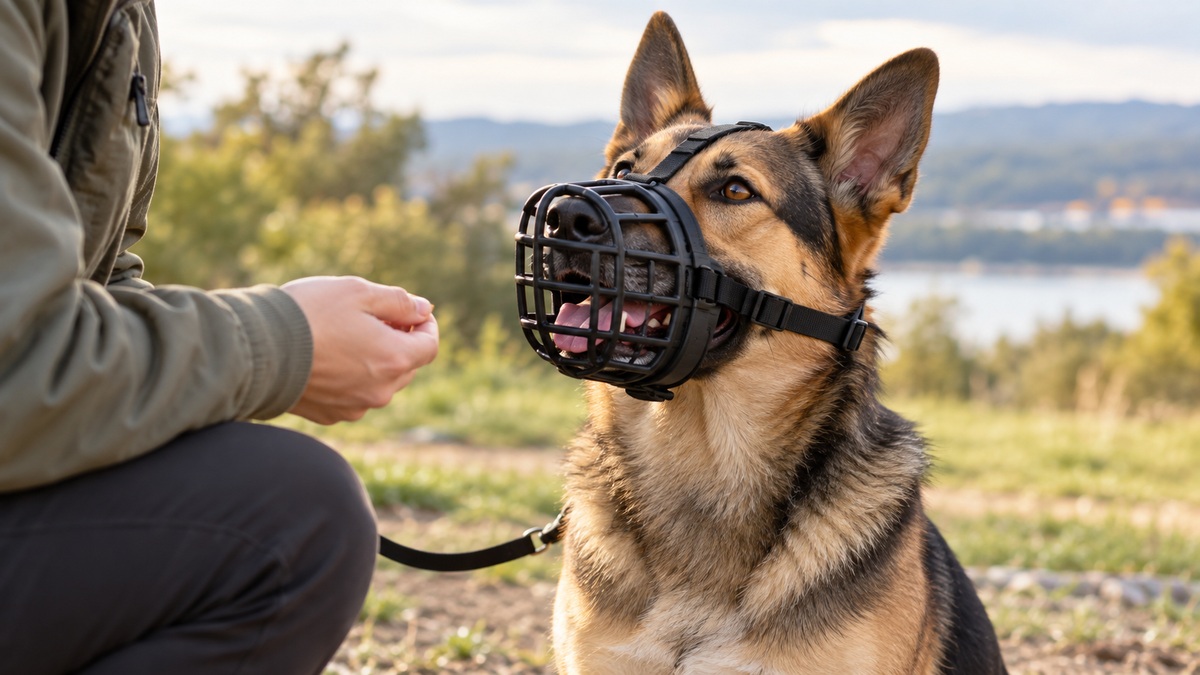
The best dog muzzle for most dogs is a basket-style model that leaves room to pant, drink and take a treat. Veterinary and welfare guidance from Cornell and the SPCA in New Zealand both point to basket designs for everyday use. This guide compares six dog muzzle listings from five brands. Four are metal or wire baskets, one is a rubber-type shell and one is a soft mesh cover. The figures below come from each listing’s own title and bullet points, so they are the sellers’ numbers, not independent checks.
Quick answer
- Pick a basket style for everyday wear. The SPCA in New Zealand treats basket muzzles as the type to use outside emergencies, because they do not restrict breathing, drinking or eating.
- Measure the snout, not the neck. Three of the four basket listings state a snout size in their bullets, with girth or circumference figures between 12 and 17 inches.
- Confirm the dog can pant and drink in the muzzle. Cornell’s guidance says a properly fitted muzzle allows both, and also allows taking treats.
- Get the dog used to the muzzle before the first real use. Cornell recommends starting with the nose, then the strap, and letting the dog approach at its own pace.
Why basket muzzles are the default
A muzzle has to stop a bite without stopping the dog from cooling itself. Dogs cool mainly by panting. The American Veterinary Society of Animal Behavior explains that a basket design lets a dog open its mouth and pant while wearing a muzzle. That matters once wear runs past a few minutes, because panting is how the dog regulates its body temperature. A closed muzzle that sits tight around the mouth removes that option, which is why the basket shape comes first in this guide.
Cornell’s basket muzzle guidance makes two practical points. First, a basket muzzle is a humane way to reduce dog bites and to keep a dog from eating things outside that could be dangerous or toxic. Second, nylon muzzles that squeeze the mouth are a poor match for most situations. That split, between an open basket and a closed or constricting cover, explains most of the differences in the set below.
The SPCA New Zealand muzzling guidance is the strictest of the three sources. It says basket muzzles are the only type it considers suitable outside emergency situations. It also says a muzzle should never be left on a dog that is unsupervised, including to stop barking. The two non-basket listings in this comparison are included because they appear in the same search results. The sources we opened put them in a narrower role.
What the snout measurements show
The table gives each listing’s stated size and basket type, using only the title and the first bullet points. Where a listing gives no number, the table says so.
| Listing | Snout size stated in the bullets | Basket or shell | Notes from the bullets |
|---|---|---|---|
| CleverTail German Shepherd muzzle | Circumference 13 inches, length about 4 inches | Steel basket with leather straps | Names polished steel and genuine leather |
| CleverTail XL Rottweiler muzzle | Circumference 17 inches, length about 3.5 inches | Steel basket with leather straps | Lists a range of large breeds |
| BRONZEDOG pitbull muzzle | Girth 12 inches, length 3.5 inches | Stainless steel basket | Neoprene pad over the nose and four adjusting straps |
| BARKLESS medium muzzle | Not stated in the first bullets | Basket with head and neck straps | Title gives medium size only |
| Baskerville ULTRA size 4 | Not given as a number; the title gives size 4 | Thermoplastic rubber shell | Bullets list six sizes and padded straps |
| Mayerzon soft mesh, black, large | Not given as a number; the title gives size L | Soft mesh cover | Adjustable neck and forehead straps |
The XL listing’s 17 inch figure is 4 inches more than the German Shepherd listing’s 13 inch figure, which is the gap between a large basket and a medium one in this set. The BRONZEDOG girth of 12 inches sits 1 inch below the German Shepherd figure, so a dog that measures between those two numbers could fit either model on paper. Snout measurements from one listing do not carry over to another brand, because each seller describes its own shape.
The bullets for the basket models tell the buyer to measure the snout first. Use a soft tape and follow the measuring tip in each listing before you order, then compare your number with the one printed in the bullets. If your dog falls between two sizes, the sources we opened do not say which way to round, so ask the seller for the basket dimensions.
Fit and conditioning
Cornell describes muzzle training in two stages. The first stage is getting the nose into the muzzle, and the second is getting comfortable with the strap that runs behind the head. Cornell suggests starting when the dog is calm and not stressed, placing a high-value treat inside the nose of the muzzle, and letting the dog come to it at its own pace. The AVSAB muzzle page describes a similar approach, with short sessions of about a minute or two at first, while the dog is kept distracted and praised.
Two listings in this set make conditioning claims of their own. The BARKLESS bullets say many dogs resist a cage muzzle at first and suggest using treats to help them adjust. The same bullets say a wrong size or too little training can let a dog pull the muzzle off, so fit and training go together. The Mayerzon bullets describe cutting a treat hole in the front of a mesh cover for training. That is a seller suggestion, and the sources we opened do not cover it.
Fit is the one check that the sources and the listings agree on. A properly fitted muzzle lets the dog pant, drink and take treats. If the dog cannot do those three things, the muzzle is too tight or the wrong style, so take it off and refit it before the next outing.
The four basket listings
The CleverTail German Shepherd muzzle is a steel basket with leather straps. Its bullets give a snout guide of about 13 inches in circumference and about 4 inches in length, and they tell the buyer to measure before purchasing a basket for a medium dog. The title names German Shepherd, husky and Malinois, but the first bullets do not give a chart for each breed, so the title is a guide to use, not a fit guarantee.
The CleverTail XL Rottweiler muzzle is the largest basket in the set. The bullets give a snout guide of about 17 inches in circumference and about 3.5 inches in length, and they name a broad group of large breeds, including Rottweiler, Cane Corso, Mastiff and Labrador. Its bullets also describe genuine leather straps and a steel basket, which matches the other CleverTail listing. A dog with a deep, broad snout is the target here. A dog with a narrow snout will not fill this basket and should not use it.
The BRONZEDOG pitbull muzzle is a stainless steel basket with a neoprene pad over the nose and four adjusting straps. The bullets give a snout girth of 12 inches and a length of 3.5 inches, and they say the basket lets air in and leaves the nose free to move. The bullets also point to a measuring video, which was not part of the text we captured. The listing is aimed at pitbull and amstaff shaped dogs, and the bullets name barking, chewing and aggression as uses.
The BARKLESS medium muzzle is a basket with adjustable head and neck straps. Its title gives medium size, and the first bullets do not state a snout number, so the fit depends on the owner’s own measurement. The bullets describe the basket as comfortable for panting and drinking, and they say the design suits most breeds with the straps adjusted. Of the four basket listings, this is the one that asks the most of the buyer’s measuring.
Across the four baskets, the features that differ most are the stated snout size, the material, and the presence of a nose pad. Steel versus stainless steel, and leather versus no stated strap material, are the next differences to check on the product page, since the first bullets do not settle them. None of the four listings gives a weight, a basket width or a sales figure in its first bullets.
The two non-basket listings
The Baskerville ULTRA muzzle is a rubber-type shell in size 4. Its bullets say the design lets a dog pant and drink, that it can be heat-shaped in warm water to fit different noses, and that it comes in six sizes. The bullets also describe a lockable neck strap clip and padded straps. The sources we opened, however, are the reason it sits outside the basket group. SPCA New Zealand treats basket muzzles as the only type it considers suitable outside emergencies, and a shell is not a basket. If you still want a shell for short, supervised use, the listing’s own statements are the only source we have for the panting and drinking claims.
The Mayerzon soft mesh muzzle in black, size large, is a mesh cover with adjustable neck and forehead straps. Its bullets describe ventilation through the mesh, a drinking hole, and a treat hole for training. Those features are the listing’s claims. The guidance we opened does not describe mesh covers as suitable for daily walks, and the SPCA position applies to this style as well. A soft mesh cover may suit a short, supervised session, such as a training step or a visit where the dog must not put its mouth on objects, but it is not the default answer for everyday wear.
Neither non-basket listing gives a snout number in its first bullets, which is another reason to check the fit with a measured snout before you buy.
How to use this comparison with training
Muzzle training is a skill the dog learns, and a listing does not teach it. The Cornell approach starts with the nose entering the basket and treats placed inside. Build up slowly to the strap behind the head, and stop before the dog shows stress. The AVSAB approach keeps the first sessions very short and pairs them with praise and calm handling.
Once the dog accepts the muzzle, the training goal is a short, calm wear period that you can end before the dog tires of it. The sources do not give a limit for every dog, so watch the dog’s breathing and posture during each session. A dog that paws at the muzzle, rubs its face on the floor or stops taking treats needs a break and a new fit check. A muzzle is a management tool. It does not change how a dog feels about other dogs, people or new places on its own.
How we chose
We searched Amazon.com for the keyword in Chrome on 21 October 2026 and read the first results page. We kept listings whose titles describe a dog muzzle and set aside results that were accessories, such as a bowl or a grooming glove. We picked six listings from five brands. We read each listing’s title and first bullet points, and we recorded any snout size or basket detail those bullets stated.
We did not pick a second listing from a brand when a different brand was available. CleverTail has two listings in the set because its two basket models cover different sizes, and the other CleverTail and BRONZEDOG listings on the page were left out so that the set stays varied. We also excluded a third CleverTail model sized for a Doberman because it repeated the same construction as the included models.
Our ranking criteria were the basket type that the sources describe, the snout size stated in the bullets, and the panting and drinking claims in the bullets. We did not rank by price, customer rating or sales rank, because those figures were not captured from the pages.
What we could not verify
- Whether any snout figure fits a particular dog. The sizes are the sellers’ own figures, and none of the sources we opened covers these brands.
- How long the steel, stainless steel, neoprene, leather, rubber-type shell or mesh will last. The listings make no durability claim we could check.
- Materials and skin-safety wording in some bullets, which we did not verify.
- Whether the Baskerville heat-shaping works as the bullets describe, and whether the shell fits any particular nose.
- Prices, stock levels, delivery times and ratings. None of these was captured from the pages.
- Anything below the first bullet points. Several bullets were cut off at capture, so the detail behind them is not covered here.
- Whether a muzzle prevents bites in any particular dog. The sources describe muzzles as a tool, but they do not cover these models.
FAQ
Is a basket muzzle better than a soft mesh muzzle?
For everyday wear, the sources we opened favor basket designs. Cornell and AVSAB both describe basket styles as allowing a dog to pant and drink, and SPCA New Zealand says basket muzzles are the only type it considers suitable outside emergencies. A mesh cover may suit a short, supervised session, but none of the sources we opened describes it as right for daily walks.
Can a dog pant and drink while wearing a muzzle?
A properly fitted basket muzzle allows both, according to Cornell’s guidance and the AVSAB page. The basket listings in this comparison also say the dog can pant and drink. If the dog cannot pant or drink in the muzzle, the fit is wrong or the style is too closed, so remove it and refit it before the next use.
How long can a dog wear a muzzle?
AVSAB explains that a dog must be able to pant if it is to wear a muzzle for more than a few minutes, and it describes training that starts with only a minute or two at a time. SPCA New Zealand says a muzzle should never be left on an unsupervised dog. The sources we opened do not set one maximum wear time for every dog, so keep each session short and watch the dog closely.
Does a muzzle stop a dog from biting?
Cornell describes a basket muzzle as a humane tool to help prevent dog bites. A muzzle is a management tool, though. The sources do not show that a muzzle changes a dog’s behavior on its own, so use it alongside whatever training plan you already follow.
Which size should I buy?
Use the snout measurement the listing gives, not the dog’s weight. Three of the basket listings give a snout size in their first bullets. The BARKLESS listing and the two non-basket listings do not, so measure the snout and compare it with the dimensions the seller publishes before you order.
Bottom line
Choose a basket muzzle that leaves room to pant and drink, measure the snout and compare it with the listing’s own figure, and condition the dog in short steps. Treat the shell and mesh listings as narrower tools for supervised use rather than everyday muzzles.
For dogs that pull hard on walks, our pitbull collar guide covers collar options, and our German Shepherd no-pull collar guide covers the same problem for a shepherd-sized dog.
1. German Shepherd Muzzle for Large Sized Dog – Metal Dog Muzzle for German Shepherd – Steel Basket (Steel basket for medium to large dogs with leather straps)
Specs from the listing (checked ):
- Snout size in listing: circumference 13 inches, length about 4 inches
- Straps: genuine leather, adjustable
- Steel: polished steel basket
Pros
- The bullets give a snout guide of 13 inch circumference and about 4 inch length
- The bullets name polished steel and genuine leather in the construction
Cons
- The captured bullets give no weight or basket width, only the snout guide
- The title names German Shepherd, husky and Malinois, but no breed chart appears in the bullets
Best for: An owner of a medium to large dog who wants a steel basket with leather straps
Skip if: Your dog's snout does not match the 13 inch circumference and about 4 inch length in the listing
View on Amazon (affiliate link)
2. XL Metal Dog Muzzle for Large Sized Dogs – Heavy Duty Rottweiler Muzzle – Basket Extra Large Dog (Extra-large steel basket for broad-snouted large breeds)
Specs from the listing (checked ):
- Snout size in listing: circumference 17 inches, length about 3.5 inches
- Material: genuine leather straps and smooth steel (bullets)
Pros
- The bullets give a 17 inch circumference and about 3.5 inch length for a large snout
- The bullets list a wide range of large breeds, including Rottweiler and Mastiff
Cons
- The bullets describe anti-biting use but give no buckle or strap length detail
- The bullets tell the buyer to measure first, so the fit depends on the owner's own number
Best for: An owner of a large, broad-snouted dog who wants a heavy steel basket
Skip if: Your dog's snout is narrower than the 17 inch circumference the listing gives
View on Amazon (affiliate link)
3. Pitbull Wire Basket Muzzle for Amstaff, Large Dogs (Steel) (Stainless steel basket with a neoprene pad over the nose)
Specs from the listing (checked ):
- Snout size in listing: girth 12 inches, length 3.5 inches
- Material: stainless steel basket with neoprene padding over the nose
- Straps: four adjusting straps (bullet)
Pros
- The bullets give a 12 inch girth and 3.5 inch length for the snout
- The bullets describe a neoprene pad over the nose and four adjusting straps
Cons
- The captured bullets give no weight, so the basket's heft is not known
- The bullets point to a measuring video that was not part of the text we captured
Best for: An owner of a pitbull or amstaff-shaped dog who wants a padded nose and four straps
Skip if: Your dog's snout is wider than the 12 inch girth in the listing
View on Amazon (affiliate link)
4. Dog Muzzle, Humane Basket Muzzle for Medium Dog Biting, Scavenging (Medium humane basket with adjustable head and neck straps)
Specs from the listing (checked ):
- Size in title: medium dog
- Straps: adjustable head and neck straps (bullet)
Pros
- The bullets say the design lets the dog pant, drink and take treats
- The bullets describe adjustable head and neck straps for a snug fit
Cons
- The first five bullets give no snout size, so the fit depends on the owner's measurement
- The bullets warn that a wrong size can let the dog pull the muzzle off
Best for: An owner of a medium-sized dog who wants head and neck straps
Skip if: You need a snout size printed in the listing before you order
View on Amazon (affiliate link)
5. Baskerville ULTRA Dog Muzzle | Size 4 (Rubber-type shell muzzle that the listing says can be heat-shaped)
Specs from the listing (checked ):
- Size in title: Size 4
- Material: Thermo Plastic Rubber (TPR) (bullet)
- Sizes offered: 6 sizes (bullet)
Pros
- The bullets say the design lets the dog pant and drink
- The bullets say it comes in six sizes with padded straps
Cons
- SPCA New Zealand favors basket muzzles outside emergencies, which places a closed shell outside that advice
- The heat-shaping step in the bullets is not covered by any source we opened
Best for: An owner who wants a closed-style muzzle for short, supervised use
Skip if: You need a muzzle for daily walks, since the sources favor a basket outside emergencies
View on Amazon (affiliate link)
6. Dog Muzzle, Patented Soft Mesh Muzzle for Scavenging | Black, L (Large soft mesh cover for short supervised use)
Specs from the listing (checked ):
- Color and size in title: Black, L
- Material: soft, lightweight, odorless mesh (bullet)
- Straps: neck strap and forehead strap, both adjustable
Pros
- The bullets describe ventilation through the mesh and a hole for drinking
- The bullets say the neck and forehead straps are both adjustable
Cons
- The guidance we opened advises basket designs for everyday wear, and this is a mesh cover
- The treat hole for training is a seller suggestion that the sources do not cover
Best for: An owner who wants a light cover for a short, supervised session
Skip if: You need a muzzle for daily wear or for a dog that pants heavily
View on Amazon (affiliate link)
Sources
- Cornell University College of Veterinary Medicine, Basket muzzle training: https://vet.cornell.edu/departments/riney-canine-health-center/canine-health-information/basket-muzzle-training
- American Veterinary Society of Animal Behavior, Muzzle Time: https://avsab.org/muzzle-time/
- SPCA New Zealand, Muzzling dogs: https://www.spca.nz/advice-and-welfare/article/muzzling-dogs