Labrador Grooming Brush: Which Tool Fits a Double Coat
As an Amazon Associate we earn from qualifying purchases. Details
Updated 19 October 2026 | Author: Editorial team, bestdogsstuff.com
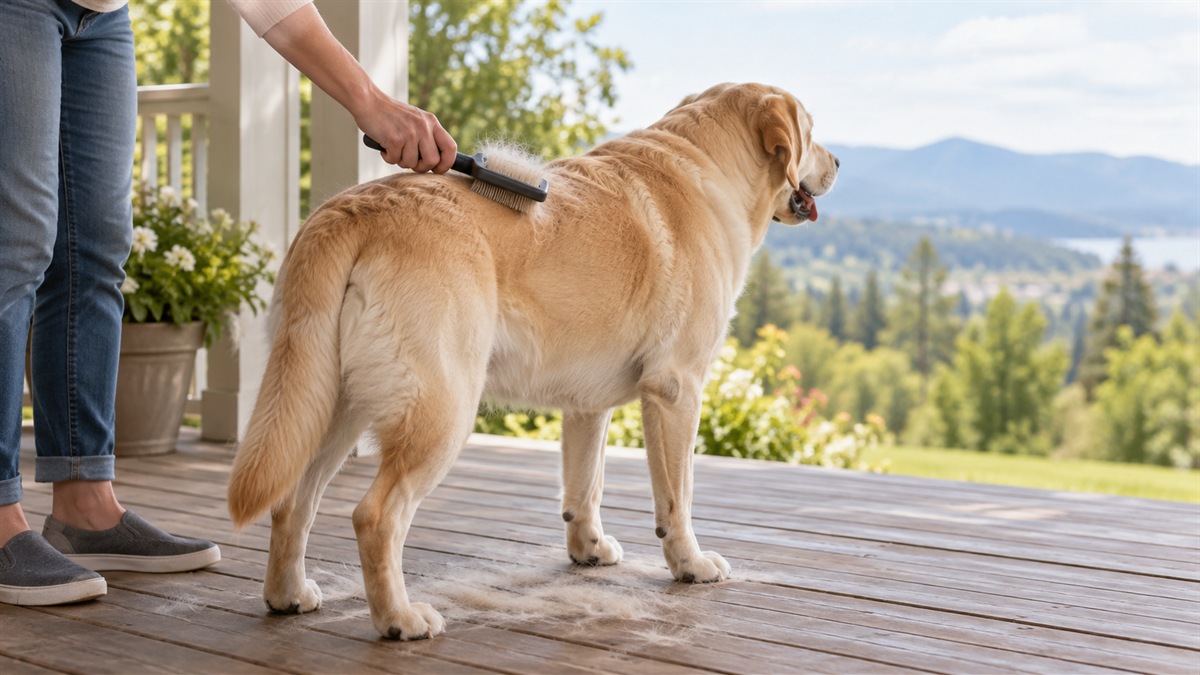
A Labrador grooming brush should do two jobs: reach the dense undercoat where loose hair builds up, and leave the outer coat smooth. The person typing labrador grooming brush usually wants one tool that handles shedding without irritating the skin. The AKC brush and shedding articles we opened agree that a double-coated dog needs an undercoat tool, and that a bristle or rubber brush alone will not reach the loose hair underneath. The picks below come from listing records, and each one says what it suits and what it does not.
Quick answer
- A Labrador has a double coat, so pick a tool that reaches the undercoat, such as an undercoat rake, instead of relying on a bristle brush.
- Choose the pin or tooth length to match the coat, and use light pressure.
- Brush during peak shedding several times a week, and at least brush the undercoat as well as the top coat.
- The three picks below are the only products in this post. Each is described from its listing, and none is a verified recommendation.
Why the coat decides the tool
Brushes are not interchangeable. The AKC guide to dog brushes sorts them by coat, and that sorting is the most useful starting point. The article says undercoat rakes “have one or two rows of metal pins designed to penetrate through to the undercoat to remove loose fur, and remove and prevent mats.” Bristle brushes, by contrast, suit a different coat: the article says they are “best used on short-coated dogs, including dogs with short, silky coats.” A tool that works well on one coat can fail on another, and the AKC guide makes the split explicit.
A Labrador’s coat is a double coat with a dense undercoat, which is the coat type the AKC guide says needs the undercoat tool. The AKC article is clear that the undercoat matters for double-coated dogs: “Remember to brush the undercoat, as well as the top coat, if your dog is double-coated.” If a brush only smooths the top layer, the loose hair underneath stays in place and comes out later on the sofa.
The AKC shedding article gives a related picture. It uses Golden Retrievers as an example of a thick double coat that sheds year-round. The brush listings we read name Labradors among the double-coated breeds their tools suit, which is the link this post relies on. The AKC pages we opened do not name Labradors in their brush guidance, so the Labrador link comes from the listings, not from an AKC instruction.
Matching brush type to coat, in a table
The table below sorts the AKC brush types by coat, using the wording of the AKC brush guide. It is a sorting aid, not a ranking of products.
| Brush type | What the AKC guide says it suits | What to watch for |
|---|---|---|
| Undercoat rake | Double-coated breeds of all fur lengths | Choose the correct pin length for the coat length |
| Slicker brush | Dense, medium or long coats to remove mats and loose hair | Maintain a light touch so you do not cause discomfort |
| Bristle brush | Short-coated dogs, and as a finishing brush on double coats | Does not reach the undercoat on a thick double coat |
| Rubber brush | Short-coated dogs | Bristles do not penetrate long or thick coats |
For a Labrador, the undercoat rake is the tool the guide points to first, with a slicker brush as an optional second tool for mats in longer hair. A bristle or rubber brush is a finishing tool, not the main brush for peak shedding.
How often to brush during shedding
The AKC shedding article says that dogs that shed heavily may need brushing several times a week or even daily during peak shedding periods. It also says heavy shedding usually happens in spring and fall for seasonal shedders, which fits the pattern many owners see. Here is a simple calculation for a four-week peak period, with the assumption stated first.
Assumption: the peak lasts 4 weeks. If you brush 3 times a week, that is 3 × 4 = 12 sessions. If you brush daily, that is 7 × 4 = 28 sessions. The gap between those numbers is the difference between a manageable plan and a plan that keeps up with heavy shedding. The AKC guide does not set these counts; the numbers here are only the arithmetic of the AKC frequency advice applied to a month.
Keep each session short and use the same light pressure throughout. A brush that is pressed hard can cause discomfort, which the AKC slicker guide warns about. End the session by checking the skin for cuts or sore spots, because the AKC brush article notes that brushing lets you notice anything unusual on the skin.
What the listing records show across the file
Before picking, we compared all five brush records in our research file for this keyword. The comparison is about what each listing states, because that is the only thing a buyer can check before purchase. The table below marks what each record names in its own text.
| Record | Labrador named in the text | Double coat named in the text | Head width given as a figure | Coat-length table given |
|---|---|---|---|---|
| Record 1 | Yes | Yes | No | No |
| Record 2 | Yes | Yes | No | No |
| Record 3 | Yes | Yes | Yes, three widths | Yes, by variant |
| Record 4 | Yes | Yes | No | No |
| Record 5 | Yes | No | No | No |
Two calculations follow from that table. First, the width spread on the rake listing: the widest option minus the narrowest is 8.3 minus 3.3 equals 5.0 inches, and the middle option sits 4.5 minus 3.3 equals 1.2 inches above the narrowest. The listing does not say which width suits which dog, so the spread tells you how far the options differ, not which one to buy. Second, the share of records that name a double coat: 4 divided by 5 equals 0.8, so four of the five records use the double-coat language, and one kit does not.
The table records what each text says, not how well each tool performs, and it cannot show whether the wording matches the product in the box. The second calculation is a reminder, not a verdict. A record that names a double coat has made a claim about fit, and the claim still needs checking against the AKC coat guidance and the variant table where one exists. Only the rake record gives a variant table, which is why the rake is the pick where a buyer can check the coat-length fit before paying.
A buying checklist for any brush listing
Use these checks on any brush page, including the three in this post. Each one follows from the AKC guidance or from the record structure above.
- Does the listing name the coat it suits, such as double coat, long coat or short coat? If it names no coat, it cannot tell you which tool fits.
- Does it give a head width or a pin or tooth length? A figure lets you compare the tool with your dog’s body and with the stated coat.
- Is there a variant table for coat length? If one version is marked not suitable for short hair, the page is telling you to choose carefully.
- Does the title make a shedding percentage claim? The sources we opened do not confirm such claims, so treat them as the maker’s wording.
- Does the brand field name a maker you can look up? A generic brand field makes it harder to find coat guidance from the maker.
Picks from the listing records
The three picks below come from our research records for this keyword. Each entry lists what the listing states, what it does not state, and when to skip it. No price, rating or review count is used. The listings do not state a dog size or weight range for these brushes, so each pick says so.
1. XL+ Undercoat Rake for Dogs & Cats, Dog Brush for Shedding, Dematting Comb | EU-Registered Design (Undercoat rake with width options)
Specs from the listing (checked ):
- Hair length (table): All versions marked for medium/long hair (over 2 inches). Short hair (2 inches or less) is marked NOT suitable on the XL 14/27 Sapele and XL 14/27 Walnut variants and the L 20-teeth variant, and suitable on the 27/53, 47/93 and L 19/27 variants.
- Width (comparison table): L 3.3 in, XL 4.5 in, Max 8.3 in
Pros
- The listing says the pins suit double coats and thick hair, and it names Labradors among suitable breeds
- The listing gives three head widths in a comparison table: 3.3 in, 4.5 in and 8.3 in
- The listing advises light pressure and says the wide side handles mats while the fine side removes loose hair
Cons
- The listing's hair-length table marks some versions as not suitable for short hair of 2 inches or less
- The listing describes the tool mainly for long or thick double coats
Best for: A Labrador with a dense undercoat that sheds heavily in peak periods
Skip if: Your dog's coat is 2 inches or less and the version you pick is marked not suitable for short hair in the listing table
View on Amazon (affiliate link)
2. Dog Grooming Rake, Deshedding Undercoat Brush, Dogs & Cats (LUWION Premium Pet Grooming Brush) (Two-sided dematting and undercoat rake)
Specs from the listing (checked ):
- Product Dimensions: 6.9 x 3.7 x 1 inches; 4.66 ounces
- Description (seller, Labrador line): LUWION is well suited to many medium- and long-haired breeds and coat types, including Golden Retrievers, German Shepherds, Huskies, Labradors, Collies, Poodles, Doodles, and similar shedding or double-coated breeds.
Pros
- The listing describes one side for dematting and the other as an undercoat rake for loose fur
- The listing says the teeth are rounded stainless steel and recommends short, gentle strokes
- The listing describes an extra-wide head for faster grooming on medium and large dogs
Cons
- The listing says it is made for medium, long, thick and double coats, so a short coat gets less benefit
- The listing does not give a dog size or weight range for the dog itself
Best for: A medium or large dog with a thick undercoat and some mats
Skip if: Your dog's coat is short and your main goal is only loose hair removal
View on Amazon (affiliate link)
3. 9Pcs Dog Grooming Kit, Slicker & Shedding Brush for Dogs & Cats (Pink) (Multi-tool grooming kit with slicker and shedding brush)
Specs from the listing (checked ):
- Pieces: 9
- Brand field: Generic
Pros
- The set includes a slicker brush, a shedding brush and a dual-sided deshedding tool in one pouch
- The listing names Labradors among the long-haired breeds the kit is meant for
- The set adds nail and bath accessories, so one purchase covers several grooming tasks
Cons
- The brand field says Generic, so there is no maker's coat guidance to check
- The AKC guide asks for a light touch with slickers, so the slicker is not a strong undercoat tool
Best for: An owner who wants a starter set covering brushing and nail care
Skip if: You need a dedicated undercoat rake for peak shedding
View on Amazon (affiliate link)
How to choose from these picks
Start with the coat. If your dog has a dense undercoat that sheds heavily, the rake is the stronger match, and the listing’s hair-length table is the first thing to read. If your dog has a short coat and sheds lightly, a multi-tool kit may cover brushing and nail care in one purchase, but do not expect it to replace a rake during peak shedding.
Then check the variant. The listing for the rake includes a table that marks some versions as not suitable for short hair of 2 inches or less. If you choose a variant that is not suitable for your dog’s coat length, you will have bought the wrong tool even if the rest of the listing matches.
Finally, check the handle and the head width for your hand and your dog’s size. The rake listing gives three width options in a comparison table, so you can match the head to the body you are brushing rather than guessing.
Steps for a good first session
- Start with the undercoat. Work the rake from the skin outward in short strokes, using light pressure and following the direction of the coat.
- Use the slicker or the wide side only where mats form. The AKC slicker guidance asks for a light touch, so do not force a tool through a tangle.
- Finish with a bristle brush if you want to smooth the top coat. Remember the AKC point that bristle brushes are for short coats and finishing, not for thick undercoat removal.
- Check the skin for redness, cuts or sore spots, and stop if your dog shows discomfort.
- Clean the brush after each session. A clogged rake pulls more and gives less result.
Mistakes to avoid
- Buying a bristle brush for a double coat and expecting it to remove undercoat. The AKC guide says bristle brushes are for short coats and as a finishing tool.
- Choosing a rake with pins that are too long or too short for the coat. The AKC guide says you must choose the correct pin length for your dog’s coat length.
- Brushing only the top coat. The AKC guide says the undercoat needs brushing as well.
- Pressing hard with a slicker or rake. The AKC guide asks for light pressure, because pressing down can cause discomfort.
- Relying on a product title’s shedding claim. Some listing titles make percentage claims about shedding, and the sources we opened do not confirm them.
Shedding, season and what to expect
Labradors shed through the year, and most owners notice the heaviest periods in seasonal change. The AKC shedding article says that the heaviest shedding usually occurs in spring and fall for dogs that shed seasonally, and that owners may need to groom more often on a temporary basis during those periods. Plan for the peak rather than the average. A tool that you use only once a week will not keep up with a heavy shedding month.
Expect the first sessions in a peak period to pull out the most hair. As the undercoat clears, sessions usually get shorter. If the hair keeps coming out in clumps long after a peak, or if the skin looks irritated, talk to your vet about the skin and coat rather than changing brushes again and again.
How we chose
We started from the question a dog owner would type: which grooming brush suits a Labrador. We read the AKC articles on dog brushes and on dog shedding, and kept only sentences that appear word for word in the saved text. The AKC pages were the brush guide and the shedding guide, both read on 19 October 2026.
For the picks, we read our research records for this keyword. Those records list brush products with titles, specifications and listing bullets. We kept three products whose listing text states a coat or size fit that a reader can check, and we left out products whose records were mostly marketing claims or lacked usable detail. The records were last checked on 17 October 2026. We did not open any product page for this post, so the picks reflect the saved listing data only.
What we could not verify
- Whether any of the three brushes removes undercoat better than the others. We cannot compare them on performance because the sources we opened do not compare brushes against each other.
- The dog size or weight range for each brush. The listings do not state one for these products, so the post does not supply one.
- Whether any brush is safe for a particular dog’s skin. Ask your vet or a groomer about sensitive skin before a new brush.
- The shedding percentages some titles claim. The post does not repeat them, and we cannot verify them from the sources we opened.
- Whether a Labrador’s coat matches every example in the AKC guide. The guide uses general coat categories and does not give breed-by-breed rules for brushes.
FAQ
What is the best brush for a Labrador?
For a double coat, an undercoat rake is the tool the AKC guide points to first, with a slicker brush for mats in longer hair. A bristle or rubber brush is a finishing tool for short coats and does not reach a thick undercoat.
Should I brush a Labrador every day?
The AKC shedding article says heavy shedders may need brushing several times a week or even daily during peak periods. Outside peak periods, a regular schedule matched to the coat is usually enough. Watch the amount of loose hair and adjust.
Can I use a slicker brush on a Labrador’s undercoat?
The AKC slicker guidance says slicker brushes work well for removing dead hair from dense coats, but they need a light touch. For an undercoat, a rake with the correct pin length is the tool the AKC guide describes.
Does the brush’s listing give a size for my dog?
These listings do not state a dog size or weight range, so the post cannot give one. Check the variant’s listing table for coat length, and ask a groomer if you are unsure which head width suits your dog.
What if my dog’s skin looks irritated after brushing?
Stop brushing, check the skin for cuts or sore spots, and ask your vet. The AKC brush guide says to use a light touch and notes that brushing lets you spot unusual skin changes early.
Bottom line
For a Labrador, buy a tool that reaches the undercoat, match the pin or tooth length to the coat, and brush with light pressure during peak shedding. Use the listing’s coat-length table to check the variant before you buy.
For related grooming reading, see our guide to dog nail grinders and how to use one, our guide to dog nail grinders for thick nails, and our review of a grooming hammock.
Sources
- AKC, how to choose the right dog brushes: brush types by coat; undercoat rakes for double coats; light pressure with slickers; bristle brushes for short coats
- AKC, dog shedding: what to expect and how to manage it: heavy shedders may need brushing several times a week or daily in peak periods; heaviest shedding in spring and fall for seasonal shedders; double coats such as Golden Retrievers shed year-round
- AKC, Scourge of the Sofa: a Shedding Dog: natural-bristle brush for loosening dead hair; coat rake or shedding tool when shedding picks up