How to Clean Pet Bedding: Step-by-Step Guide
As an Amazon Associate we earn from qualifying purchases. Details
Knowing how to clean pet bedding means working in a set order: remove the hair first, wash the bedding in hot water with a pet-friendly detergent, and dry it completely before your pet lies on it again. Most beds and blankets can go through a washing machine if the label allows it, and the sources we opened say that high-temperature washing programs can kill germs and parasites. This guide covers the steps, how often to wash, what to do with bedding that cannot go in the machine, and the points the sources leave open.
Quick answer
- Vacuum or lint-roll the bed before you wash it, because mixing dog hair with water can clump and clog a washing machine.
- Wash in the machine on a high-temperature program when the label allows it, using a fragrance-free, pet-friendly detergent.
- Air dry the bed when you can, and wait until thick, fiber-filled beds are fully dry, because a damp bed encourages mold and mildew.
- The AKC article says there are no hard and fast rules on frequency, and reports that weekly washing is recommended for parasite and zoonosis control.
Why bedding needs a different routine
Pet bedding is not the same as a bowl or a hard toy. The Maddie’s Fund cleaning handout we opened lists bedding among the supplies that are not as easy to clean and disinfect, along with plastic dishes and rubber or plastic toys. The same handout explains that bedding, carpet, and upholstered furniture would be damaged by diluted bleach used as a surface disinfectant. That means the bleach-based disinfecting routine used for bowls does not carry over to a bed.
Bedding is washed instead of wiped. The handout’s laundry section says bedding, towels, stuffed animals, and toys with fabric should be laundered in hot water, separately from other laundry. For a bed, that means a machine wash, a drying step, and sunlight or a dryer, rather than a spray and a 10-minute wait.
If you are still choosing a bed, our guides to big barker extra large dog beds and dog beds for night scratching describe the bed styles that suit different dogs, and the cleaning steps below apply to most of them.
If your pet sleeps on a couch or in a bedroom with carpet, the bed is only part of the job. The handout says to vacuum carpet thoroughly, including under beds and couches, and to steam clean upholstered furniture. It also reminds readers that the vacuum and the steam cleaner can themselves become sources of germs, so clean those as well.
How we chose
This guide is based on four sources we opened and read on 2026-10-23: the AKC article on how to clean a dog bed, the Maddie’s Fund foster-home cleaning handout, a UC Davis handwashing handout, and an EPA-registered bleach label. We used the steps, cautions, and frequency guidance those sources state. We did not rank beds or recommend any product, and where a source does not cover a point, the point is listed under “What we could not verify” rather than filled in from memory.
Step-by-step: washing a dog bed or blanket
Step 1: Remove hair and debris
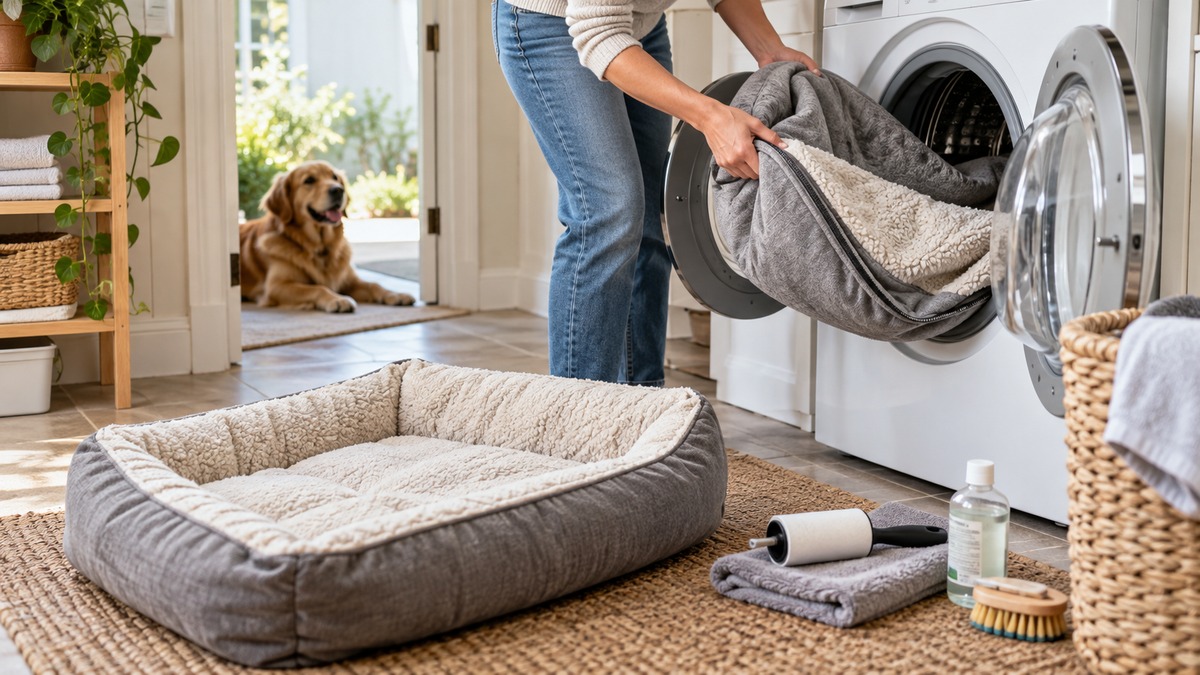
Start with a dry clean. The AKC article advises vacuuming the surface, crevices, and sides of the bed with a pet hair vacuum or a pet hair remover tool, both before and between washings. Lint rollers and masking tape also lift hair, and the article suggests wearing rubber or latex gloves and wiping the bed to pull up what remains.
This step matters because hair and water do not mix well in a washer. The AKC article says that mixing dog hair with water causes it to clump up and clog the machine. If you are worried about clogs, the same article suggests a dog bed laundry bag, which keeps hair contained during the wash.
Step 2: Check the label
Before you put the bed in the machine, read the care label. The AKC article says dog blankets and soft beds are typically best washed in a machine, if they fit and the label allows it. Beds with a non-washable filling, a waterproof backing, or a removable foam core may need different care, and the sources we opened do not cover those materials, so follow the maker’s instructions.
Step 3: Wash hot, with a pet-friendly detergent
Use a high-temperature program. The AKC article says high-temperature programs can kill germs and parasites and provide a deep clean. It recommends a fragrance-free, pet-friendly detergent. The Maddie’s handout also says to follow the label directions for measuring laundry detergent and bleach per load, so use the amounts printed on your products rather than guessing.
The handout’s advice on the wash cycle is specific. It says the best approach is to use separate bleach and detergent cycles. One option is a wash cycle that uses detergent for cleaning, then a rinse cycle before bleach is added for disinfecting, followed by a final rinse. The other option is to run the laundry through twice, first with detergent and then with bleach. Either way, the goal is to clean first and disinfect second, which matches the order used for hard surfaces.
If you want a bed laundry bag or a separate load, keep the bed apart from clothing, as the handout recommends washing pet bedding separately from other laundry.
Step 4: Dry it completely
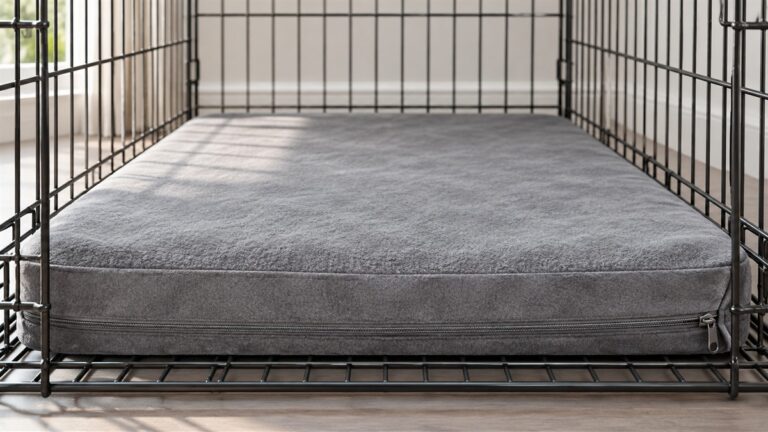
Dry the bed in a way that avoids damp fillings. The AKC article says air drying is usually best, because some bed fillings can clump in the dryer. It also warns that a damp bed encourages mold and mildew, so wait until thick, fiber-filled beds are fully dry before your dog uses them again.
The Maddie’s handout says laundry should be dried either by machine or in sunlight, and it calls sunlight a great additional disinfectant. If you hang a bed outside, choose a dry day and check the middle of the filling, not only the surface.
Step 5: Clean the washer and dryer
The Maddie’s handout reminds readers to clean and disinfect the outside of the washer and dryer, because they can also become fomites, which means objects that carry germs from one place to another. Wipe the rubber seal on a front-loading machine and check the lint filter after a heavy load. The AKC article also suggests checking the filter and wiping the rubber seal to remove any debris or hair after the program is complete.
What about the odor?
The AKC article describes an optional extra step for a very dirty bed: running an empty cycle afterward to remove lingering odors. It also gives a vinegar and baking soda option, placing one or two cups of white vinegar and half a cup of bicarbonate soda into the dispenser. These are the article’s suggestions, not a disinfecting method, so they do not replace the hot-wash step.
How often to wash pet bedding
The AKC article says there are no hard and fast rules about how often to wash a dog’s bedding. It also reports that the authors of a study published in the Canadian Medical Association Journal, and the CDC, recommend washing a dog’s bedding weekly to reduce the risk of spreading parasites or zoonoses. The same article says EPA guidance is to deep clean dog beds every two to three weeks to help control flea infestation.
Those figures give a range rather than a rule. A practical routine for many homes is to vacuum the bed often, wash it on a regular schedule within the range above, and wash it sooner if the bed is visibly dirty or a pet has been ill. The Maddie’s handout’s foster-home guidance is stricter: it calls for cleaning at least weekly when all pets are healthy, and at least daily when a pet has an infectious disease. That advice is written for foster homes, so use it as context rather than a rule for every household.
Bedding that cannot go in the machine
Some beds have a shell, a foam core, or a cover that cannot be machine washed. The Maddie’s handout says that bedding, carpet, and upholstered furniture would be damaged by diluted bleach, so a bleach spray is not the right answer for these items. The handout’s general advice for items that bleach would damage is to clean them carefully with a cleaner that is safe for that material. For a bed that cannot be washed in the machine, check the maker’s care instructions first, and use a pet-friendly cleaner on the cover.
The handout also says that some surfaces are better handled by throwing them away when they cannot be cleaned or disinfected. It says to consider replacing supplies that are not easy to clean and disinfect, and to throw away items that cannot be cleaned or disinfected at all.
Mistakes to avoid
- Washing before vacuuming. Loose hair can clog the machine, as the AKC article warns.
- Putting a damp bed back in use. The AKC article links damp bedding to mold and mildew.
- Using a bleach spray on bedding. The Maddie’s handout says diluted bleach would damage bedding.
- Using the same bowl-style bleach routine on a bed. The handout treats bedding as a laundry item, not a surface to be sprayed and rinsed.
- Forgetting the washer and dryer. The handout says they can also be fomites and should be cleaned.
- Using a fragrance product where the AKC article recommends a fragrance-free detergent.
What we could not verify
- Whether a specific bed filling, such as memory foam, can go through a hot wash without damage. The sources we opened do not cover foam cores in detail, so check the maker’s label.
- The exact water temperature that a high-temperature program reaches. The AKC article says high temperature without giving a number, and we did not find a figure in the other sources.
- Whether a waterproof or water-resistant bed cover needs a different detergent. The sources do not say.
- How often a bed needs washing in a home with no pets ill and no fleas. The AKC article gives a weekly figure reported from a study and the CDC, and an every two to three weeks figure from the EPA for flea control, but the sources do not match those figures to a particular home.
- The CDC and the Canadian Medical Association Journal figures are as the AKC article reports them. We did not open those primary pages in this guide, and the CDC page did not return a readable copy when we opened it.
- Whether a vinegar and baking soda rinse removes odors as well as a detergent wash. The AKC article suggests it, but the sources we opened do not compare the two.
FAQ
How often should I wash my dog’s bed?
The AKC article says there are no hard and fast rules. It reports that weekly washing is recommended by the authors of a study in the Canadian Medical Association Journal and by the CDC, and it notes EPA guidance to deep clean dog beds every two to three weeks for flea control. Wash more often if the bed is visibly dirty.
Can I put a dog bed in the washing machine?
The AKC article says dog blankets and soft beds are typically best put in a washing machine, if they fit and the label allows it. Vacuum the hair first, and use a bed laundry bag if you are worried about clogs.
Should I dry a pet bed in the dryer or air dry it?
Sunlight is also described by the Maddie’s handout as a great additional disinfectant. Either way, make sure the bed is fully dry before your dog uses it.
Is bleach safe for pet bedding?
Bleach has a place in the laundry, but the Maddie’s handout says diluted bleach would damage bedding if it were used as a surface disinfectant. For the wash, follow the label directions for bleach per load, and keep bleach cycles separate from detergent cycles as the handout describes.
What detergent should I use?
The AKC article recommends a fragrance-free, pet-friendly detergent. Follow the label directions for measuring the detergent, and rinse the load fully.
Should I clean the washer after washing pet bedding?
Yes, according to the Maddie’s handout, which says to clean and disinfect the outside of the washer and dryer because they can also be fomites. Check the lint filter, and wipe the rubber seal if your machine has one.
Bottom line
Vacuum the bed first, wash it hot with a pet-friendly detergent when the label allows, and dry it completely before your pet uses it again. Follow the AKC and EPA frequency figures as a guide, wash sooner when the bed is dirty, and follow the care label for any bed that cannot go in the machine.
Sources
- https://www.akc.org/expert-advice/lifestyle/how-to-clean-a-dog-bed/
- https://www.maddiesfund.org/cleaning-and-disinfection-in-foster-homes/presentation_content/external_files/Educational%20Handout-%20Cleaning%20and%20Disinfection%20in%20Foster%20Homes.pdf
- https://ucfoodsafety.ucdavis.edu/sites/g/files/dgvnsk7366/files/inline-files/200948.pdf
- https://www3.epa.gov/pesticides/chem_search/ppls/005813-00001-20060925.pdf