Best Way to Protect Couch From Dog Hair
As an Amazon Associate we earn from qualifying purchases. Details
The best way to protect couch from dog hair is a routine that removes the hair before it works its way into the upholstery. The American Kennel Club (AKC) notes that lying on couches presses a dog’s hair into the fibers, which makes it harder to remove later. This guide covers the steps in the order that matters most: brushing on a schedule, vacuuming early and often, using the right tool for each surface, setting up a removable cover or throw, washing fabric barriers, and following a simple weekly check. It does not recommend any product.
Quick answer
- Brush the dog on a schedule that matches its coat. The AKC says dogs that shed heavily may need brushing several times a week or even daily during peak shedding.
- Remove loose hair before it embeds. The AKC says removing the hair before it becomes embedded in upholstery fibers is key.
- Use a handheld vacuum with an upholstery tool for cushions, seams and the space under the cushions, then a pet hair roller for what remains.
- Use a rubber broom for stuck-on fur in crevices, and a microfiber cloth or duster for leather.
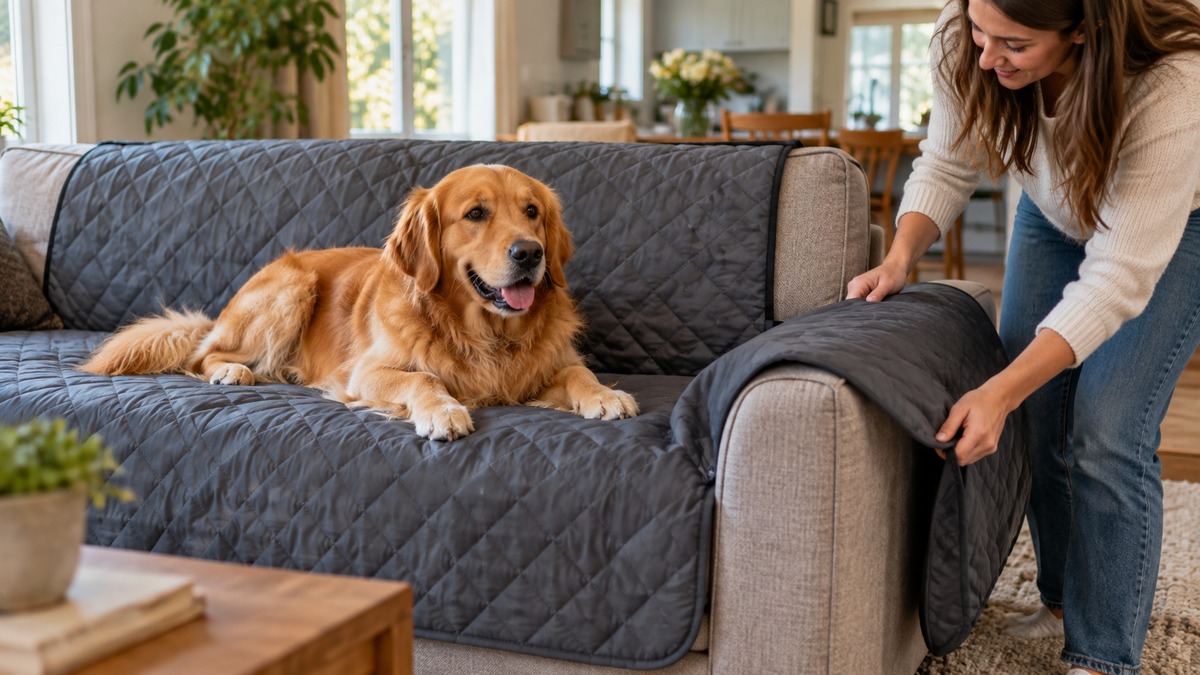
- Put a removable, washable throw or pet-specific cover over the areas the dog uses most, then wash it on a regular cycle.
- Bathing and consistent grooming help reduce how much hair reaches the furniture in the first place.
How we chose this method
We limited this guide to independent sources. We opened AKC pages on dog hair removal and shedding management on 2026-10-23 and quoted only sentences that appear in the text of those pages. We did not test any vacuum, brush, roller or cover, and we do not rank or recommend products. Each step below traces to a sentence in one of the pages we opened, or is a plain routine that the sources do not contradict. Where the sources are silent, the section “What we could not verify” says so.
Step 1: Set a brushing schedule that matches the coat
Brushing is the step that removes hair before it reaches the sofa. The AKC’s shedding guidance says dogs that shed heavily may need brushing several times a week or even daily during peak shedding periods. The AKC’s hair removal guide gives a simpler starting point: the ideal schedule depends on the dog’s coat type, but weekly brushing is a good starting point for many breeds. It also notes that a slicker brush used at least weekly can remove loose undercoat hair before it ends up on floors, furniture and clothing.
Match the brush to the coat. The AKC says natural-bristle brushes and grooming gloves are good options for dogs with short coats. For dense or long coats, the AKC’s hair guide points to slicker brushes, and its shedding guide mentions coat rakes or de-shedding tools during heavy shedding periods. Brush in the direction of hair growth and keep going until less hair is coming out, which is the signal the AKC’s guidance points to.
A practical habit is to brush the dog on a hard floor or outdoors, so the loose hair does not land on the cushions while you work.
Step 2: Vacuum before the hair embeds
The AKC’s point is to remove hair before it becomes embedded. Its hair guide says that lying on couches, beds or even laps presses hair into the fibers. In practice, that means vacuuming on a regular schedule rather than waiting for the sofa to look dirty.
A simple weekly pass for the couch looks like this:
- Remove the cushions and vacuum the seams, the back, the arms and the space underneath.
- Vacuum the cushion tops and the front edge, where dogs usually sit or lie.
- Use the pet hair roller on any hair the vacuum leaves behind.
- Check the couch corners and other hard-to-reach crevices, which the AKC’s hair guide names as places where hair gets trapped.
The AKC recommends a handheld vacuum for cushions, cracks and underneath furniture, and it describes a pet hair vacuum designed for upholstery and tight spaces as able to remove loose fur quickly. A standard lint roller is often not enough when a dog sheds a lot. The AKC states that some dogs shed more than others, which means a basic lint roller is not always enough.
Step 3: Use the right tool for each part of the couch
Different parts of a sofa call for different tools. The table below lists the tool categories named in the AKC’s hair guide and the job each one is described as doing. It does not rank brands.
| Tool type | What the AKC says it does | Where to use it on a couch |
|---|---|---|
| Handheld vacuum | Quickly removes loose fur from upholstery and tight spaces | Cushions, seams, cracks, under the cushions |
| Upholstery attachment | Used for vacuuming flat upholstered surfaces | Seat tops, back and arm panels |
| Pet hair roller | Picks up hair left behind after vacuuming; static charge in reusable rollers | Spot clean between full vacuum passes |
| Carpet rake | Pulls embedded hair from couches, carpets and car seats | Fabric with hair pressed in |
| Detailing tool | Removes hair trapped in couch corners and hard-to-reach crevices | Corners, piping, the crease where back meets seat |
| Rubber broom | Loosens embedded hair and gets it out of tough crevices | Stuck-on fur in seams and tufts |
| Microfiber cloth or duster | Gathers loose fur from smooth surfaces | Leather or other hard-surface upholstery |
The AKC says leather furniture requires a slightly different approach. Because hair does not embed as deeply in leather, wiping the surface with a microfiber cloth or duster can help gather the loose fur. Fabric is different, and the rubber broom and carpet rake are more useful there.
Work in one direction, from the top of the cushion toward the floor, and keep the vacuum head moving so you do not push hair deeper into the weave.
Step 4: Set up a removable cover or throw
Covers and throws act as a barrier. The AKC’s hair guide suggests that, to make future cleanup easier, you consider using a crate or a pet-specific seat cover to help contain the fur. That tip appears in the AKC’s car section, but the same logic applies to a sofa: the hair lands on the cover first, and the cover can be removed and washed.
When you choose a cover or throw, look for the things the sources actually mention: a removable cover that can be washed, and a cover that fits the areas the dog uses most. The sources do not compare fabrics or say which weave holds up best, so this guide does not make that comparison. Place the throw where the dog lies, not across the whole sofa, so you are not covering areas the dog never reaches.
Keep one cover for the dog’s favorite spot and rotate it with a clean one. That way, the cover can go into the wash without leaving the sofa bare.
Step 5: Wash the covers, throws and blankets
Fabric barriers collect hair quickly, so they need their own routine. The AKC’s bedding section says that before washing blankets and sheets, you should shake them outdoors to remove loose fur. The AKC also suggests running a slightly damp rubber dish glove over a blanket to lift the hair.
When the cover goes in the washer, the AKC suggests adding half a cup of white vinegar to help loosen trapped pet hair from the fabric fibers. Follow the care label on the cover, and check the washer for accumulated fur afterward. The AKC’s laundry section says to regularly clean the lint trap and check the washer’s inner tube for fur that has built up over time.
If a throw is too large or too delicate for the washer, the sources we opened do not give a dry-cleaning or hand-wash method, so check the care label and ask the cleaner rather than guessing.
Step 6: Keep the dog’s coat and routine on track
Brushing protects the couch, but grooming and bathing also reduce how much hair the dog leaves behind. The AKC says bathing can help reduce shedding. Its hair guide also says that consistent brushing, bathing and professional grooming can reduce shedding and help prevent dog hair from accumulating throughout the home. A groomer quoted in the AKC’s hair guide, David Maher of Biscuits and Bath, makes the same point in plain words: staying ahead means brushing between professional appointments rather than relying on a roller.
Brushing has a side benefit that the AKC also mentions. Regular brushing gives you a chance to notice unusual lumps, bumps or skin changes that you may want to bring to your veterinarian. The AKC’s shedding guide also lists possible causes of excess hair loss, including hypothyroidism, congenital coat disorders and allergies, and advises a veterinarian visit if you see thinning fur, bald patches or irritated skin. If you see any of those signs, see your veterinarian rather than adjusting the cleaning routine alone.
Common mistakes
- Waiting until the hair is visible on the cushions. The AKC says the key step is removing hair before it becomes embedded in the upholstery fibers.
- Relying only on a lint roller. The AKC says a basic lint roller is not always enough for a dog that sheds a lot, and the groomer quoted in its guide puts it more bluntly: if you are using a lint roller, you are already behind.
- Brushing the dog on the couch. That sends loose hair straight onto the cushions, so brush elsewhere first.
- Skipping the seams and corners. The AKC’s hair guide names couch corners and crevices as places where hair gets trapped.
- Skipping the rubber broom for stuck-on fur. The AKC suggests a rubber broom to loosen embedded hair from tough crevices.
- Washing covers without shaking them out first. The AKC says to shake blankets and sheets outdoors before washing.
- Letting the washer’s lint trap fill up. The AKC’s laundry section says regular cleaning of the lint trap helps.
How we chose
The tips above come from the AKC pages we opened on 2026-10-23: a dog hair removal guide, a shedding management guide and a shedding overview. We used those three pages because they cover the same question from the owner’s side: how to remove hair from a couch and how the coat and grooming routine affect the amount of hair. We did not include tips that appeared only on commercial blogs, and we did not include any claim that we could not confirm in the page text.
We did not rank tools or name brands, and we did not weigh one cleaning method against another in a test. The order of the steps follows the order the AKC describes: brush, remove hair before it embeds, use the right tool for each surface, use a barrier, and wash the barrier.
What we could not verify
- The sources we opened do not compare fabrics, weaves or cover materials for durability or for hair release. This guide does not make that comparison.
- The sources do not give a number of minutes per vacuum pass or a cleaning time for a full sofa.
- The sources do not say how many hairs a dog sheds per day or how much a given routine reduces hair on the couch.
- The sources do not say whether a particular tool performs better than another for a given coat type.
- The sources do not address the effect of hair on allergies or on indoor air. We make no claim about that.
- The sources do not say whether training a dog to stay off furniture reduces hair on the couch. We make no claim about that.
- We did not test any product, and we do not recommend any product.
FAQ
How often should I vacuum a couch with a dog?
The AKC does not give a single number of times per week. Its guidance is to remove hair before it embeds in the fibers. Vacuum on a schedule that matches how much your dog sheds, and add a spot pass when you see hair building up.
Is a lint roller enough to protect a couch from dog hair?
The AKC says some dogs shed more than others, which means a basic lint roller is not always enough. Use a handheld vacuum with an upholstery tool first, and use a roller for what remains.
Should I brush my dog on the couch?
Brushing on the couch sends loose hair onto the cushions. Brush the dog on a hard floor or outdoors, then move to the sofa to clean up.
What is the best tool for dog hair on furniture?
The AKC lists handheld vacuums, reusable pet hair rollers and upholstery detailing tools as options for removing hair from furniture and cushions. The sources do not rank one above the others.
How do I clean a throw or cover that has dog hair on it?
Shake it out outdoors first. The AKC suggests a slightly damp rubber dish glove to lift hair from a blanket, and a half cup of white vinegar added to the wash to loosen trapped hair from the fibers. Follow the care label.
Does brushing reduce hair on the couch?
The AKC says consistent brushing, bathing and professional grooming can reduce shedding and help prevent dog hair from accumulating throughout the home. Brushing removes loose coat before it reaches the furniture.
Bottom line
Protect the couch by removing hair before it embeds. Brush the dog on a schedule that matches its coat, vacuum the cushions, seams and underneath with an upholstery tool, use a roller for what remains, and put a washable throw where the dog lies. Wash the throw on a regular cycle. For related reading on the dog’s routine at home, see the guide to orthopedic beds for senior dogs, the guide to scratching beds at night and the guide to dogs that dig in bed.
Sources
- https://www.akc.org/expert-advice/home-living/how-to-remove-dog-hair/
- https://www.akc.org/expert-advice/health/managing-dog-shedding/
- https://www.akc.org/expert-advice/health/dog-shedding-what-to-expect-and-how-to-manage-it/