Best Way to Walk Dog on Leash: The Loose-Leash Method Step by Step
As an Amazon Associate we earn from qualifying purchases. Details
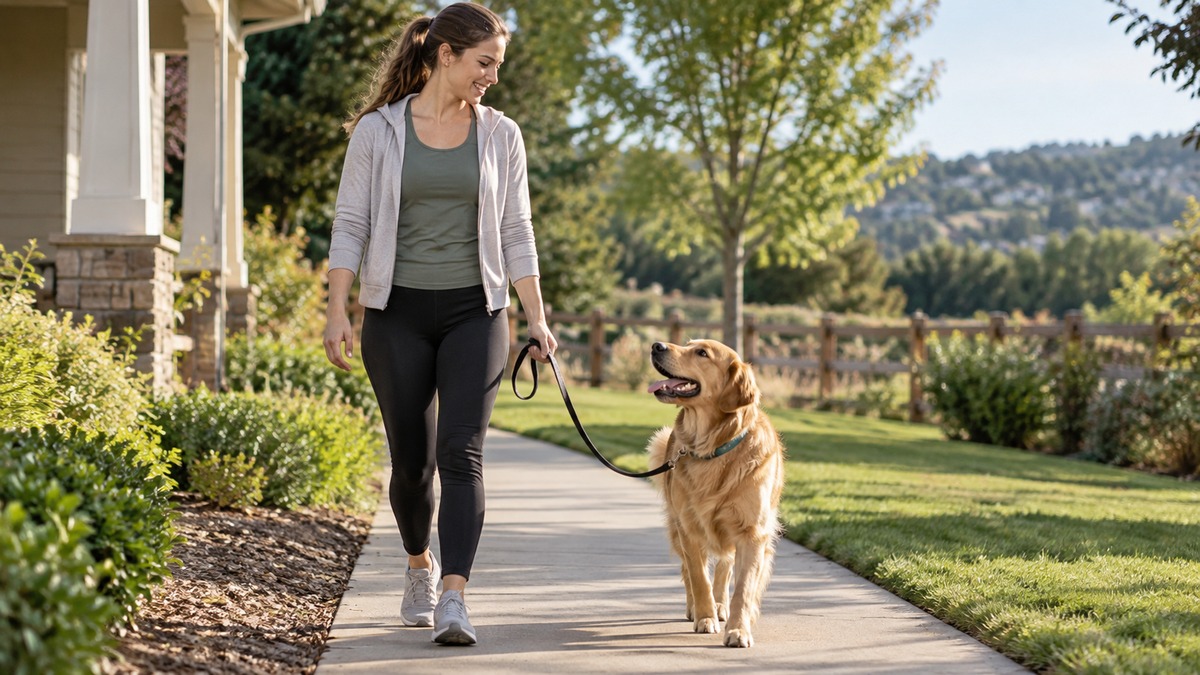
The best way to walk dog on leash is loose-leash walking. The dog walks beside you with a slack leash, and when it pulls, you stop and wait until the leash loosens before you move again. Walking forward only when the leash is slack teaches the dog that pulling does not get it where it wants to go. The steps below use guidance from the AKC, the ASPCA, the San Francisco SPCA and American Humane.
Quick answer
- Walk the dog beside you, not ahead. The goal is a slack leash, not a leash that stays taut.
- The moment the leash tightens, stop and stand still. The AKC says to stop, plant your feet, and wait for the dog to return to you or loosen the leash.
- Move forward only when the leash is slack again. American Humane describes this as the “be a tree” method.
- Reward the dog when it walks next to you without pulling. The ASPCA recommends treats given for calm walking beside you.
- Use a six-foot leash, not a Flexi leash. The San Francisco SPCA says a Flexi leash gives to a pulling dog and teaches it to pull.
- Be consistent. The AKC warns that letting the dog pull, even once in a hurry, sets training back.
What the loose-leash method is
Loose-leash walking is a reward-based method. The dog learns that walking with a slack leash keeps the walk moving, and that pulling stops it. The San Francisco SPCA calls one version “red light/green light”: when the leash goes tight, the walk stops, and when it is loose again, the walk continues. The idea is simple, but the timing matters. The AKC says you must stop the moment the dog pulls and wait for the slack before continuing.
The method works because the dog is never rewarded for pulling. If the dog pulls and the walk keeps going, the dog learns that pulling gets it ahead. The San Francisco SPCA says that even a few steps of pulling before you stop makes the message unclear.
How to walk your dog on a leash, step by step
Step 1: Get the gear right
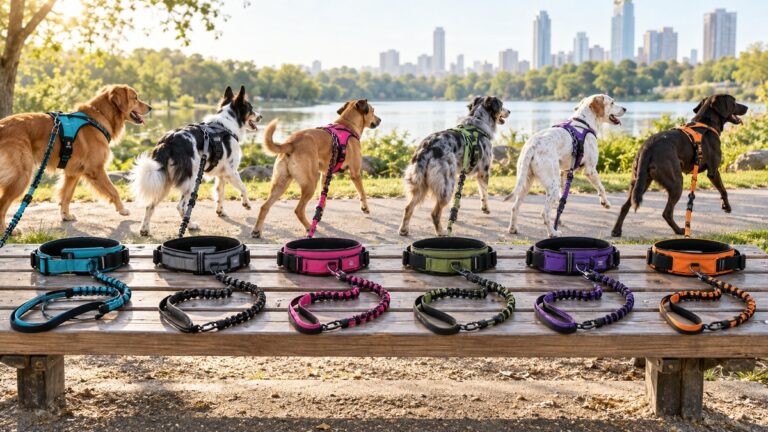
Use a six-foot leash for everyday walks. The San Francisco SPCA says to use a six-foot leash and not a Flexi leash, because a Flexi leash gives to a pulling dog.
Fit matters. The AKC notes that with a larger dog, pulling hard can cause injuries. The opened pages do not name one right collar or harness for every dog, so ask a vet or trainer about the best fit for a dog that pulls hard.
Step 2: Start in a quiet place
The AKC says to begin leash training as soon as you bring a puppy home. It also says that trainers often start leash practice before the first walk. For an adult dog, the same idea applies. A quiet space with few distractions lets the dog learn that a slack leash is the rule before the outdoors adds smells, people, and other dogs.
Step 3: Stop the moment the leash tightens
This is the core step. As soon as the leash tightens, stop walking and stand still. The AKC says to plant your feet and wait for the dog to return to you or loosen the leash. The American Humane tips say the same: when the dog pulls ahead, stop and stand still, and only move forward once the leash is slack again.
Do not move forward with the leash still taut. The San Francisco SPCA says that when the leash tightens, you stop immediately, and that you should be ready to stop the moment it goes tight.
Step 4: Wait for a slack leash, then move
The AKC describes a slack leash as one that hangs in a J-shape, and says to wait until the dog turns its attention back to you. Only then should you continue. At first you may have to stop and start every step or two. The AKC says the dog will soon learn that pulling makes the walk stop, and that walking politely lets it continue.
Step 5: Reward calm walking
Reward the dog for walking beside you with a slack leash. The ASPCA recommends carrying a treat pouch filled with treats on all walks, and giving treats when the dog calmly walks next to you without grabbing the leash. The ASPCA suggests giving treats often, every one to two seconds, while the dog stays calm. American Humane also advises rewarding the dog when the leash stays loose.
The ASPCA says that as the dog settles into walks and focuses more on you and less on the leash, you can give treats less often. Keep the reward for a loose leash, not for simple movement. The American Humane tips say to reward for loose-leash walking specifically.
Step 6: Add distractions slowly
Once the dog walks well in a quiet place, add more distractions in small steps. The AKC says that if the dog walks about ten feet without pulling, you can release it to sniff for a few minutes. That gives the dog a reward of exploring after a stretch of good walking. Sniffing breaks help, but they should follow loose-leash walking rather than replace it.
Step 7: Match your pace to the dog
The AKC says you can teach the dog to match your speed. It also notes that while you are training, a quicker pace can make it easier for the dog to learn not to pull. A brisk walk can make it harder for a dog to stay beside you while it is still learning, so a slower, steady pace is a reasonable place to start.
Step 8: Stay consistent
The AKC warns against letting the dog pull, even once. It says that when you are in a hurry, it can be tempting to let the dog pull, but a single pulled walk can set the training back. Use the same rule on every walk, including short trips to the yard.
Which source covers which part
The four steps above are covered by different sources. The table shows where each opened page makes its point, so you can check the claim against the source itself.
| Part of the method | AKC pages | ASPCA page | San Francisco SPCA | American Humane |
|---|---|---|---|---|
| Stop when the leash tightens | Stop, plant your feet, and wait (expert tips) | Not used in this guide | Stop immediately when tight | Stop and stand still |
| Move on only when slack | Wait for a J-shaped slack leash | Not used in this guide | Walk as soon as it is loose | Move forward only when slack |
| Reward calm walking | Release to sniff after about ten feet of calm walking | Treats for walking calmly beside you | Treats or a toy listed as needed | Reward when the leash stays loose |
| Equipment | Not used in this guide | Not used in this guide | Six-foot leash, not Flexi | Not used in this guide |
“Not used in this guide” means the cell is a point this guide does not rely on from that page. It does not mean the page disagrees with the other sources.
Common mistakes
- Walking forward while the leash is tight. The San Francisco SPCA says that pulling rewarded by continuing the walk makes loose-leash walking harder to teach.
- Stopping only some of the time. The San Francisco SPCA says that if you allow even a few steps of pulling before you stop, the message to the dog is unclear.
- Using a Flexi leash, which is covered in Step 1 above.
- Rewarding movement rather than a slack leash. American Humane says to reward when the leash stays loose.
- Letting the dog pull when you are in a hurry. The AKC says that one pulled walk can set training back.
- Skipping the quiet practice. The AKC suggests starting before the first walk, so the rule is clear before the outdoor distractions begin.
How we chose
This guide uses five independent pages: two from the AKC, one from the ASPCA, one from the San Francisco SPCA, and one from American Humane. All five were opened on 2026-10-23 with a successful HTTP response. We did not use manufacturer pages, equipment brands, or retailers as sources for any statement. The steps follow the method those pages describe, and each statement was checked against the text of the opened page. No product is recommended here, and no product claims are made.
What we could not verify
- How long a training session should last. The opened pages give no exact length.
- Which collar or harness is right for a given dog. The sources describe fit and avoidance of some collars, but they do not give a single answer for every dog.
- A fixed number of steps before a dog can walk on a full-length route. The sources describe progression but not a timetable.
- How long the treat schedule should last before it fades to none. The ASPCA says to reduce treats gradually, but the pages do not give a day count.
- Whether the loose-leash method works for every dog. The sources describe a method and advise consistency, but they do not measure results.
- A training plan for a dog that is fearful or reactive on walks. The opened pages do not cover this, so a veterinarian or certified trainer is the right source.
FAQ
What is the best way to walk a dog on a leash?
The best way is loose-leash walking. Stop when the leash tightens, wait for it to go slack, then move forward, and reward the dog for walking beside you. The AKC, the ASPCA, and American Humane all describe versions of this method.
How long does it take to teach loose-leash walking?
The sources say progress is often slow at first and that you may need to stop and start every step or two. They do not give a fixed number of days, because each dog learns at a different pace.
Should I use a harness or a collar?
The opened pages do not name one right choice for every dog. The AKC notes that pulling hard can cause injuries, especially with a larger dog, so ask a vet or trainer about the best fit for a dog that pulls hard.
What leash length is best for walking?
The San Francisco SPCA recommends a six-foot leash and says not to use a Flexi leash. A Flexi leash gives to a pulling dog and can teach it to pull.
What if my dog keeps pulling?
Keep stopping. The AKC says the dog learns that pulling makes the walk stop, and that walking politely lets it continue. If pulling continues after consistent practice, a trainer can help.
Can I let my dog sniff on a walk?
Yes, but after the dog has walked a stretch without pulling. The AKC suggests releasing the dog to sniff for a few minutes after about ten feet of calm walking, so that the sniffing becomes the reward for good behavior.
Related guides
If you are deciding between a collar and a harness for walks, read is a collar or harness better for a dog. For a different walking question, see easy walk harness vs gentle leader. These pages are separate from this how-to guide, and this guide makes no product claims.
Bottom line
Stay consistent on every walk, because the dog learns from the pulls it is allowed to get away with.
Sources
- https://www.akc.org/expert-advice/training/teach-puppy-walk-leash/
- https://www.akc.org/expert-advice/training/expert-tips-dog-leash-issues/
- https://www.aspca.org/node/67357
- https://www.sfspca.org/resource/loose-leash-walking/
- https://www.americanhumane.org/public-education/10-training-tips-for-happier-safer-walks-with-your-dog/