Best Way to Brush Dog Fur: Step-by-Step by Coat Type
As an Amazon Associate we earn from qualifying purchases. Details
The best way to brush dog fur is to match the brush to the coat, brush the hair rather than the skin, work through the undercoat on double-coated dogs, and keep the routine regular enough that loose hair and small tangles do not turn into mats. The steps below use guidance from the AKC and the ASPCA, and they note where those sources do not give a specific answer.
Quick answer
- Identify the coat first: smooth or short, double coat, or long and silky. The right tool depends on the coat.
- Use a rubber brush or a bristle brush or mitt on short coats. Use a slicker brush on longer and double coats, and an undercoat rake for loose undercoat.
- Brush the hair, not the skin. Keep the pressure light, especially with a slicker brush.
- Brush the undercoat on double-coated dogs, not only the top coat.
- Plan on brushing at least weekly. The AKC says brushing is sometimes weekly, sometimes a few times a week, and sometimes daily during heavy shedding.
- Brush out dead hair and mats before a bath, because the ASPCA recommends brushing first.
- If a mat is dense or close to the skin, do not cut it at home. The ASPCA says to take care not to come near the skin, so ask a groomer or your veterinarian for help.
What “best” means for brushing
There is no single best brush. The AKC says you need the right tool for your dog’s particular coat type, because the tool determines how much of the loose hair you actually reach. A rubber brush that is fine on a short coat will not penetrate a long or thick one, and a slicker brush pressed hard can make a dog uncomfortable.
So the practical answer to “best way” has three parts: the correct tool for the coat, a routine that fits how fast the coat tangles and sheds, and a gentle technique that clears loose hair without pulling on the skin. This guide walks through each part.
How to brush dog fur, step by step
Step 1: Sort the coat into one of three groups
The sources group dogs roughly by how their hair behaves.
- Short or smooth coats lie close to the body. The AKC says a fine job can be done with a natural-bristle brush, or a hound mitt or glove with bristles on the palm, to loosen dead hair.
- Double coats have a soft, dense undercoat under a longer outer coat. The AKC says to brush the undercoat as well as the top coat, and the AKC’s double-coat guidance describes a slicker brush followed by a comb.
- Long or silky coats tangle easily. The ASPCA recommends a daily grooming routine for long-haired dogs to remove tangles and prevent mats.
Step 2: Pick the tool that matches the group
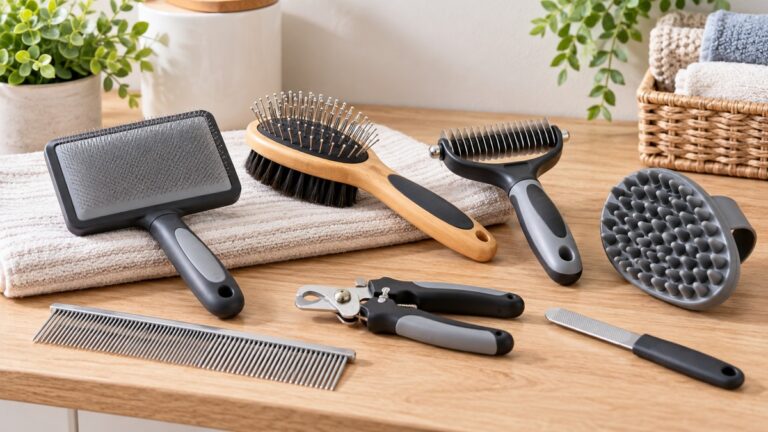
Each tool has a job, and the AKC describes them clearly:
- A slicker brush has a head covered with short, tightly packed wire pins that go through the coat without reaching the skin. The AKC says to keep a light touch with it, because pressing down hard can cause discomfort.
- A bristle brush has many natural or synthetic bristles. The ASPCA suggests using a bristle brush after a slicker brush to catch dead hair and finish the coat.
- A rubber brush has short, flexible rubber bristles. The AKC says it is best for short-coated dogs, because the bristles do not penetrate a long or thick coat. It works by massaging the skin and bringing loose hair to the surface.
- An undercoat rake has one or two rows of metal pins that reach the undercoat to remove loose fur and help prevent mats. The AKC says it can be used on double-coated breeds of all fur lengths.
- A wide-toothed comb helps with mats and tangles that a brush has loosened. The AKC lists it as a way to help remove mats and tangles.
Step 3: Choose a routine
A fixed schedule is hard to give because coats differ and shedding changes with the season. The sources still offer useful anchors.
| Coat or situation | Tool named by the sources | How often the sources say |
|---|---|---|
| Short or smooth coat | Natural-bristle brush, hound mitt or glove, or rubber brush | Not stated for this coat. The AKC gives a general range of weekly to daily during heavy shedding |
| Double coat | Slicker brush, then a comb; undercoat rake for loose undercoat | At least once a week with a slicker and comb (AKC). Rake when shedding picks up (AKC) |
| Long or silky coat | Slicker brush, then bristle brush | Daily, to remove tangles and prevent mats (ASPCA) |
| Puppy | Soft slicker brush | Not stated as a schedule. The AKC says to use a soft slicker on a puppy and a medium one on an adult |
Two points come through from these sources. First, the routine should follow the coat, not a calendar. Second, a steady routine is what the ASPCA links to preventing mats, so waiting for a coat to get tangled is the wrong approach.
Step 4: Brush the hair, not the skin
The AKC’s double-coat guidance says to brush the hair, not the skin, the same way you would brush your own hair. Keep the pressure light, and if the dog pulls away, check whether the tool is catching the skin or a tangle.
Step 5: Work the undercoat on double coats
On a double-coated dog, loose hair often sits in the undercoat. The AKC says to brush the undercoat as well as the top coat. It also says that in a humid climate, a thick undercoat that is not brushed weekly can get packed in and hold moisture next to the skin. An undercoat rake or slicker reaches the undercoat, and a comb is a useful finish.
Step 6: Deal with tangles and mats
Tangles are easier to remove before they become mats. The ASPCA advises gently teasing tangles apart with a slicker brush, then brushing the dog with a bristle brush.
Dense mats are different. The ASPCA says that if matting is particularly dense, you may try clipping the hair, taking care not to come near the skin. A mat that sits tight against the skin, or a dog with sore or irritated skin, is a job for a groomer or veterinarian, not a home clip.
Step 7: Brush before you bathe
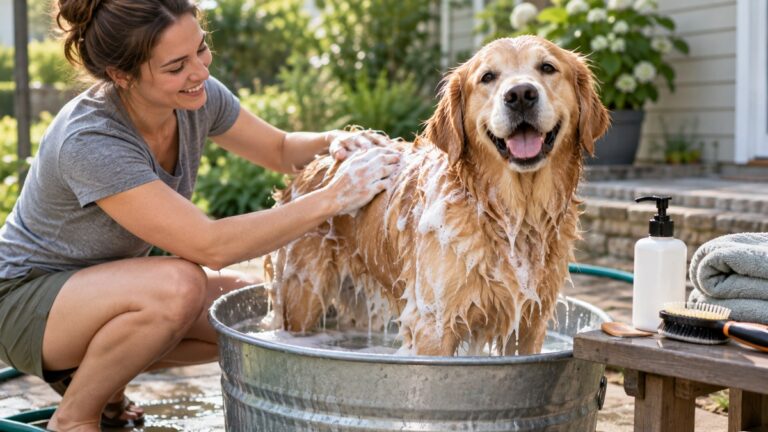
The ASPCA recommends giving the dog a good brushing to remove all dead hair and mats before putting the dog in a tub of lukewarm water. Brushing first is the step the ASPCA puts ahead of the bath.
Step 8: Get the dog used to brushing
The AKC advises getting dogs used to gentle brushing early, along with handling their feet, mouth, and ears. A dog that is used to brushing is easier to groom at every stage of life. The opened pages do not give a method for a fearful dog, so see the questions the sources leave open below.
How much brushing helps with shedding
Shedding is normal for dogs. The ASPCA states that shedding old or damaged hair is a normal process, and that the amount and frequency depend on health, breed type, and season. It also says that while a healthy dog’s shedding cannot be stopped, you can reduce the hair in your home by brushing regularly.
The AKC adds that many dogs shed more in the spring and fall, while dogs kept indoors tend to shed more evenly through the year. Brushing removes hair before it lands on furniture and clothing, so the routine helps with the mess even though it does not stop the shedding itself.
Shaving is a common question. The AKC says shaving does not eliminate shedding, and that it can damage the topcoat and the undercoat that insulates the dog in winter and keeps the skin cool in hot weather. Ask a vet or groomer before shaving a double coat.
How we chose
This guide uses four independent pages from the AKC and the ASPCA, all opened on 2026-10-23 with a successful HTTP response. We did not use manufacturer pages, cleaning brands, or retailers as sources for any statement in the guide. The steps follow the coat groups and tools those four pages describe. Each statement was checked against the text of the opened page. No product is recommended in this guide, and no product claims are made.
Common mistakes
- Using one brush for every coat. The AKC says the right tool depends on the coat, and a rubber brush suits short coats rather than long or thick ones.
- Brushing only the top coat of a double-coated dog. The AKC says to brush the undercoat as well.
- Pressing hard with a slicker brush. The AKC warns that pressing down hard can cause discomfort, so use a light touch.
- Brushing the skin instead of the hair. The AKC’s guidance is to brush the hair.
- Bathing a matted coat. The ASPCA advises brushing out dead hair and mats before the bath.
- Cutting a dense mat close to the skin at home. The ASPCA warns to take care not to come near the skin when clipping.
- Shaving a double coat to stop shedding. The AKC says shaving does not stop shedding and can damage the coat that protects the dog.
- Letting tangles build up. The ASPCA links a daily routine to removing tangles and preventing mats.
What we could not verify
- A single brushing schedule for every breed. The sources give weekly, a few times a week, and daily ranges, but they do not give one number for each coat type.
- The time a brushing session should take. The opened pages do not give a length.
- How to handle a fearful or resistant dog during brushing. The opened pages do not describe a method for this.
- The exact amount brushing reduces shedding in a home. The sources say brushing reduces hair in the home but do not measure it.
- A full checklist of mat-prone spots on every breed. The opened pages do not give one.
- Any specific brush brand or model for any coat. The sources describe tool types only, and this guide does not recommend products.
FAQ
How often should I brush my dog?
The AKC says brushing is sometimes weekly, sometimes a few times a week, and sometimes daily during periods of heavy shedding. The ASPCA says long-haired dogs benefit from a daily routine. The sources do not give one number for every coat.
What tool should I use on a double-coated dog?
The AKC says to brush the top coat and the undercoat. It names a slicker brush for the top coat, an undercoat rake for loose undercoat, and a comb as a finish. The AKC says the undercoat rake can be used on double-coated breeds of all fur lengths. This is a tool type, not a product recommendation.
Should I brush my dog before or after a bath?
The ASPCA recommends brushing before a bath, to remove dead hair and mats first. The sources reviewed here do not give a drying routine after the bath.
Can I shave my dog to stop shedding?
The AKC says shaving does not eliminate shedding. It can damage the topcoat and the undercoat that insulates the dog, and it can increase the chance of skin problems or sunburn.
What if my dog has a mat close to the skin?
Do not cut at home. The ASPCA advises taking care not to come near the skin when clipping dense matting. A groomer or your veterinarian can remove a mat that sits tight against the skin.
What if my dog does not like being brushed?
The AKC advises getting dogs used to gentle brushing early. The sources reviewed here do not give a method for a dog that resists. If the problem continues, a veterinarian or certified trainer can advise on it.
Related guides
If you want to narrow the brush choice after reading the steps above, the related roundup guides on this site cover specific brush types, including dog brushes for loose hair, brushes for removing an undercoat, and deshedding brushes for large dogs. Those pages are separate from this how-to guide, and this guide makes no product claims.
Bottom line
Match the brush to the coat, brush the hair and the undercoat with a light touch, and keep the routine regular enough to stop tangles before they become mats. When a mat is close to the skin, get help from a groomer or veterinarian rather than cutting at home.
Sources
- https://www.akc.org/expert-advice/health/types-dog-brushes-shedding/
- https://www.akc.org/expert-advice/health/scourge-of-the-sofa-a-shedding-dog
- https://www.akc.org/expert-advice/health/how-to-groom-a-double-coated-dog/
- https://www.aspca.org/pet-care/dog-care/dog-grooming-tips