Best De Shedding Tool for Short Hair Dogs: Five Listings Compared
As an Amazon Associate we earn from qualifying purchases. Details
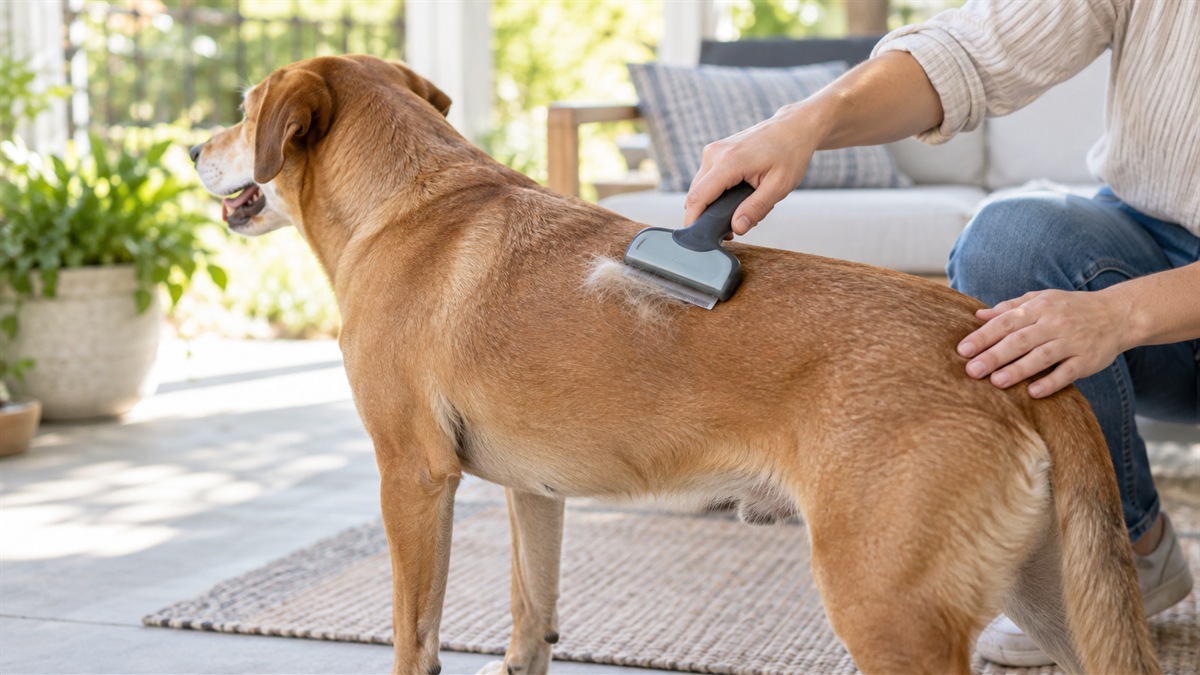
If you searched for best de shedding tool for short hair dogs, you want one tool that pulls loose hair out of a thin coat without pressing into the skin. That is a narrower job than most product pages suggest. The American Kennel Club says dogs with short coats can often do a fine job with a natural-bristle brush or a bristled glove, and it saves the heavier shedding tools for the weeks when shedding peaks. Of the five listings compared here, two describe short-coat use directly, one is written for long hair, and two are general grooming tools with extra features.
Quick answer
- For a short coat, the BOTH WINNERS dual-sided blade is the listing that most directly names short coats. Its listing says the fine side suits short coats.
- The SleekEZ brush is the smallest tool in this set. Its title names short, medium and long coats.
- Skip the FURminator undercoat tool for a short-haired dog. Its listing names long hair and dogs over 50 pounds as its target.
- Choose the oneisall kit only if you want a corded vacuum with grooming attachments. Its listing describes a 1.5-liter dust box and three power levels.
Start with the coat, not the brand
A de-shedding tool solves one problem: loose hair that is already in the coat. Whether a given tool helps depends on how the coat is built. The AKC’s shedding guidance separates dogs with short coats, such as Beagles, Pugs and German Shorthaired Pointers, from dogs with a downy undercoat under a harder outer coat. The short-coat group benefits from simple tools that loosen and lift dead hair. The double-coat group needs a tool that reaches down through the outer coat to the undercoat.
That split matters for this keyword. A short-coated dog does not need the same rake that a double-coated dog needs. The AKC’s own advice for short coats is a natural-bristle brush or a bristled glove. It also advises switching to a coat rake or shedding tool once shedding really picks up. So the first question is not which brand is strongest. It is whether your dog has a short single coat, a short coat with a dense undercoat, or a longer coat that the keyword does not describe.
Most listings in this comparison do not explain their coat target in plain language. The specification fields give a hair type, and the bullets add a few coat words. Read those fields first. If a listing says it is for long hair, treat that as the listing’s own limit, even when the tool is well built.
How often a short-haired dog needs a de-shedding tool
Shedding is not a fixed amount. The AKC’s shedding article says a dog may need brushing sometimes weekly, sometimes a few times a week, and sometimes daily during periods of heavy shedding. That pattern explains why one tool can feel ideal in one month and unnecessary in another.
The AKC also says that consistent brushing helps control shedding and keeps the coat looking its best. A simple brush used on a regular schedule can therefore cover most of the year, while a more aggressive tool is best saved for the heavy weeks. Heavy shedding periods are when a coat rake or de-shedding tool can remove large amounts of loose undercoat hair, according to the AKC’s managing-shedding guidance.
The listings do not give any shedding schedule, so the pattern in your own home is the most useful guide. Keep a short log for two or three weeks. Note how much hair comes off in each session and how often the couch, bed and floor need attention. That record will tell you more about the right tool than a product title will.
When a de-shedding blade makes sense
The BOTH WINNERS listing describes a dual-sided blade with a coarse side and a fine side. Its bullets say the coarse teeth suit long coats and the fine teeth suit short coats. For a short coat, the fine side is the one the listing points to, and that is why this listing sits at the top of the quick answer.
The AKC gives a clear caution for any blade-style tool: do not press too hard. The BOTH WINNERS bullets say the same thing in their own words, asking for light pressure and a gliding motion over the hair. The pressure rule applies to every blade in this set, so it matters more than the brand.
Use a blade on a short coat in short passes. Start with light strokes over the back and sides, then check the skin and the coat after each section. Stop and look more closely if the dog reacts, and leave any irritated area alone until you have spoken with your veterinarian. The AKC grooming guidance also says to check regularly for burrs, plant material, mats, cuts, scrapes or other abnormalities while you brush. That check takes a minute and is worth doing every time.
Mats need their own attention. The AKC notes that mats commonly develop behind the ears and under the legs. A blade can pull loose hair from those areas, but it is not a substitute for a comb when a mat has formed, and the listing does not describe how a blade handles a mat. Work those spots slowly and separately from the main coat.
Reading the listing fields
The table below uses only the dimensions, weights and hair-type fields in each listing. None of the listings gives a durability figure or a usage limit in those fields, so none is shown.
| Listing | Hair type named | Tool style (per listing) | Overall size | Weight |
|---|---|---|---|---|
| BOTH WINNERS dual-sided blade | All, coarse; fine side for short coats | Dual-sided metal blade | 12 x 4.1 x 1.57 in | 4.44 oz |
| FURminator undercoat tool | Long | Stainless steel undercoat tool | 6.5 x 2 x 8.75 in | 9.14 oz |
| Swihauk self-cleaning slicker brush | All (bullets name both long and short) | Rectangular brush with press-to-clean button | 16.14 x 9.45 x 0.79 in | 8.82 oz |
| oneisall LM5 vacuum grooming kit | Pet hair (recommended use) | Corded vacuum with brush and tools | Not stated in the fields read | Not stated in the fields read |
| SleekEZ patented deshedding brush | All | Stainless steel bristles, poplar wood handle | 5 x 1.5 x 2.5 in | 4 oz |
The table shows that the BOTH WINNERS blade is 12 inches overall, while the SleekEZ brush is 5 inches on its longest side. Our planning estimate: 12 divided by 5 is 2.4, so the blade is about 2.4 times as long as the SleekEZ brush. That ratio describes how much coat one pass can cover. A longer tool covers more area per stroke, which helps on a large back, but a shorter tool is easier to keep on a small area.
The FURminator and Swihauk listings are heavier and longer than the SleekEZ brush. The oneisall kit is a different category altogether because it includes a vacuum unit. When you compare weights, remember that a hand tool’s weight in ounces tells you about handling, while a kit’s power and dust-box figures describe a different kind of purchase.
Length and weight are not the same as fit. A short coat needs a tool whose teeth, bristles or blade match the hair length. The listing fields tell you about the tool’s size, not whether its teeth reach the right depth, so the hair type field and the bullets carry most of the decision.
What each listing says about handling
The BOTH WINNERS bullets describe a soft ergonomic handle with a non-slip grip and say you can hold the handles apart to cover a larger area or together to work on a smaller one. The listing also says to avoid scratching the pet’s skin and to glide the loop over the hair rather than combing hard. Those are handling notes from the listing, and they match the AKC’s advice on pressure.
The FURminator bullets describe a stainless steel tool with a push-button release for clearing hair and an ergonomic handle. The listing says the tool reaches through the topcoat to remove loose undercoat hair, and it adds the phrase “when used as directed.” That phrase points to the label, which is not part of the data we read. The listing’s target is a large dog with long hair, so a short-coated dog is outside its stated use.
The Swihauk bullets describe soft, round-headed plastic bristles, a press-to-clean bottom, a TPR handle and a stainless steel body. The listing calls the brush skin friendly, but the bullets do not give a method for how that was assessed, so repeat the claim only as the listing’s own wording. Its first bullet names long-haired dogs and then short-haired dogs in the same sentence, which makes the intended coat unclear.
The SleekEZ bullets describe a patented design that grabs the tips of the hair, a wood handle and stainless steel bristles. The bullets say the brush works on all coat types and that it can also clear hair from couches, cars and blankets. Those are useful notes for a short coat, but the claims about hair removal from furniture are the listing’s own statements.
The vacuum option
The oneisall listing is the only vacuum-style product in this set. Its bullets describe a grooming vacuum with three suction levels, a HEPA filter named in the specifications, a 1.5-liter dust box, and attachments that include a deshedding brush and a grooming brush. The specifications list the unit as corded electric and name a 4.9-foot hose. The fields we read do not give the cord length.
The listing’s own copy aims the kit at what it calls huge shedders and thick double coats. That is a different coat from the one this keyword describes. A vacuum kit can still be a reasonable choice for a short-coated dog that sheds heavily in one room, but the listing is not written for that case, and you should read the copy with that in mind.
The bullets also claim that the kit collects 99 percent of pet hair. The data does not say how that figure was measured, so treat it as the seller’s statement. Noise is another claim: the bullets say the unit is quiet and does not scare dogs, and the specifications list a noise level. Some dogs react to vacuums, and the listing cannot predict how your dog will respond. Watch the first session and stop if your dog shows stress.
Mistakes that make a de-shedding tool less useful
The most common mistake is buying a long-hair tool for a short coat. The FURminator listing is clear that its target is long hair, and a short coat gives it little to work with. A second mistake is pressing hard on a blade. The AKC warning is short, and it applies to every blade-style tool in this set, including the BOTH WINNERS blade.
Another mistake is treating one session as a fix. Shedding returns with the seasons and with changes in the coat, so the tool is one part of a routine. A third mistake is overlooking the skin. If you see redness, scabs, flaking or sudden hair loss, the grooming tool is not the answer. The AKC says that conditions such as hypothyroidism and allergies can affect skin and coat health, and it advises consulting a veterinarian if you suspect a problem with the coat or skin.
Finally, people often buy for the peak weeks and then store the tool for months. A small brush that lives near the door gets used more often than a large kit in a closet. That is a practical point about routine, not a claim about any product.
How to choose a de-shedding tool for short hair
Start with four questions. First, what is the coat: a single short coat, a short coat with a dense undercoat, or a longer coat? Second, how much hair are you removing: a light daily pass or a heavy seasonal job? Third, where will you work: outdoors, on a sofa, or in a bathroom? Fourth, how much control do you need: a small tool for the face, legs and belly, or a larger tool for the back and sides?
For a single short coat with light seasonal shedding, a fine-sided blade or a small brush from this set is usually enough, and the AKC’s natural-bristle advice is a reasonable starting point. For a short coat with heavy shedding in peak weeks, a blade with a fine side and light pressure can fit. For a dog with a thick undercoat, the listings point toward tools that reach deeper, which means the long-hair FURminator or a deeper rake, not the short-coat tools in this set.
The cleanest rule is to match the tool to the coat and the season, then check the hair type field. If the field says long hair, the tool is for long hair, even if its other features look appealing. If the field says all coats, read the bullets to see whether a short-coat claim is made. A tool with no coat claim at all should be treated as unproven for your dog.
If you want to compare other brushes before you decide, our LetsFeed and Dexas comparison covers one pairing, and our Dexas and PrimeCat comparison covers another. The coat questions in this guide apply to both.
1. BOTH WINNERS Dual-Sided Shedding Blade with Stainless Steel Blade De-Shedding Tool for All Dog Coat (Closest fit for a short coat)
Pros
- Listing says the fine side suits short coats and the coarse side suits long coats
- Dual-sided design with a non-slip handle grip, according to the listing
- Stainless steel blade named in the title, with a 12-inch overall size
Cons
- Listing asks for light pressure, so it needs a careful hand on a sensitive coat
- The fields name plastic bristle material, which the listing does not explain
Best for: Owners of short-coated dogs who want one metal blade with a fine side for heavy shedding weeks
Skip if: Your dog only needs a light daily brush, where a natural-bristle brush or grooming glove may be enough
View on Amazon (affiliate link)
2. FURminator Large Dog Undercoat deShedding Tool for Long Hair (Long-hair undercoat tool)
Pros
- Listing describes a stainless steel tool with a push-button release for clearing hair
- Ergonomic handle named in the bullets for comfortable grooming
Cons
- Listing names long hair as the coat type, which does not match a short coat
- Listing states the tool is designed for dogs weighing more than 50 pounds
Best for: Large dogs with long coats or a thick undercoat during heavy shedding
Skip if: Your dog has a short coat, because the listing's own target is long hair
View on Amazon (affiliate link)
3. Swihauk Self Cleaning Slicker Brush – Skin Friendly Deshedding Grooming Tool for Dogs & Cats (Slicker-style brush with a self-cleaning button)
Pros
- Soft, round-headed plastic bristles that the listing describes as protective
- Press-to-clean bottom and lightweight TPR handle named in the bullets
- Stainless steel body listed in the bullets, with a rectangular shape
Cons
- One bullet names both long-haired and short-haired dogs, so the intended coat is unclear
- At 16.14 inches overall, it is the longest tool in this set and the fields give no size guidance
Best for: Owners who want a larger slicker-style brush with a self-cleaning button for mixed coats
Skip if: You need a blade-style tool for a thick short coat, since this listing describes a slicker-type brush
View on Amazon (affiliate link)
4. oneisall Dog Hair Vacuum Shedding Grooming Brush Kits for Pet Thick Coats (Vacuum grooming kit with attachments)
Pros
- Kit includes a deshedding brush, a grooming brush, a crevice tool and a 4.9-foot hose, per the listing
- Three power levels and a 1.5-liter dust box named in the bullets
Cons
- Corded electric unit, and the listing does not state the cord length
- Listing copy aims the kit at huge shedders and thick double coats rather than short coats
Best for: Owners who want to vacuum loose hair in the same room where they brush indoors
Skip if: You want a simple hand tool, or you would rather not add a corded appliance to your grooming routine
View on Amazon (affiliate link)
5. SleekEZ Dog Brush for Shedding | Patented Deshedding Dog Brush | Pet Hair Remover for Short, Medium (Small patented brush for short and medium coats)
Pros
- Compact 5-inch brush that the listing describes at 4 ounces
- Stainless steel bristles and a poplar wood handle, per the specifications
- Title names short, medium and long coats, so the coat fit is stated plainly
Cons
- The listing does not say whether the brush suits a thick double coat
- Patent and made-in-USA wording is marketing copy that the data does not verify
Best for: Owners of short-coated dogs who want a small, light brush for a quick session
Skip if: You need to cover a large area quickly, or your dog has a thick double coat
View on Amazon (affiliate link)
How we chose
We started with the five listings in the catalog set for this keyword and did not add or drop any of them. For each listing we read the title, the bullets and the specification fields, and we checked whether the listing said anything about a short coat, a long coat or all coat types. We then grouped the listings by tool style: blade, undercoat tool, slicker brush, vacuum kit and small brush.
The selection criteria were simple. A listing counted as a fit for a short coat if its own text named short coats or all coats without a long-hair limit. A listing counted as a skip for a short coat if its own text named long hair or a larger dog as the target. A listing counted as a conditional fit if its text was mixed, or if a feature added value without changing the coat fit. We also looked for a clear limitation in each listing, because a pick without a limit does not help a reader choose between tools.
The catalog data contains no price or rating, and we did not use any review count. The order of the picks below follows the coat fit described above, not a score.
What we could not verify
None of the listings states how long the tool lasts. The SleekEZ bullets describe long-lasting durability as a product benefit, but the fields give only the materials, a size and a weight. We cannot say whether any of these tools holds up to heavy seasonal use.
The FURminator listing refers to a guarantee and says to see the product label. The label is not part of the data we read, so we cannot describe the terms.
The Swihauk listing names both long-haired and short-haired dogs in one bullet. Because the data does not say which coat is the main target, we cannot place it firmly in either group.
The oneisall listing says the kit collects 99 percent of pet hair. The data does not say how that figure was measured, and we cannot confirm it. The cord length, the overall size and the weight of the kit are also missing from the fields we read.
The sources we opened do not compare these brands with one another, and none of them ranks the listings. Any ordering here reflects the coat fit described in each listing, not a comparison of results.
FAQ
Is a de-shedding tool the same as a regular brush for a short-haired dog?
Not always. The AKC says a natural-bristle brush or a bristled glove can loosen dead hair on a short coat. A de-shedding tool with a blade or a rake is more useful when the amount of loose hair rises sharply, such as during a heavy shedding season. The listings in this comparison describe their own tools, so compare the tool style and the hair type field before you decide.
Can I use a long-hair de-shedding tool on a short coat?
The FURminator listing names long hair and dogs over 50 pounds as its target, so it is not written for a short coat. You can use a tool outside its stated target, but the listing gives no guidance for that case, and the fit will probably be poor. For a short coat, choose a listing whose hair type field says short or all coats, and read the bullets for any limit.
How often should a short-haired dog be brushed during shedding season?
The AKC says the need can change with the season, from sometimes weekly to daily during periods of heavy shedding. The listings in this set do not give a schedule. Start with the pattern the AKC describes, keep a short log of how much hair comes off, and adjust after a few weeks.
Is a vacuum grooming kit a good choice for a short coat?
It can be, if you want to remove loose hair in the same room where you brush. The oneisall listing describes a corded electric unit with three power levels and a 1.5-liter dust box, and it includes a deshedding brush. Its copy aims the kit at heavy shedders and thick double coats, so a short-coated dog is a less direct fit. Check the cord length on the seller’s page before you buy, because the fields we read do not state it.
When should I call a vet about shedding?
Call a veterinarian if you see sudden hair loss, redness, scabs, flaking or a change in the coat that does not match the season. The AKC notes that conditions such as hypothyroidism and allergies can affect skin and coat health, and it advises consulting a veterinarian if you suspect a problem. A grooming tool does not treat those conditions.
Bottom line
For a short coat, pick the gentlest tool that removes loose hair, and use a blade only during heavy shedding weeks and with light pressure. If you want one metal blade whose listing names a fine side for short coats, the BOTH WINNERS listing is the closest fit in this set. Skip the FURminator for a short-haired dog, and choose the oneisall kit only if a corded vacuum is what you want.
Sources
- AKC, shedding article: brushing frequency, tools for short and double coats, and light pressure on blades
- AKC, managing dog shedding: tool choice by coat type, heavy shedding periods, and skin or coat conditions to raise with a vet
- AKC, how to groom a dog: consistent brushing, checking for mats, and asking a vet or groomer about tools