PetSafe Gentle Leader No Pull Dog Headcollar Review
As an Amazon Associate we earn from qualifying purchases. Details
Source basis: every product fact below comes from the Amazon listing for ASIN B00074L4RW. We did not put this headcollar on a dog for this article.
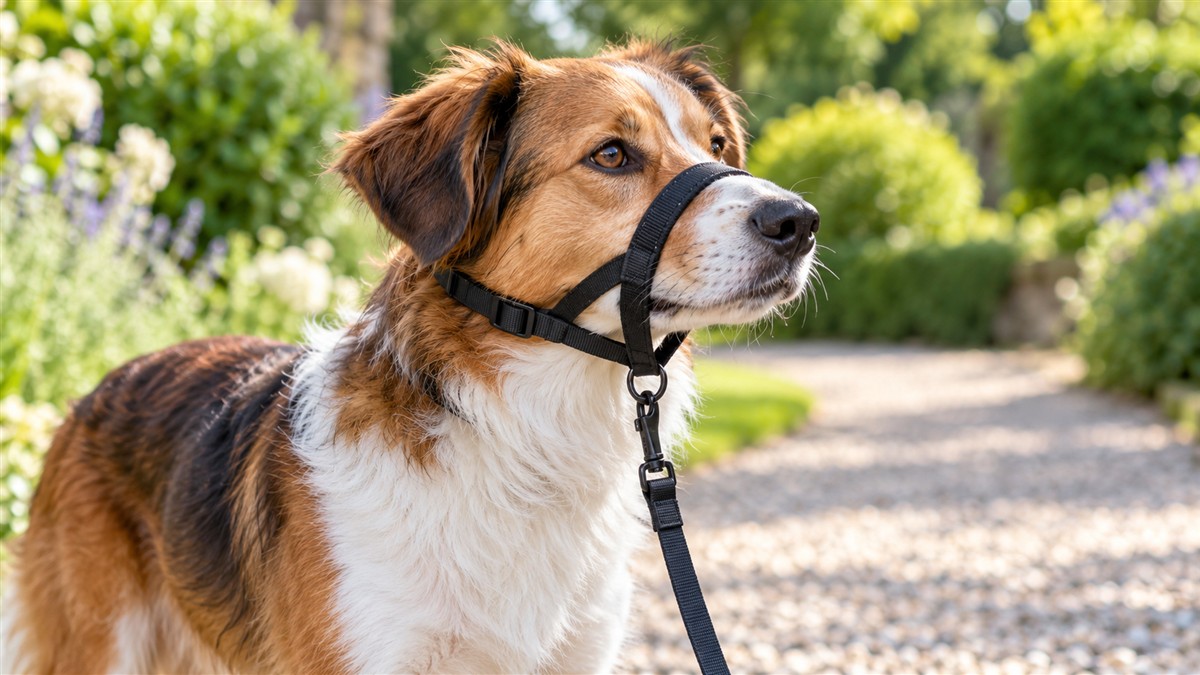
If your dog pulls hard enough to turn every walk into a tug-of-war, the leash is only part of the problem. A headcollar moves control to the head: a loop sits over the muzzle and a strap runs behind the ears, so when the dog pulls, the head turns toward you instead of the body surging forward. The PetSafe Gentle Leader No Pull Dog Headcollar in black, medium size is one of the most widely recognized versions of that design.
Quick verdict
The Gentle Leader in Medium suits an adult medium-sized dog with a standard-length muzzle that pulls on walks. It is a head-control tool rather than a neck collar, so it belongs on the shortlist whenever a dog pulls against a regular collar or harness. Three things decide whether it works for you: the dog’s size against the chart, the length of the muzzle, and whether your dog will accept something resting on the face during a gradual introduction. Price, color and brand reputation matter far less than those three.
Who it suits and who should skip it
It is a good fit when:
- Your dog falls in the Medium band on the size chart and you can confirm the weight.
- The dog pulls hard enough that neck pressure is the real problem, and you want the head to turn instead.
- You want a lightweight, padded option that is mostly nylon and neoprene.
- You are willing to introduce it slowly over a week or two with treats and short sessions.
Skip it when:
- Your dog has a short snout. The listing states that the Gentle Leader will not fit pets with short snouts such as pugs or bulldogs. Do not force a fit.
- Your dog sits at the edge of the Small or Large band and you cannot measure the dog accurately.
- Your dog paws, rubs or freezes every time something touches the face, even after a slow start.
- You want a neck-based solution, since this design works through the head.
Use cases that match the design
Daily neighborhood walks with a dog that lunges at squirrels, cats or other dogs are the strongest case, because the head gives you a way to turn the dog back toward you when a trigger appears. A dog that pulls mainly at the start of a walk, when excitement peaks, can also be a good case, as long as you keep the leash slack and reward attention.
Harder use cases need more thought. Long hikes on uneven ground, rain-soaked walks, and dogs that jump up on people are not described in the listing, so test those situations with short outings before relying on the headcollar for them. Walks in summer heat are a different story: the listing points to minimal straps and a cooler design, which suits warm weather better than a heavy harness. For the general trade-off between a collar and a harness, see our collar or harness guide.
Specifications in practical terms
- Model and size: Gentle Leader Head Collar, Medium, black, model GL-Q-HC-M-BLK. Keep the model number when you reorder so you get the same item.
- Weight: 1.44 ounces. That is almost nothing on a dog’s head, which helps comfort during long walks.
- Dimensions: 8 inches long and 1.25 inches wide, per the item dimension fields. The narrow strap width means less material on the face and neck.
- Materials: a padded neoprene nose loop and a nylon strap. Neoprene cushions the muzzle where the loop sits; nylon carries the daily load.
- Closures: a quick-snap neck strap and a snap closure on the nose loop. The listing advises listening for the snap. That click is your check that the loop is locked before you clip the leash on.
- Care: spot clean. Wipe the parts down rather than soaking or machine washing, because the listing does not describe any machine-wash method.
- Age and breed: the manufacturer recommends it from 1 month of age, and the listing names medium breeds as the recommendation.
- Warranty: 1 year, from the manufacturer.
- Brand line: PetSafe. The listing calls the brand a trusted global leader in pet behavior, containment and lifestyle products since 1998. That is a company statement, and the data package does not verify it.
Sizing: the chart and the checks you still need
The listing gives a size chart labeled by weight capacity in pounds:
- Petite: 0 to 2.3
- Small: 2.7 to 11.3
- Medium: 11.3 to 27.2
- Large: 27.2 to 59
Three checks come before you order.
First, weigh your dog. Use a current weight, not a remembered one, and compare it to the chart’s pound labels. A dog that is in between bands, or close to a boundary, needs more than the weight alone.
Second, notice the chart’s structure. It leaves a gap between 2.3 and 2.7, and it shares boundary values at 11.3 and 27.2. A dog whose weight lands on a shared boundary, or in the gap, is a borderline case.
Third, measure the muzzle and neck. The listing does not include a muzzle or neck measurement guide, so take those measurements yourself and compare them with the product’s own sizing instructions before buying.
Fitting and the first two weeks
Fitting is quick once the dog is comfortable. The listing describes an adjustable nose loop that fits in minutes, and the snap closure on the loop is what you should listen for.
A gradual introduction works best:
- Day 1 to 3: hold the loop near the face, pair it with treats, and release it before the dog pulls away. Keep sessions to a few minutes.
- Day 4 to 7: fit the loop, clip the leash and walk in a quiet area for short distances. Keep the leash loose.
- Day 8 onward: move to regular walks. Reward your dog for calm walking at your side, and keep the head turn gentle.
Place the nose loop above the nose, not over the eyes, and keep the strap behind the ears. It should sit snug enough not to slide, with room for the dog to open its mouth for a treat. After the first few walks, check the muzzle and the back of the ears for rubbing, and check the loop daily for wear.
Strengths the listing supports
The design is simple. Head control is the core feature, and the listing describes it as designed with a veterinary behaviorist and recommended by vets to interrupt a dog’s instinct to pull against pressure. Treat that as the manufacturer’s position. The data package holds no independent comparison study.
Other strengths are practical. The strap design is minimal, which keeps weight low. The padded neoprene nose loop helps the muzzle feel comfortable. The nylon build is meant for daily use. The snap closure makes the fit easy to check.
The listing’s phrase “most effective no-pull solution” is marketing language. It is not a measured comparison, so judge the headcollar by your dog’s response over a few weeks.
Limitations and avoid-if cases
- Short-snouted dogs are excluded by the listing. This is the hard limit.
- The size chart has gaps and shared boundaries, so borderline dogs need measurements.
- Head control changes the leash dynamic. Some dogs resist it by pawing, shaking the head or freezing. If that happens, slow the introduction, or stop and consult a trainer or your vet.
- Cleaning is spot clean only, so a dog that rolls in mud will need more upkeep.
- Ask your veterinarian before using any headcollar on a dog with a medical condition.
- The data package holds no duration or service detail beyond the 1-year warranty.
How to compare no-pull options
When you compare headcollars with other no-pull tools, sort them by these points. For a side-by-side look at a harness and a head-control option, see the Easy Walk harness and the Gentle Leader.
- Control point. This model works on the head. Martingale and prong-style training collars work on the neck, and they use different closures and materials. The listing data for other collars includes a martingale collar with a buckle closure, sized by neck measurement rather than weight, and a prong collar with a quick-release buckle, sized by neck inches. A neck-sized tool and a weight-sized tool are not interchangeable choices.
- Sizing basis. Weight charts and neck measurements answer different questions. Measure both so you can compare.
- Muzzle shape. A headcollar needs a muzzle that fits its loop. Short-snouted breeds need a different plan.
- Closure type. Snap closures give an audible check. Buckles and quick-release clips differ in how fast they open and how easily they fasten.
- Materials. The listing names neoprene and nylon for this model and does not address wet weather. For any option, check which parts will get wet and how they dry.
- Care method. Spot clean only, or machine wash, changes how often you replace parts.
- Confirm the item: PetSafe Gentle Leader No Pull Dog Headcollar, Black, Medium, model GL-Q-HC-M-BLK. Check it on the product page before you buy.
Choosing the PetSafe Gentle Leader by dog and situation
A young dog that is still growing. The manufacturer recommends the headcollar from 1 month of age, and the size chart runs on weight. A puppy can sit in the Petite or Small band for a while and then move into Medium, so weigh the dog again before each order instead of reusing an old number.
An adult medium dog on daily walks. This is the case the product is built for. The Medium band runs from 11.3 to 27.2 pounds on the chart, the item is labeled Medium, and the breed recommendation is medium breeds. If the weight sits comfortably inside that band and the muzzle is a standard length, the remaining work is the fit check and the introduction plan.
A dog with a short snout. This exclusion is covered above, so do not force the fit on a flat-faced dog. Ask your veterinarian which other tool suits the dog.
A dog near a chart boundary. Weights of 11.3 or 27.2 pounds sit on a shared boundary, and weights between 2.3 and 2.7 pounds fall in the gap. For those dogs the weight alone does not settle the size, so take the muzzle and neck measurements described below before you choose. For other medium-dog options, see our harness for a medium-sized dog guide.
A household with more than one dog. The included components field names one head collar, and the item count is one. Each dog needs its own order and its own size check.
A tight budget. The data package gives no price, so compare totals on the product page. The only warranty term the listing states is the 1-year manufacturer warranty. A headcollar that does not fit is wasted money, so the size checks matter more than the sticker price.
Measurement steps before you order
The listing gives weight bands but no muzzle or neck guide. The steps below are general method, not product instructions, so check the product page for any sizing note before you measure.
- Weight: hold the dog on a bathroom scale, subtract your own weight, and record the number. Repeat the reading to confirm it.
- Muzzle: with a soft tape, measure from the tip of the nose back to the point where the nose loop would rest. Note whether the muzzle reads as standard or short.
- Neck: measure around the neck where the strap would sit behind the ears.
Keep the numbers with the order, and compare them with the chart before you buy.
Quick comparison by group
The earlier comparison covered control point and sizing basis. These groups add the points the other collar listings give for warranty, care, materials and breed notes.
- Warranty: this headcollar carries a 1-year manufacturer warranty. The martingale collar in the research lists 60 days. The prong collar in the research gives no warranty term.
- Care: the headcollar and the martingale collar are both spot clean. The research gives no care method for the prong collar.
- Materials: the headcollar uses neoprene and nylon. The martingale collar adds polyester, rubber and stainless steel, and the prong collar uses nylon and zinc alloy.
- Breed notes: the headcollar names medium breeds. The martingale collar names Husky, Border Collie, Australian Shepherd and other short-coated breeds. The prong collar is listed for adult dogs, with Labrador, Pitbull and Mutt among its named breeds.
These collar facts come from other products. Use them to compare categories, not to attribute those features to this headcollar.
Reading the weight chart
Take a dog that weighs 12 pounds. The Medium band starts at 11.3 pounds, so this dog sits 0.7 pounds above that boundary (12 minus 11.3 equals 0.7), which is just inside Medium. A dog at 11.3 pounds would sit on the shared boundary, and a dog at 2.3 pounds would sit on the Petite boundary. The Medium band spans 15.9 pounds, from 11.3 to 27.2 pounds, while the Large band reaches up to 59 pounds.
Frequently asked questions
Can a puppy wear it? The listing recommends it from 1 month of age. A young dog may fall in the Petite or Small band, so check the chart with the current weight.
Can I wash it in a machine? The care instruction is spot clean, so wipe it instead.
How long is the warranty? The listing shows a 1-year manufacturer warranty.
Does it stop pulling on its own? The listing claims it interrupts pulling, but the data package includes no independent test. Expect a training period.
Does it come with a leash? The included components field names only the Gentle Leader Head Collar.
The product details describe fitting, not a training program.
Is it made for every life stage? The age range field reads “All Life Stages.” For the right size, still use the chart and your dog’s current weight.
Is it sold in another color? The color field reads black.
Final verdict
For a medium dog with a standard muzzle that pulls on walks, and an owner who will introduce the headcollar gradually, the Gentle Leader is a sound option to compare first. Skip it for short-snouted dogs, for borderline sizes you cannot measure, and for dogs that will not tolerate face contact. If the fit checks pass, the Gentle Leader in black, medium is a practical place to start.