Best Way to Organize Dog Supplies: Zones That Keep Pets Safe
As an Amazon Associate we earn from qualifying purchases. Details
The best way to organize dog supplies is to sort everything into a few clear zones, give each zone its own storage place, and keep anything hazardous in a closed, high place that the dog cannot reach. The ASPCA’s guidance on household products and common dangers makes that last step the priority. This guide walks through a zone system, explains where the sources we opened are specific and where they are silent, and lists the mistakes that come up most often when a home fills with dog gear.
Quick answer
- Sort supplies into zones: toys, grooming and walking gear, medications, cleaning products, and a travel kit.
- Keep medications and cleaning products in a closed cabinet or high shelf the dog cannot reach. The ASPCA says to keep all potential toxins completely out of reach.
- Put cleaning implements such as mops away after use, in an area the pets do not enter.
- Use the label directions for any cleaning product, and keep the product in its original container.
Why the zones matter more than the bins
Most guides to organizing dog supplies focus on containers and labels. Those details help, but the safety side of organization comes first. Storage location matters more than the look of the shelf. The ASPCA’s press release on human medications says that “it is so important to keep all potential toxins completely out of reach.” The same release quotes the medical director of the ASPCA Animal Poison Control Center saying that pets are “much stronger and agile, with the ability to chew right through pill containers or jump to typically out-of-reach hiding places.” A bin or a childproof-style lid is not a reliable barrier on its own.
That is why this guide puts hazards in their own zone, separate from everything else, and does not mix them into the everyday bins.
Step 1: Gather everything into one place
Start by collecting every dog item in the home. Check the hall closet, the car, the laundry room, the garage, and any drawer where a leash or a bag of treats has ended up. Put everything on one table or floor area so you can see the full amount before you sort.
Count what you find by type, not by brand. Leashes, collars, harnesses, toys, grooming tools, bowls, bags for waste, medications, and cleaning products are the usual groups. Do not discard anything yet. Sorting comes first.
Step 2: Set up five zones
Use five zones as the working system. Each one has its own place in the home.
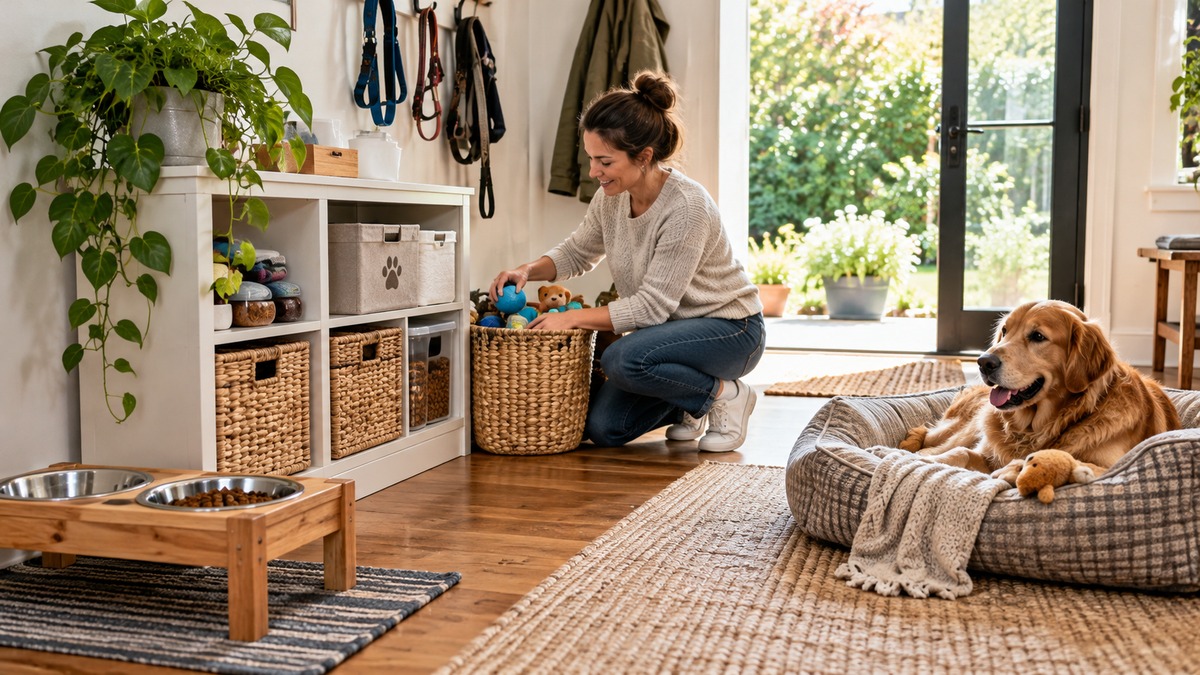
Zone 1: Toys and chews. Everyday toys and chews go here, in one bin or basket. Keep the zone away from the hazard zone, and inspect items as they come out, which is covered in our toy storage guide.
Zone 2: Walking and grooming gear. Leashes, collars, harnesses, brushes, and nail tools can share a hook or a drawer near the door you use most. Keep grooming tools dry and out of the reach of toys so they do not get mixed up.
Zone 3: Medications. Prescriptions and over-the-counter products for the dog belong in a closed cabinet, away from the zone where pets rest or eat. The ASPCA’s household guidance says that “you should always keep personal products and items in a medicine cabinet or up high enough so that your pet cannot reach them.”
Zone 4: Cleaning products. Keep cleaning products in a closed cabinet, high enough that the dog cannot reach or open the door. The ASPCA advises owners to “clean and put away cleaning implements like mops in areas your pets won’t have access to.”
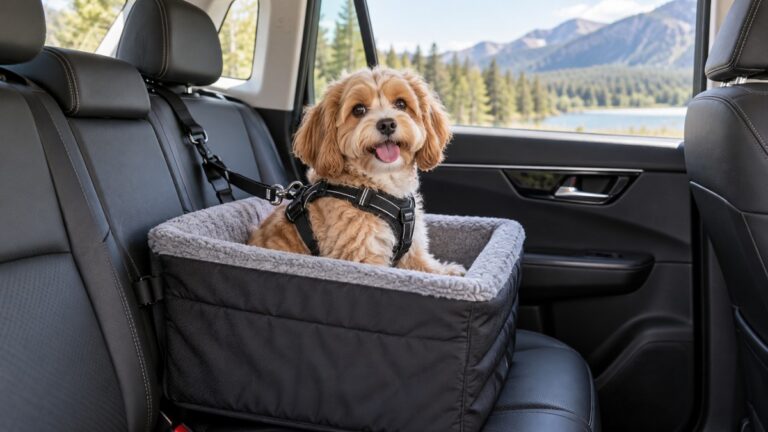
Zone 5: Travel kit. A travel kit should be packed and stored in one bag, so it is ready when needed. The kit is not a hazard zone, but it can include medication, which means it must be checked against the rule for Zone 3 before it goes into the car.
Five zones may sound like a lot for a small home. In practice, two of them, the toy zone and the walking zone, often share the same shelf. The key rule is that the medication and cleaning zones never share space with pet-accessible storage.
Step 3: Move medications to a closed, high place
Medications are the most important item to organize. The ASPCA says that human medications have topped its list of pet poison concerns, and the ASPCA’s press material notes that “many of these exposures occurred because people did not store lawn and garden products out of the reach of pets.” The same logic applies to human medicine.
Store medications in a closed cabinet, not on a counter or nightstand. The ASPCA’s household guidance on rooms in the home notes that bedrooms are not safe places to keep medications, because tables and nightstands are easy for a pet to reach. Keep the medication cabinet in a room the dog does not enter during daily life, and close the door after each use.
Take medications in a separate room if you can. The ASPCA’s guidance says to take pills “behind a closed door away from your pets,” because a dropped pill can be picked up quickly.
Step 4: Store cleaning products and tools
Cleaning products need the same treatment as medications. Keep them in a closed cabinet, and keep the tools that go with them, such as mops and cloths, in an area the dog cannot enter.
The ASPCA’s household guidance also covers how to clean safely. It says that “always follow label directions for usage” and advises that owners “contact your veterinarian or the manufacturer” with questions about the right product. It also says to “ensure you dispose of unused or dirty solutions.” Empty a cleaning bucket after use, and do not leave a solution sitting in an open container.
Keep each cleaning product in its original container. A relabeled bottle can cause confusion about what is inside, and the label directions cannot be followed if the original label is gone.
Step 5: Use a labeled bin for everyday supplies
Once the hazards are in the closed zones, the everyday supplies can go into open, labeled bins. Clear bins work well for toys and treats, because the owner can see what is inside without opening every lid. Label each bin with its contents, and keep the labels at the front so they are easy to read from the door.
Open bins are fine for toys, leashes, and grooming tools. They are not a place for medications or cleaning products, which should stay in the closed zones even if the bin is labeled and sealed.
Step 6: Make a short check list for each zone
A simple checklist keeps the system working. Once a month, check that the medication cabinet is closed and locked where a lock is used, that cleaning products are in their original containers, and that the toy and walking bins are still in their zones. The sources we opened do not give a checking schedule, so the monthly interval here is a practical suggestion, not something a source recommends.
When a new item comes into the house, ask which zone it belongs in before it goes anywhere. A new cleaning product goes to the cleaning cabinet, and a new medication goes to the medication cabinet, not to the nearest shelf.
Common mistakes to avoid
Keeping medications on a nightstand or counter. The ASPCA warns against this because pets can reach low, easy-to-access surfaces. Move the medication to a closed cabinet.
Storing cleaning tools next to toys. A mop or cloth left in the toy area can be picked up and chewed. The ASPCA advises keeping cleaning implements in areas pets cannot access.
Relying on a bin lid as the only barrier. The ASPCA says pets can chew through pill containers. A closed cabinet is the safer step.
Moving products to unlabeled containers. The original label holds the directions and the warnings. Keep the original container.
Leaving a travel kit with medication in the living room. The kit is useful, but its medication belongs in the medication zone when it is not packed.
What we could not verify
The sources we opened do not address the storage of pet food, treats, or bags of dry food in a home. The University of Minnesota Extension page that discusses stored food was not accessible to us, so this guide does not make a claim about food storage.
The sources do not say which bin, basket, or shelf material is best for dog supplies, and they do not compare cabinet types.
The sources do not give a schedule for checking supplies, such as monthly or quarterly, so the check list above is a practical suggestion and not a sourced rule.
The sources we opened do not address organizing supplies for multiple dogs, puppies, or senior dogs. Those cases may need different zones.
How we chose
This guide answers one question: what is the best way to organize dog supplies, using storage steps the sources support. We based the zone system and the safety rules on three ASPCA pages we opened on 2026-10-23: the ASPCA’s household products guide, its guide to common dangers in each room, and its press release on human medications and pet poisoning. Where a page does not cover an item, such as pet food, the guide says so. The guide does not recommend a product, list a price, or rank any container.
FAQ
Where should I store dog medication at home?
The ASPCA says to keep medications in a closed cabinet or high enough that the pet cannot reach them. It also warns against nightstands and low tables, and it says pills should be taken behind a closed door away from pets.
Is a childproof container enough to keep medication away from my dog?
The ASPCA’s press material says pets can chew right through pill containers. A closed cabinet is the safer option.
Where should cleaning products go?
The ASPCA advises keeping cleaning products out of reach and putting cleaning implements in areas the pets cannot access. Keep the products in their original containers and follow the label directions.
How do I organize toys and leashes together?
Keep toys and walking gear in open, labeled bins or on a hook or shelf in zones that do not hold hazards. The sources we opened do not give a layout, so the zones in this guide are a practical method.
What if I am not sure whether an item is a hazard?
Contact a veterinarian, and the ASPCA’s household guidance also suggests contacting the manufacturer about the right use of a product. Do not use an unknown product near the dog until you have an answer.
Bottom line
Organize dog supplies by zone, and give the hazards their own closed, high storage. Medications and cleaning products belong in a closed cabinet, cleaning tools belong in an area the dog cannot enter, and toys and walking gear can sit in open labeled bins. For the points the sources do not cover, such as pet food and checking schedules, the sources do not say, so this guide does not give a number.
For a toy-focused layout, see our teething puppy chew guide. For walking gear to keep near the door, see our small dog no pull harness roundup.
Sources
- https://www.aspca.org/news/pet-poisons-be-mindful-these-household-products-and-cleaning-agents
- https://www.aspca.org/news/dangers-lurking-every-room-your-home-depth-look
- https://www.aspca.org/about-us/press-releases/human-medications-top-list-aspca-animal-poison-concerns