Best Way to Pick Up Dog Poop in the Backyard
As an Amazon Associate we earn from qualifying purchases. Details
The person typing “best way to pick up dog poop in backyard” wants a routine they can repeat every day without making a mess of the yard. The short answer is to scoop the waste soon after your dog goes, put it in a bag, and throw the bag in your household trash. Washington State University Extension puts it in one line: “Just Scoop it, bag it & put it in the trash.”
Quick answer
- Scoop as soon as possible after your dog goes, while the waste is easy to find and before it spreads through the grass.
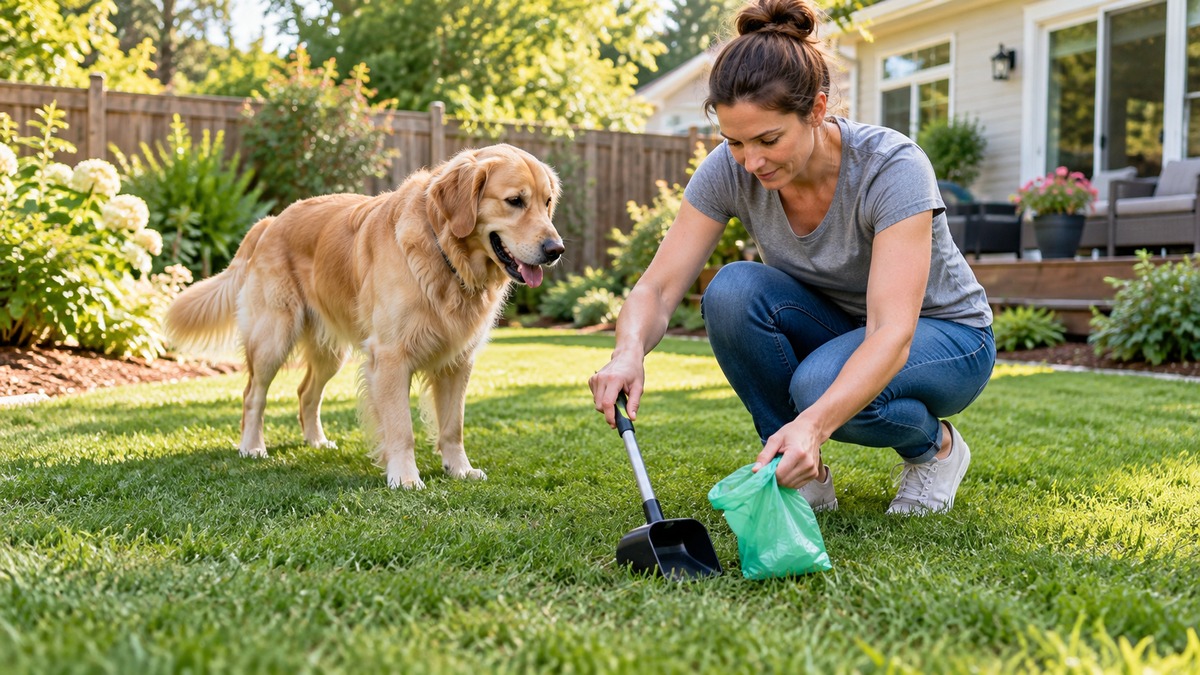
- Use a scooper or a gloved hand, put the waste into a bag, and tie the bag closed.
- Put the bag in your household trash. Do not put it in a compost pile, and do not put it in a storm drain.
- Keep a bag or scooper in the yard or by the back door so you do not have to go looking for one.
How we chose
This guide is based on public guidance from a university extension office, a university extension newsletter, and the U.S. Environmental Protection Agency. We opened each source directly, read the page or PDF text, and checked the quotes against that text before using them. The sources are listed at the end of this guide.
This guide does not recommend any product. It explains a routine that the sources support, and it marks the points those sources do not cover.
We looked for three things in the sources: what to do with the waste after you scoop it, why the timing matters, and which disposal methods the sources say to avoid. Where a source is silent on a point, we say so in the section called What we could not verify.
How to pick up dog poop in the backyard
Step 1: Pick a tool you will actually use
Choose one of two methods and keep it in the same place every time.
- A scooper. A scooper keeps your hands away from the waste.
- A bag on your hand. The WSU Extension page describes placing a hand inside a bag as if putting on a glove, then turning the bag over the waste.
Either method works if the waste goes into a bag and the bag goes into the trash. The sources we opened do not rank one tool above the other. If you want a separate guide to the bag side of this routine, see the bags to pick up dog poop guide.
Step 2: Scoop soon
The EPA fact sheet says that animal waste contains two main types of pollutants that harm local waters: nutrients and pathogens. The pathogens are disease-causing bacteria and viruses. The sooner the waste is removed from the yard, the less time it has to break down into the soil and spread.
The same EPA fact sheet says that when waste decomposes in water, it releases nutrients that cause excessive growth of algae and weeds, and the water can become murky and smelly.
Scoop on a schedule you can keep. The sources do not give a number of times per day or per week that is right for every yard.
Step 3: Bag the waste
Put the waste into a bag that closes. Tie the top or fold it shut. Do not leave the bag open on the grass or on a patio while you do other chores.
The UConn Extension article “What Do You Do After You Scoop?” describes the common mistake of carrying waste to a storm drain. The author writes that a neighbor who had scooped a dog’s waste then dropped the bag directly into a storm drain. The article says the waste should not be carried directly to the storm drain. The bag belongs in the trash.
Step 4: Put the bag in the trash
The EPA fact sheet says that for dogs and other pets that eat meat, it is important to dispose of the waste in the garbage. The fact sheet gives a reason for the rule: the parasites, bacteria, and viruses in meat-eater waste are not readily destroyed during composting, so the waste should not be placed in a compost pile.
The UConn article gives the same basic answer. It says that once you scoop the waste, you need to dispose of it properly, “either in the garbage or flushed down the toilet (minus the plastic bag).” The article is a short extension piece, so read it as a summary and check your local rules before you flush anything.
If you use an outdoor trash can for the bags, the sources we opened do not say what size or type of can is best.
Step 5: Clean the spot if needed
If a little waste was left on the grass, pick it up as soon as you see it. The sources we opened do not give a specific cleaning product or method for lawns. For that reason, this guide does not recommend a product or a chemical. Pick up what you can see, bag it, and place it in the trash.
Step 6: Keep the tools ready
A bag or scooper that is out of reach is one reason waste gets left behind. Keep a supply of bags and your scooper in the same spot near the door you use for the yard. For a dispenser that holds bags on a leash, see the dog poop bag dispenser guide. If you walk your dog away from home, carry a bag with you so you can pick up in public spaces as well as in your own yard.
What to avoid
Some common ways of handling yard waste are not supported by the sources we opened, and some are specifically warned against.
- Do not put the waste in a compost pile. The EPA fact sheet says meat-eater waste should not be placed in a compost pile.
- Do not put the waste or the bag in a storm drain. The UConn article says waste should not go directly into a storm drain. The EPA fact sheet explains that the pollutants in animal waste harm local waters.
- Do not leave the waste to break down on its own. The EPA points to the pathogens and nutrients in animal waste as the reason waste harms local waters when it is not disposed of properly.
- Do not assume flushing works everywhere. The UConn article says to flush the waste without the plastic bag. The sources we opened do not say whether flushing is right for every system.
Buying checklist for a backyard routine
You do not need many items to do this well. The following checklist covers what the sources support:
- A scooper or a supply of plastic bags you will use every time
- A lidded trash can for the bags, if you have one
- A place to store bags and a scooper near the yard door
- A habit of scooping soon after your dog goes
- A plan for what to do when you walk your dog away from home
The sources do not give a price, a brand, or a size as a requirement. For that reason, this checklist does not name products.
Common mistakes
Waiting too long. The longer the waste sits, the more of it can spread, dry, and get trampled into the lawn. Scooping soon makes the job faster and cleaner.
Using a compost pile. A compost pile is a common backyard habit, but the EPA fact sheet says meat-eater waste should not go into one.
Dropping the bag into a drain. A bag that goes into a storm drain is not disposed of properly, and the UConn article says the waste should not be carried to a storm drain.
Forgetting the bag. Without a bag, waste is harder to pick up cleanly. Keep a bag with the leash.
Leaving bags open. A bag that is left open can be knocked over before the waste goes in the trash. Tie the bag closed as soon as the waste is inside.
What we could not verify
- Septic systems. The WSU and UConn sources we opened do not give a detailed rule for septic systems. The UConn article mentions flushing, but it does not say whether a septic system can take flushed waste. Check your local rules and your septic provider before flushing.
- Biodegradable bags. The sources we opened do not say whether a biodegradable bag is better than a regular plastic bag for this routine. Our sources say only that the bag goes in the trash.
- Lawn treatment. The sources do not give a cleaning product, a dose, or a method for treating a lawn after waste has been removed.
- How often to scoop. The sources do not say how many times a day or week a yard should be scooped.
- Exact health risks for your family. The EPA fact sheet and the WSU page describe germs and pathogens in general. They do not give a risk estimate for a particular yard, a particular dog, or a particular family.
- Local rules. Many towns and counties have their own pet waste rules. The sources we opened do not cover your local code.
FAQ
Can I put dog poop in my compost pile?
No, not according to the EPA fact sheet we opened. It says that meat-eater waste should not be placed in a compost pile because the parasites, bacteria, and viruses are not readily destroyed during composting. The same fact sheet tells owners to dispose of the waste in the garbage.
Can I flush dog poop down the toilet?
The UConn Extension article says the waste can be flushed down the toilet without the plastic bag. The article does not cover septic systems in detail. Check your local rules and your septic provider before you flush.
Is it safe to put dog poop bags in the storm drain?
No. The UConn article describes a bag dropped into a storm drain as a mistake, and says the waste should not be carried directly to the storm drain. The EPA fact sheet explains that pet waste harms local waters when it is not disposed of properly.
Do I need a special bag?
The sources we opened do not say that a special bag is required. They say to bag the waste and put the bag in the trash. The WSU page says to place a hand inside a bag like a glove, which works with a standard plastic bag.
Should I use a scooper or my hand?
Either works if the waste goes into a bag and the bag goes into the trash. The sources do not rank one method above the other, so choose the one you will use every time.
How soon should I pick up dog poop?
Pick it up as soon as possible. The EPA fact sheet explains that waste left in the environment releases nutrients and pathogens. The sources we opened do not give a set number of minutes or hours.
Bottom line
Scoop soon, bag the waste, and put the bag in your household trash. Keep the routine simple, keep the tools where you can reach them, and never put the waste or the bag into a compost pile or a storm drain. Check local and septic rules before flushing anything.
Sources
- https://extension.wsu.edu/clallam/wp-json/wp/v2/pages/5543 (Washington State University Extension, Clallam County, page text, opened 2026-10-23)
- https://extension.uconn.edu/2018/04/30/what-do-you-do-after-you-scoop (UConn Extension, “What Do You Do After You Scoop?”, opened 2026-10-23)
- https://cfpub.epa.gov/npstbx/files/Pet%20Care%20Fact%20Sheet.pdf (U.S. Environmental Protection Agency, Pet Care Fact Sheet, opened 2026-10-23)