Best Dog Shoes for Large Dogs: Measure the Paw Before You Buy
As an Amazon Associate we earn from qualifying purchases. Details
By Ken
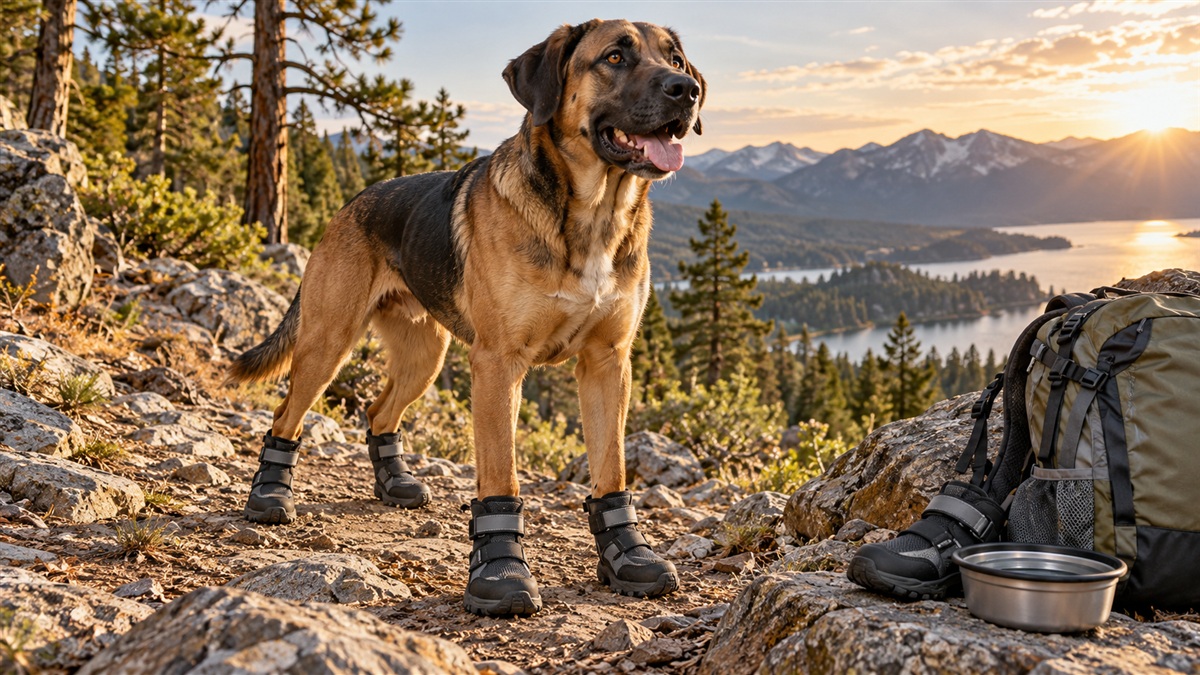
The person typing best dog shoes for large dogs wants a boot that fits a big paw and stays on a dog that runs, turns and pulls. For a large dog the size decides most of the outcome, and the four boots in this guide do not size the same way. One gives a paw width in inches. One asks for body measurements. Two give size letters with a rule for in-between sizes but no number. This guide explains what to measure, how to read each listing and where the listing text stops.
Quick answer
- Measure the front paw across its widest part, then match that number to the listing you are buying. Hcpet is the only pick with a paw width in inches: size 6 is 2.55 inches wide.
- Three of the four picks push you toward the larger size. Hcpet and QBLEEV say so for in-between measures, and Sunnymove says to choose a boot larger than the paw.
- PURRLIA sizes by chest, neck, back and hind-leg length, so it suits an owner who prefers body measurements. The chart it points to is not in the listing text.
- Sunnymove is the only pick written for wound recovery. Ask your vet before using any boot on an injured paw.
- Before a long walk, let the dog wear the boots indoors and check that the paws stay in.
Start with the paw, not the weight
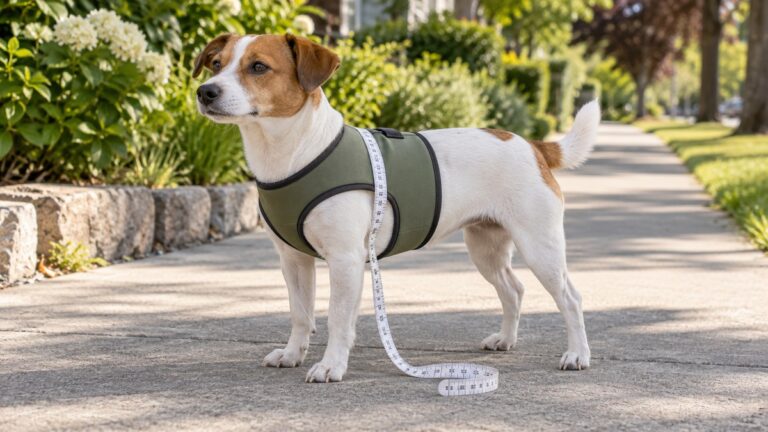
A boot wraps a foot, so the foot is the measurement that matters. The AKC boot guide describes the paper method in plain steps. “Take a piece of paper and press your dog’s paw into the sheet.” Then trace the outline and “Draw a line across the widest part of the paw tracing and measure it.” That single width is the number a boot chart needs.
Weight is a poor stand-in. The Hcpet bullets make the point themselves: “Measure paw WIDTH (not weight) and match our chart for a snug, accurate fit.” The same bullets then tie size 6 to a weight band, 52 to 68 pounds. A reader could take that band as the rule. The paw width is the safer number, and the listing’s own instruction says to use it.
The four picks use four different ways to size the same boot, and the table below sets them side by side.
| Pick | Sizing method in the listing | Number the bullets give | Rule for in-between sizes |
|---|---|---|---|
| Hcpet | Paw width across the widest part | Size 6 is 2.55 inches wide; sizes 1 to 8 are named | Size up |
| PURRLIA | Chest, neck, back and hind-leg length, then a size chart | None | Not stated |
| QBLEEV | Six sizes, XS to 2XL; no measuring method in the bullets | None | Choose the larger size |
| Sunnymove | Sizes S to XL; choose a boot larger than the paw | None | Choose the larger boot |
The table shows two families of method. Hcpet and the AKC paper method both measure the paw. PURRLIA measures the body. QBLEEV and Sunnymove name sizes without giving the numbers behind them. A body-based chart can work for a large dog with a broad chest and a long leg, but the paw still has to fit inside the boot. AKC’s measuring guide is written for clothing and harnesses rather than boots, yet its general advice carries over: “Always compare your dog’s measurements with individual product sizing charts before purchasing.” The same page warns that “Brand Variation: Always check the measurements listed on individual products.”
Convert the numbers before you compare
Listing numbers are in inches. A tape marked in centimeters needs a conversion, and the formula is simple: multiply inches by 2.54.
- Hcpet size 6: 2.55 x 2.54 = 6.48 centimeters.
- PawZ medium, listed for medium dogs with paws from 2.5 to 3 inches: 2.5 x 2.54 = 6.35 centimeters and 3 x 2.54 = 7.62 centimeters.
- PawZ small, listed for paws from 2 to 2.5 inches: 2 x 2.54 = 5.08 centimeters and 2.5 x 2.54 = 6.35 centimeters.
- TEOZZO size 3, listed at 1.37 inches wide: 1.37 x 2.54 = 3.48 centimeters.
The PawZ and TEOZZO listings are not large-dog picks. They appear here because they show what a paw number looks like in a listing and because the numbers do not line up across brands. Hcpet’s size 6 at 2.55 inches sits inside the PawZ medium range of 2.5 to 3 inches. One listing calls that boot a size 6 for large dogs, and the other calls its range medium. A size letter tells you little on its own. A paw number tells you more, but only when the brand gives one.
Here is a worked case with the Hcpet numbers. Suppose a traced paw measures 2.6 inches across. That is 0.05 inches wider than size 6, because 2.6 minus 2.55 equals 0.05. The Hcpet bullets say to size up for in-between measures. The research file does not give the width of any other Hcpet size, so it cannot say whether the next size is the right fit. The chart on the product page is the step that closes that gap, and it should be read before the order is placed.
What the boot should do once it is on
The AKC boot guide gives three checks that do not depend on the listing. The first is whether the paw stays put: “Assess whether your dog’s paws stay in the boot or if they slip out.” The second covers a boot that does not hold: “If your dog’s paws don’t securely fit the boots, you may need to consider purchasing a different size.” The third is a trial before any long outing. The page suggests a test run, which means having the dog wear the boots indoors first.
Adjustment takes time as well. The AKC paw-care page says “It may take a little time for your dog to get used to wearing dog booties,” and adds that “with patience and rewards, most dogs adapt just fine.” The boots page asks owners to “Monitor your dog for signs of discomfort or stress when wearing boots, allowing you to intervene or make adjustments when necessary.” Short indoor sessions, then a longer walk, is a sensible order for a large dog that has never worn anything on its feet.
After the first outing, check the paws. The AKC paw-care page says that “Cleaning your dog’s paws is a great opportunity to check for cuts, scrapes, or dry and cracking pads.” Look between the pads and around the nail beds, and note any change in the way the dog walks.
The four picks
Four listings in the research file name a size that reaches large dogs. The cards below give each listing’s own bullets and specification fields, with the spec field that supports each point. No prices, ratings or sales figures were used, because the research file stores none of them.
1. Dog Boots for Large Medium Small Dogs, Water-Resistant Dog Shoes (Best for a paw-width number in the listing)
Specs from the listing (checked ):
- Size: Width 2.55 in
- Dog Breed Size: Large
- Material: Nylon
- Product Care Instructions: Machine Wash
Pros
- Size 6 is listed at 2.55 inches wide, the only paw width in this group
- Dual adjustable straps with a wide split-seam opening, according to the bullets
- Dog breed size field reads Large
Cons
- The bullets say hand-washable but the specification field says Machine Wash
- The dimensions line reads 0.3 x 1 x 0.2 inches, which does not describe a boot
Best for: A large dog whose paw can be traced and measured across the widest part
Skip if: Your dog's paw width is far from 2.55 inches and you need the widths of the other sizes, which the listing text does not give
View on Amazon (affiliate link)
2. Anti-Slip & Waterproof Dog Shoes with Full Leg Coverage (Red M (Best for a connected set sized by body measurements)
Specs from the listing (checked ):
- Size: M
- Closure Type: Elastic Band
- Dog Breed Size: Large, Medium, Small
- Unit Count: 1 Count
Pros
- Four booties connected by adjustable elastic bands, according to the bullets
- Sizing uses chest, neck, back and hind-leg length rather than paw width
- Specification field lists Large, Medium and Small as dog breed sizes
Cons
- No paw width or size numbers appear in the bullets, and the chart it points to is not in the text
- Unit count reads 1 Count while the bullets describe four connected boots
Best for: An owner who prefers body measurements and a set that moves as one piece
Skip if: You want to size by paw width, since the listing gives no paw number
View on Amazon (affiliate link)
3. QBLEEV Dog Suspender Boots, Waterproof Dog Rain Boots Paw Protector Shoes (Best for six sizes and a stated larger-size rule)
Specs from the listing (checked ):
- Size: X-Small
- Closure Type: Buckle
- Dog Breed Size: Extra Small
- Material: Nylon
Pros
- Six sizes from XS to 2XL, according to the bullets
- Bullets say to choose the larger size when a measure falls between two sizes
- Elastic band connects all four boots, with adjustable fastener straps
Cons
- The specification field shows Size X-Small and Dog Breed Size Extra Small for this listing
- The bullets name a buckle and a hook-and-loop closure, but the specification field lists only Buckle
Best for: A large-dog buyer who wants a connected set and a clear between-size rule
Skip if: You need a paw measurement or a size chart number, since the bullets give neither
View on Amazon (affiliate link)
4. 2 Pcs Dog Paw Wound Recovery Boots Non-Slip Dog Protector Boots for Injured Paw Breathable Soft Pet (Best for a wound-recovery boot in sizes up to XL)
Specs from the listing (checked ):
- Size: XL
- Closure Type: Hook & Loop
- Dog Breed Size: Large, Medium, Small
- Material: Polyester
Pros
- Sizes S, M, L and XL, with the XL variant in the specification field
- Bullets say the boots are designed for post-surgical care, nail bleeding and paw pad injuries
- Hook-and-loop closure with an adjustable self-adhesive strap
Cons
- Built for recovery rather than everyday walks, according to the bullets
- A bullet about a dog with size S paws is cut off in the text, so its sizing advice is incomplete
Best for: A large dog that needs a protective boot on a recovering paw, with a vet's approval
Skip if: Your dog needs an everyday shoe and has no paw injury; ask your vet before using it on any wound
View on Amazon (affiliate link)
Notes on each pick
Hcpet: the only paw-width number
Hcpet’s listing is titled for large, medium and small dogs, and its specification field reads “Large” for the dog breed size. The bullets give the one paw width in this group. Size 6 is 2.55 inches wide and, according to the same bullet, suits dogs from 52 to 68 pounds. The bullets also say sizes 1 to 8 cover a range from 11 pounds to 88-plus pounds, and they tell buyers to size up for in-between measures. Size 6 is linked to a list of breeds, including Samoyed, Husky, Labrador, Airedale Terrier and Chow Chow. The bullets present those names as examples, not as a full list of fits.
The construction notes are specific. The bullets describe breathable mesh, reinforced stitching, a rugged sole and reflective straps. The fit notes describe “dual adjustable straps with a wide split-seam opening,” which the listing says make the boots easy to put on and take off. For a large dog that is already wary of having its feet handled, a wide opening can shorten the first try, though the listing does not claim that outcome.
The care instructions conflict. The bullet calls the booties hand-washable, while the specification field says Machine Wash. Read the care label on the boot before choosing a washing method. The dimensions line in the specification field reads 0.3 x 1 x 0.2 inches, which does not describe a boot, so this guide does not use it.
PURRLIA: a connected set sized by body measurements
PURRLIA’s four booties connect through adjustable elastic bands, which the listing says lets the set go on and off quickly. Each boot also has matching adjustable straps for the suspender system. The bullets say the fit is taken from “chest, neck, back, and hind leg length,” and they say the set comes in six sizes. The size in our file is M, and the bullets do not give a number for that size.
The bullets also describe thickened rubber soles that “last 3 times longer than ordinary dog-shoe soles.” That is the listing’s own claim, and the listing does not name a source for it. QBLEEV uses nearly the same sole sentence, so the claim appears in two listings with no support given in either one.
The specification field lists the unit count as one, while the bullets describe four connected boots. The listing does not say whether one package holds one full set. Check the order page for the count before buying.
PURRLIA suits a dog that will wear a set on walks and an owner who finds body measurements easier to take than a paw measurement. It is a weaker choice for a buyer who wants a paw number, since the listing text names no paw width at all.
QBLEEV: six sizes and a stated larger-size rule
QBLEEV’s bullets list six sizes from XS to 2XL and say, “If the size is between two sizes, please choose the larger size.” That is the clearest in-between rule in this group. The bullets also say the boots suit “small medium large dogs,” but the specification field shows Size X-Small and Dog Breed Size Extra Small. The field describes one variant, so a large-dog buyer must choose the large size on the order page and should not rely on the field.
The closure is described two ways. The bullets mention an adjustable buckle and a hook-and-loop closure. The specification field lists “Buckle” only. Check the product page for the closure that comes with the size you pick.
The bullets say the reflective details enhance visibility “during nighttime walks,” and they suggest giving the dog “a few minutes to get used to the shoes.” The sole claim matches PURRLIA’s: thickened rubber that lasts three times longer than standard dog-shoe soles. Neither listing explains how that figure was reached, so it stays in this guide as a claim and not as a fact.
Sunnymove: wound-recovery boots in sizes up to XL
Sunnymove’s title and bullets describe a dog paw wound recovery boot. The first bullet says the boots are “Specifically designed for post-surgical care, nail bleeding, or paw pad injuries.” The specification field lists Size XL, two pieces, polyester and a hook-and-loop closure. The bullets also mention an adjustable self-adhesive strap and say the boots suit “daily activities from small to large dogs.”
For sizing, the bullets say, “We recommend choosing boots that are larger than your dog’s paws,” and they point to a size guide. The bullets name sizes S, M, L and XL. The size guide itself is not in the listing text, and one bullet about a dog with size S paws is cut off, so this guide does not quote it.
Use this pick for an injured or recovering paw, and ask your vet before putting it on a wound. The research file holds no veterinary instruction for this product, and the listing’s recovery claims are its own wording.
Who should skip these picks
- Small and medium dogs. The PawZ listings name paws of 2 to 3 inches and are written for small or medium dogs. They appear here only as reference numbers.
- Buyers who need a number from the listing. PURRLIA and QBLEEV give no paw measurement in their bullets, so measure the paw and check the chart that comes with the listing.
- Buyers who want a weather rating. The weather wording in these listings is not a sizing measure, so this guide leaves it out of the fit advice.
How we chose
The research file for this guide holds twelve entries. One is a bitter apple spray, which is not footwear. Three have a title but no bullets and no specification fields, so the size they cover cannot be checked. Three PawZ entries and one TEOZZO entry describe small or medium dogs. The remaining four name a size range that reaches large dogs, and those four are the picks.
We used the listing’s own bullets and specification fields only. The picks were chosen because their text names a size that reaches large dogs, not because of any ranking. None of the four listings gives enough measured detail to rank them against each other on fit, so the cards describe each listing and leave the decision to the buyer’s own measurement.
What we could not verify
- Whether any of the four boots fits a given large breed. The Hcpet bullets name breeds as examples; the other listings name none.
- The size charts that PURRLIA and Sunnymove point to. Those charts are not in the listing text.
- The sole durability claims for PURRLIA and QBLEEV. Both are the listings’ own wording.
- Whether Hcpet’s boots are washed by machine or by hand. The bullet and the specification field disagree.
- The width of any Hcpet size other than size 6.
- Whether the AKC measuring guide applies to boots in every case. That page is written for clothing and harnesses, so this guide uses only its general steps.
Measuring checklist
- Have the dog stand on a flat floor, with the front paw relaxed and flat.
- Press the paw onto paper and trace its outline, as the AKC boot guide describes.
- Draw a line across the widest part of the tracing and measure it in inches.
- If the chart uses centimeters, multiply the inch figure by 2.54.
- Read the chart on the listing you are buying. Do not borrow a chart from another brand.
- If the number falls between two sizes, the Hcpet and QBLEEV listings say to go up to the larger size.
- Put the boots on indoors and check that the paws stay in.
- Watch the dog for discomfort, and check the paws after the first outing.
Mistakes that send a boot back
- Buying by weight alone. The Hcpet bullet ties a weight band to size 6, but the same listing says to measure the paw.
- Trusting a size letter across brands, as the PawZ medium and Hcpet size 6 example shows.
- Skipping the chart. PURRLIA and Sunnymove both point to one, and the chart decides the fit.
- Ordering without checking the care line, since the Hcpet bullet and specification field disagree.
- Skipping the indoor trial that the AKC boot guide recommends.
FAQ
How do I know which size a large dog needs?
Measure the front paw across its widest part, following the AKC paper method, and match the number to the chart on the listing you are buying. Only Hcpet gives a paw width in its bullets, so for the other three picks the chart on the product page is the number that counts.
Should I size up if my dog falls between two sizes?
Yes for Hcpet and QBLEEV, whose bullets both give that rule. PURRLIA’s bullets give no in-between rule. Sunnymove says to choose a boot larger than the paw. The AKC measuring guide, written for clothing and harnesses, suggests looking for adjustable options when a dog falls between sizes.
Can I put a boot on an injured paw?
Ask your veterinarian first. Sunnymove’s listing is written for wound recovery and post-surgical care, but the listing text gives no instructions for use on a healing or injured paw. The research file holds no veterinary guidance for any of these products.
How long does it take a dog to get used to boots?
The AKC paw-care page says that “It may take a little time for your dog to get used to wearing dog booties,” and adds that most dogs adapt with patience and rewards. Start with short indoor sessions before a long walk, then watch how the dog moves.
Are connected sets better than separate boots?
PURRLIA and QBLEEV both tie all four boots together with elastic bands, which keeps the set moving as one piece. The listings do not say which design a dog accepts better, so this guide does not rank them.
Bottom line
Measure the paw in inches, match the number to the chart on the listing you are buying, go up a size when the measure falls between two, and let the dog wear the boots indoors before the first walk. For fastening details on a boot that should stay on, read our guide to best dog boots that stay on. For a harness that covers a large-dog size range, see best rated dog harness for large dogs.
Sources
- AKC, Best Dog Boots for Any Weather: paper tracing and the widest-part measurement; check whether the paws stay in; indoor test run; watch for discomfort (opened 2026-10-20)
- AKC, How to Clean and Care for Your Dog’s Paws: adjustment time for booties; check the paws for cuts, scrapes and dry or cracking pads (opened 2026-10-20)
- AKC, How to Measure Your Dog for Clothes and Gear: measure while standing; compare with product charts; brand variation; adjustable options between sizes (opened 2026-10-20)