PETSFIT Dog Car Seat Review: 35 lb Limit
As an Amazon Associate we earn from qualifying purchases.
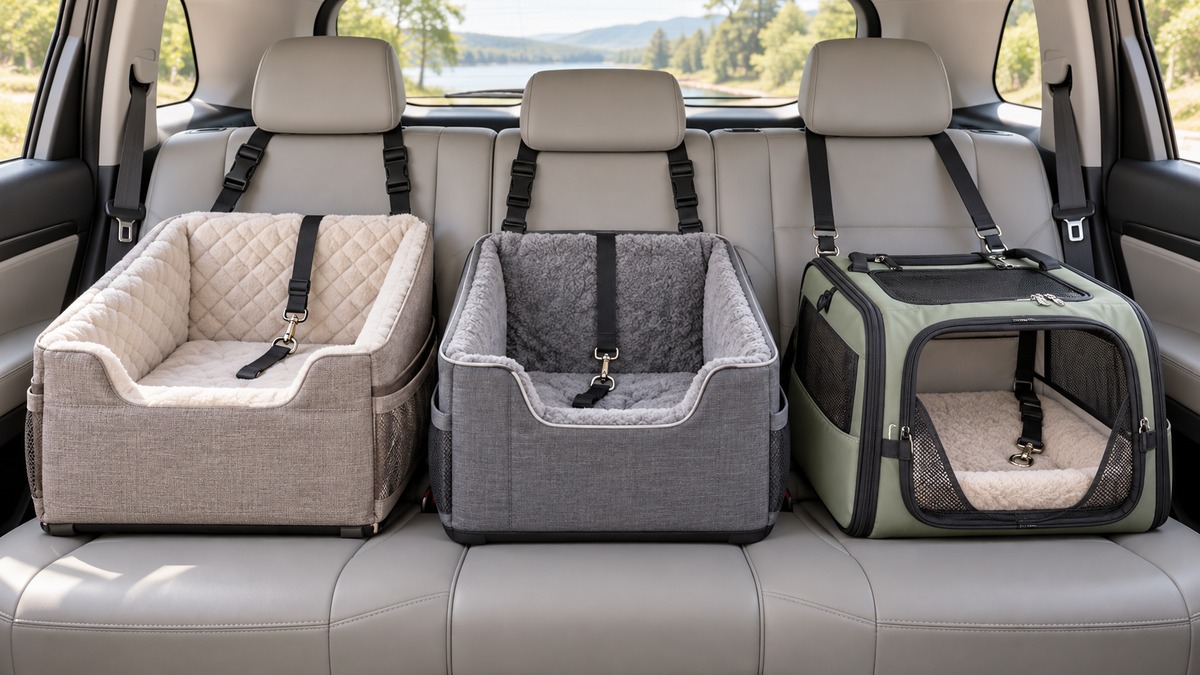
The PETSFIT dog car seat suits a dog of up to 35 pounds that rides in the back seat and needs a raised view and a washable cover. The listing gives a 20 by 19 by 23.6 inch booster, a 5-inch foam cushion, adjustable straps that reach the headrests and seat belt anchors, and buckles that it describes as patented. The listing does not name a crash-test result or a crash standard for the seat. Check your car’s belt and headrest layout before you order, and secure the seat before every trip.
Quick answer
- Weight limit: 35 pounds, according to the listing’s spec table. The bullets also say the seat has room for two smaller pups, but they give no combined limit.
- Dog size: extra small, small and medium, per the spec table.
- Attachment: the buckles attach to the vehicle’s seat belt, and the straps reach the headrests and seat belt anchors.
- Crash safety: the listing names no crash-test result or standard. The ASPCA and AKC pages we opened advise keeping the dog restrained in the back seat, in a harness or a carrier.
Who this car seat suits
This seat is for a small or medium dog that rides in the back seat, gets restless when its view is blocked, and fits within the weight limit. The raised cushion lifts the dog so it can see out of the window, which is the listing’s main use case, and the removable cover makes it easier to keep the seat clean after muddy walks. For other car gear, see our guide to back seat dog car seat covers and our guide to a blanket for the back seat of a car.
It is less suited to a dog over 35 pounds, to a large dog that cannot sit comfortably in a seat this size, and to a dog that chews straps. The listing does not say how the straps hold up to chewing, so a chewing dog needs a closer look before it rides. It is also not a front-seat product. The ASPCA’s travel article says the back seat is the right place for a pet, because airbags are not designed with pets in mind.
What the listing says
The figures below come from the listing data collected on 2026-10-12. Each row says where the listing gives the figure.
| Feature | What the listing says |
|---|---|
| Size | 20 x 19 x 23.6 inches (product dimensions) |
| Weight limit | 35 pounds (spec table); room for dogs up to 35 pounds or two smaller-size pups (bullets) |
| Dog size | Extra small, small and medium (spec table) |
| Material | Memory foam and velvet (spec table); fleece side for winter and breathable mesh side for warm months (bullets) |
| Cushion | Elevated foam cushion of about 5 inches; the bullets give 5.12 inches |
| Attachment | Buckles described as patented, attaching to the vehicle’s seat belt; headrest straps and seat belt anchors (bullets) |
| Straps | Adjustable (spec table) |
| Cover | Fully detachable, machine-washable cover and cushion (bullets; spec table says machine wash) |
| Seatback | Built-in seatback protector for the car’s upholstery (bullets) |
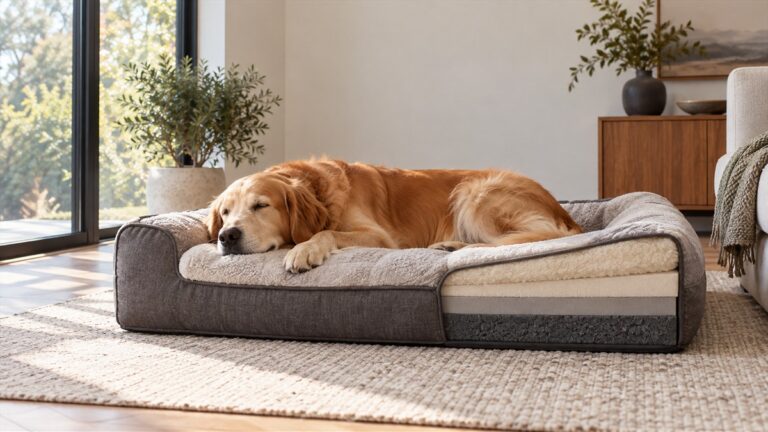
| Indoor use | The bullets say it can serve as a resting bed indoors |
| Crash test | Not stated; no crash standard named |
The bullets cite a US patent number for the buckles. This review does not verify that patent, and a patent describes a design, not a crash result.
The fit arithmetic
Three checks use the listing’s numbers. Keep them separate, because each one answers a different question.
Weight margin = 35 pounds minus the dog’s weight. For an illustrative 28-pound dog, that leaves 35 minus 28, or 7 pounds of margin. This is an example with a made-up weight, not a reading for any dog.
Two-dog case = the listing says the seat has room for two smaller pups, but it gives no combined weight limit. Do not add two dogs’ weights and assume the 35-pound figure covers them. If you plan to carry two dogs, ask the seller for a combined limit before you use the seat.
Footprint = 20 x 19 = 380 square inches of seat footprint, which is about 2.6 square feet (380 divided by 144 is 2.64). Compare the 20-inch length and the 19-inch width with the space between your car’s seat and door, and with the room between the headrests if the straps reach them.
Height check = the seat’s 5.12-inch cushion, which the bullets describe, raises the dog’s position by about that amount. For an illustrative dog that sits 10 inches high on a flat seat, the same dog would sit about 10 + 5.12 = 15.12 inches high on this seat. That is the view change the listing describes. This is an example with a made-up height, not a measurement.
Restraint and crash questions
The AKC says car carriers and dog car seats can keep a smaller dog secured for the drive, so a seat like this has a role. The ASPCA’s travel article, however, says a dog should ride in the back seat in a harness attached to the seat buckle, and it warns that airbags are not designed with pets in mind. The AKC’s seat-belt guide says dog seat belts work in a similar way to human ones, and that they vary by dog size. It advises a forward-facing position for a dog in a booster seat or a seat-belt harness. The AKC’s road-trip guide says vehicles do not come with dog restraints, and it says you will want to know your dog is secure in a carrier or a safety harness.
None of those sources says a dog car seat is a crash-tested restraint, and the listing names no crash result or standard. So treat the seat as a booster and a way to keep a dog settled, and pair it with a restraint that you have confirmed. For a seat-belt restraint rather than a booster, see our guide to dog seat belts for the back of an SUV.
Practice before the trip
A restraint works only if the dog accepts it. The AKC’s road-trip guide advises practicing with a harness ahead of time, and it suggests having the dog wear the harness in the car for short stages, gradually increasing the time on each trip. It also says to leave the harness on for only a few minutes at a time at first. The guide does not describe booster seats, so the same approach applied to this seat is general practice rather than a sourced instruction: let the dog settle in the seat while the car is parked, then take short drives before any long journey.
The ASPCA’s travel article advises securing a crate so it cannot slide or shift during an abrupt stop. A booster is not a crate, but the principle carries over: the seat should stay where you put it, and it should be fastened before the car moves. Check the seat belt and the straps every time you put the dog in the seat, and recheck them after the first few drives.
Buying checklist
- Weigh your dog and confirm it is below 35 pounds. Do not add a second dog to the limit.
- Check the rear seat: the straps need to reach the headrests, and the seat belt buckle needs to reach the anchor point.
- Confirm the seat’s 20 by 19 inch footprint fits your back seat and leaves room for the dog to sit and turn.
- Ask the seller for any crash-test result or standard. The listing names none.
- Plan a forward-facing position and a harness or carrier for restraint, as the AKC advises.
- If your dog chews, check the straps every time you use the seat, since the listing does not address chewing.
Mistakes to avoid
- Treating “patented” as crash-tested. The listing cites a patent for the buckle design. It names no crash result.
- Using the seat in the front. The ASPCA advises the back seat, because airbags are not designed for pets.
- Adding two dogs to the 35-pound figure. The listing gives no combined limit for two dogs.
- Skipping the anchor check. The seat’s attachment depends on your car’s seat belts and headrests, and the listing cannot know your car.
Product pick
PETSFIT Dog Car Seat with Safety Buckles, 5-Inch Elevated Cushion, Black
Best for: a small or medium dog of up to 35 pounds that rides in the back seat and needs a raised view and a washable cover.
Why it is here: it is the one dog car seat in our saved search, and the other saved items were carriers, a hip carrier and a crate, which this review leaves out.
Skip if: your dog is over 35 pounds, chews straps, or your car’s seat belt anchors do not match the strap design.
Limit: no crash-test result or crash standard is named, so pair the seat with a harness or carrier as the ASPCA advises.
How we chose
Our saved search for this brand’s car and travel products returned 25 results. Eight matched the travel theme, and one was the PETSFIT car seat, which is the only product this review covers. The other seven were carriers, a hip carrier and a crate, so the review does not compare them.
Our criteria were the stated weight limit, the dog size, the dimensions, the attachment points, the cushion, the cover care, and whether the listing names any crash result or standard. We separated the seller’s words about comfort, motion and anxiety from the figures, and we refer any health-related claim to a veterinarian. The AKC and ASPCA pages were read for restraint advice rather than for product comparisons, and where that advice is general, the text says so. The listing data was collected on 2026-10-12, and the advice pages named at the end of this post were opened on 2026-10-21.
What we could not verify
- Crash performance. The listing names no crash result or standard, and the pages we opened do not report a result for this seat.
- The patent. The listing cites a US patent number, which this review does not verify.
- Comfort and motion claims. The listing says the raised cushion may help ease motion-related anxiety for some pets, and it describes the foam as offering orthopedic support. Neither is confirmed by an outside result. Ask a veterinarian about any dog that has motion or anxiety concerns.
- Strap strength under chewing. The listing does not address it.
- Fit with your own car’s seat belts and headrests. Only your car can answer that.
- Foam density. The listing says memory foam but gives no density or firmness figure beyond the cushion height.
- How the seat behaves in a sudden stop. None of the pages we opened reports results for a booster seat in that situation.
- Washing results over time, and the warranty. Neither appears in the listing data.
Frequently asked questions
Is it crash tested?
The listing names no crash-test result or standard. The ASPCA and AKC pages we opened do not report a crash result for this seat, so ask the seller directly.
Can I wash the cover?
Yes. The bullets say the cover and cushion are fully detachable and machine washable, and the spec table lists machine wash for care.
Is it for small dogs only?
The spec table lists extra small, small and medium dogs, with a weight limit of 35 pounds. A dog over that limit should not use the seat.
Can two dogs share it?
The bullets say it has room for two smaller pups, but they give no combined weight limit. Ask the seller before you carry two dogs.
Where should the dog sit in the car?
The ASPCA advises the back seat, and the AKC advises a forward-facing position for a dog in a booster seat. Keep the seat out of the front seat.
Bottom line
The PETSFIT seat is a 35-pound booster with a raised cushion and a washable cover, sized for a small or medium dog in the back seat. Confirm your dog’s weight, check your car’s anchors, and do not treat the seat as a crash-tested restraint, because the listing names no crash result or standard.
Sources
- Traveling With Pets? Follow These Expert Dos and Don’ts to Keep Them Safe, ASPCA. https://www.aspca.org/news/traveling-pets-follow-these-expert-dos-and-donts-keep-them-safe (dated 2025-12-30; opened 2026-10-21)
- How to Keep Your Dog Comfortable During Car Rides, American Kennel Club. https://akc.org/expert-advice/travel/dog-seat-belts-what-you-need-to-know-to-keep-your-dog-safe (page updated 2026-03-10; opened 2026-10-21)
- Essentials for a Fun and Safe Car Trip With Your Dog, American Kennel Club. https://www.akc.org/expert-advice/health/dog-road-trip-safety/ (page updated 2025-09-30; opened 2026-10-21)
Affiliate note for this page: As an Amazon Associate we may earn from qualifying purchases made through the links above.