Best Dog Brush for Loose Hair: Self-Cleaning, Small Dogs and Travel
As an Amazon Associate we earn from qualifying purchases. Details
By Ken
The best dog brush for loose hair is one that lifts hair out of the coat before it lands on the sofa, is easy to empty, and fits the size of the dog and the hand holding it. This guide compares ten listings on size, bristle type, self-cleaning design and the uses each listing names. Most of the brushes here are sold for small dogs, puppies or several kinds of pet, so the size line on each card matters more than the picture. The American Kennel Club says that “Consistent brushing helps control shedding and keeps your dog’s coat looking its best,” which is the reason a brush belongs in the weekly routine.
Quick answer
- Choose by size first. Most listings here are aimed at small dogs, puppies, cats or several small animals, so check the size line before the bristle type.
- A self-cleaning button saves time on a brush you will use often. The listings describe a release that lets the hair fall off the pins, which means less cleaning by hand.
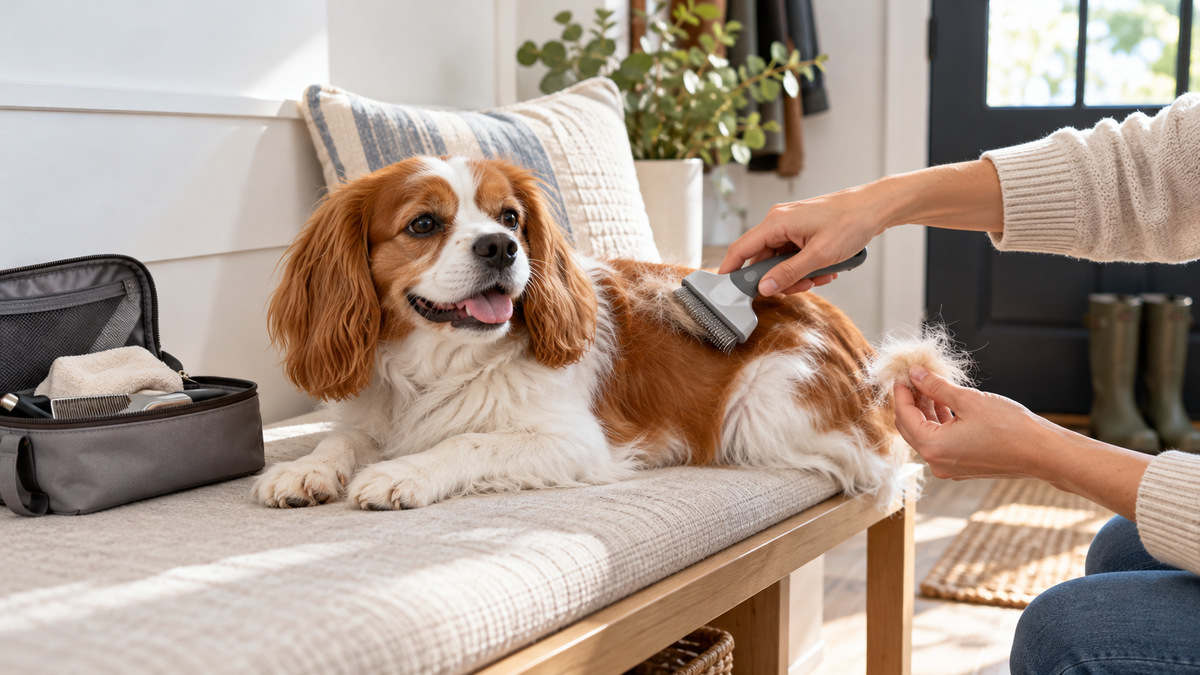
- Brush loose hair out of the coat, not across it. A fine-tooth comb behind the ears and under the belly reaches the places a wide brush misses.
- Keep sessions short and regular. AKC says brushing helps control shedding, and a brush that lives where you can reach it is more likely to get used.
What loose hair is, and why a brush helps
Loose hair is hair that has already stopped growing and sits in the coat, held only by the undercoat or the topcoat. It is not the same as a tangle or a mat, and it does not need the same tool. A brush removes loose hair by catching it between the pins or bristles before it drops off. The ASPCA’s grooming tips describe the general effect of brushing well: “Regular grooming with a brush or comb will help keep your pet’s hair in good condition by removing dirt, spreading natural oils throughout her coat, preventing tangles and keeping her skin clean and irritant-free.”
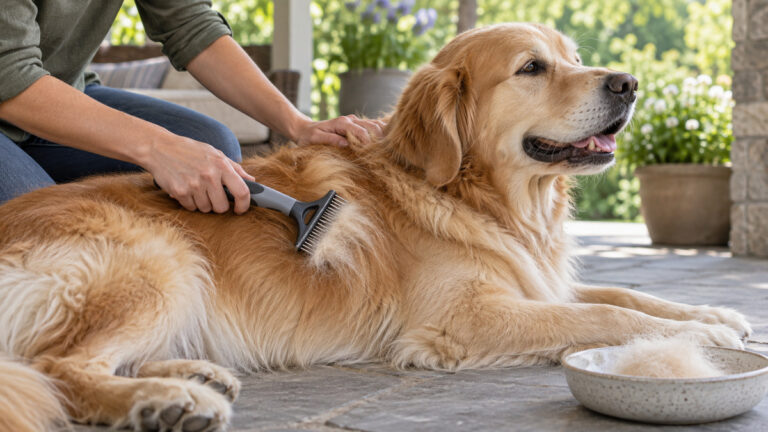
The practical result is a home with less hair in it. A brush cannot stop normal shedding, but it can take out hair that would otherwise end up on the floor, the bed and the car seat. The ASPCA puts the balance plainly: “While you cannot stop a healthy dog from normal shedding, you can reduce the amount of hair in your home by brushing your dog regularly.” A brush that catches loose hair during a 10-minute session is doing that job even when the coat looks no different afterward.
Loose hair comes in two forms, and they call for different brushes. The first is the surface hair that lifts off with a light pass. The second is the soft undercoat that sits underneath and only comes out when the pins reach the base of the coat. A brush for loose hair does not need to be a heavy deshedding tool, but it does need to reach the base of a short or medium coat, or the surface will look clean while the undercoat keeps shedding.
Self-cleaning buttons and where the hair goes
Several of the brushes in this group have a release button. The listings describe a mechanism that pulls the pins back into the head, so the hair collected between them falls off in one move. AKC’s brush guide describes the same feature: “Some types of brushes, particularly slicker brushes, have a self-cleaning function,” and the function “consists of pins that retract at the press of a button, so you can easily remove hair and dirt.”
For a daily brush, the button is a real advantage. Hair left between the pins has to be pulled out by hand, and that step is the one most owners skip. A self-cleaning head makes the brush easier to use often, which matters more than any single feature in the listing. The KALAMANDA and Chenqifuture brushes use a release button, and the card for each says so. The Lyaiwever cloud and mushroom heads have no button, so their hair has to be cleared by hand.
The button does not replace a cleaning check. Pins still collect dirt and fine hair, and the comb or the brush head needs a wipe from time to time. Listings with an extra fine-tooth comb, such as the Chenqifuture set, add a second cleaning job, because the comb needs to be emptied too.
Size, shape and the reach you need
AKC’s brush guide makes the size point in two short lines. It says: “Choose a dog brush based on the size of your dog, their breed, and their coat type.” It also says: “Choose an appropriate brush size for the size of your dog.” For loose hair, that means a small brush for a small dog, but also a head that covers the coat in a few strokes. A small head on a large dog takes many strokes, and the session becomes a chore.
Shape matters too. Wider heads cover a back in fewer passes, while smaller or rounded heads suit a face, legs and tail. The DEEUCHIS heart and the Lyaiwever cloud and mushroom heads are small and rounded, which suits the head, ears and paws of a small dog. The Lyaiwever brushes say they are light and portable, and the listing gives their package weight at about 2.4 ounces, which is handy for a travel bag.
Brush size is a practical trade-off between coverage and control. A large head covers more coat, but a small dog will not sit still for a big tool across the chest. A small head reaches the tricky spots, but it can take twice as long on a medium coat. Choose the size for the dog you have today, and use a second, smaller brush for the face and feet if you need one.
Small dogs, cats and travel brushes
Many of the listings in this group are sold for small dogs, puppies, cats and rabbits at the same time. The PETPAWJOY slicker and the DEEUCHIS heart both name several pets in their titles or bullets. That is a useful fact for a home with more than one animal, because one brush can be shared, but it is not a reason to choose a tool that is too small for a large dog.
Travel sizes are a separate category. The DEEUCHIS brush is described as a travel-size brush, and the Lyaiwever cloud and mushroom brushes are described as portable, fitting in a bag or a car. For a small dog that goes on trips, a travel brush can keep the coat cleaner between baths. Keep the travel brush for the trip, and use a full-size brush at home so the coat gets the longer session it needs.
The KALAMANDA brush is sold as a cat and dog brush, and its listing says it suits short, medium or long, thick, thin or curly coats. Its hair-type field, however, says thin. A mixed pet household should choose the brush that matches the thickest coat in the home, and check the hair-type field against the dog’s coat before buying.
Bath brushes and kits
Two listings are bath brushes or kits rather than daily loose-hair brushes. The Bodhi Dog shampoo brush is a rubber brush for bathing, and its bullets say it can help remove hair as well as work shampoo into the coat. The MASTER QUEEN five-piece kit is a bag of tools that includes a self-cleaning brush, a dematting rake, a massaging brush, a flea comb and a steel comb. A bath brush is useful during a wash because wet hair lifts more easily. A kit gives you several tools in one order, but the listing gives no piece sizes, so the head width of each tool is not stated.
The MASTER QUEEN kit suits a household that wants several jobs covered, from the daily brush to the flea comb. It is a poor choice for a buyer who wants one good brush, because the set spreads the budget across five tools that each do a smaller job. The kit’s main brush is the first item to check on the product page.
The Maxpower Planet dematting and shedding brush is in this group as well. Its listing describes a double-sided tool with a 9-tooth dematting side and a 17-tooth deshedding side, and its safety information says the blades may injure a pet if used carelessly. It is a tool for undercoat work rather than a light daily brush, and the card reflects that.
Where the loose hair ends up
Loose hair does not stay in the brush. It goes onto the sofa, the bed and the car seat, and it can settle into fabric in ways that a brush cannot reach. Owners who want fewer hairs in the car should combine a brush with a seat cover. Our guide to car seat covers that repel dog hair covers that job in more detail, and it is a practical companion to a daily brush.
Brushing before a car ride can leave less loose hair to settle on the seat, and brushing over a hard floor makes what falls easy to sweep up. These are simple habits, and they cost nothing more than the time of one session.
For a comparison of two brushes in the same category, the Dexas and PrimeCat brush comparison puts the tools side by side and shows which features each one has.
How often to brush for loose hair
The schedule depends on the coat. AKC says that most dogs need only a few brushing sessions a week, and that consistent brushing controls shedding. The ASPCA sorts coats by type and gives a simple guide. A smooth, short coat needs brushing once a week, and short, dense fur that is prone to matting also needs brushing once a week. A long, silky coat needs daily attention.
For a loose-hair brush, a short daily session fits most coats. The table below maps the coat type to the number of sessions per week and to the kind of brush that suits the job, using the ASPCA’s guidance and the listing types in this group.
| Coat type (ASPCA example) | Brushing guidance | Suited listing types in this group |
|---|---|---|
| Smooth, short | Once a week | Rubber or bristle brush, then a comb |
| Short, dense, prone to matting | Once a week is fine | Slicker or self-cleaning brush, then a bristle finish |
| Long, silky | Daily | Pin brush or slicker, then a bristle finish |
The guidance column reflects the ASPCA’s own categories. A dog with a double coat that sheds heavily may need more brushing, as the Texas A&M Pet Talk article suggests with its three to four sessions a week. The ASPCA’s categories give a floor for each coat, and the loose-hair brush is the tool that keeps that rhythm simple.
Skin, sensitivity and when to call the vet
A loose-hair brush is used on the coat, so the skin is in contact with the pins. AKC’s brush guide says to maintain “a light touch when using slicker brushes, as pressing down hard could cause your dog discomfort.” Use the same light touch with any pin brush, and stop if the dog pulls away or the skin looks red.
Brushing also shows you the skin. AKC’s grooming guide says that regular grooming sessions let you check the coat, teeth, eyes, ears and nails for signs of potential problems. If you see a bald patch, a scab or an area of unusual hair loss, the brush is not the treatment. The AKC shedding article says that if you suspect a problem with the coat or skin, you should consult your veterinarian for guidance.
Keep the brush clean. A brush full of hair catches less on the next pass, so empty the pins after each session.
How we chose
Of the twelve listings in the research file, ten fit a loose-hair question. We used ten. The two we left out are the KUUBIA two-in-one hair dryer with a brush, which is a heated pet dryer whose main job is drying, and the KEEPLKVOC nine-piece small animal kit, whose title names rabbits and guinea pigs and whose bullets list small pets in general. The dryer listing says that towel drying beforehand is recommended and that the dryer is not suitable for fully drying larger dogs, so it does not answer the loose-hair question. Listings without a card: the KUUBIA dryer and the KEEPLKVOC kit.
The cards use the listing’s stated size, bristle type, hair-type field and use wording, and they say what the listing does not state. Many cards state no head width or pin length, and the card says so. Products came only from the research file, and the listing data was not edited. Where a listing has empty bullets, the card uses the title and the specification fields that exist.
The sources are AKC’s brush guide, AKC’s shedding and grooming pages, the ASPCA grooming tips and the Texas A&M Pet Talk article on shedding. Every quoted sentence was matched to the saved text of its page before it went into this post.
What we could not verify
- Head width and pin length. Few listings give either, so the reach of each brush on a coat is not stated.
- Cat and dog use in the same brush. Several listings name cats, rabbits and guinea pigs alongside dogs, and the listings give no test of how a brush performs on each animal.
- The effect of a self-cleaning button on the bristles over time. The listings describe the button, but none gives a wear figure or a durability test.
- The Bodhi brush’s effect on a dry coat, since the listing presents it as a bath tool.
- The contents of the MASTER QUEEN and KEEPLKVOC sets beyond their titles and short bullets, and the piece sizes, which the listings do not give.
- The sizes of the Lyaiwever and DEEUCHIS brushes beyond the package dimensions, which describe the packaging rather than the brush head.
- Whether a particular brush suits a particular coat. The listings describe the coat types they suit, but they do not give a test for them.
The listings, one by one
Each card lists the stated size or pet type, the bristle or pin material, and the points that matter for loose hair. The skip line names the situation where the brush does not fit, and it is most often a size mismatch or a coat type that the listing does not cover.
1. Cat Brushes for Indoor Cats, Dog Brush for Shedding with Metal Cat Comb, Self Cleaning Pet Hair (Pink self-cleaning brush and comb set)
Specs from the listing (checked ):
- Hair Type: Thin
- Unit Count: 2 Count
- Bristle Material: Rubber
Pros
- The bullets describe a release button that lifts the brushed hair off the metal pins, and the set includes a fine metal comb
- The listing says the brush suits short, medium or long coats in the bullets, and the handle has a non-slip grip
Cons
- The hair-type field says thin, and the title names indoor cats, so the listing is not aimed at a thick dog coat
Best for: A household with a cat and a small dog that wants a two-piece set
Skip if: Your dog has a thick double coat, since the hair-type field says thin
View on Amazon (affiliate link)
2. Slicker Brush, Dog Brush Gently Cleaning Pin Brush For Shedding Dog Hair Brush For Small Dogs Puppy (Rotatable slicker for small dogs and puppies)
Specs from the listing (checked ):
- Bristle Material: Stainless Steel
- Handle Material: Rubber
- Product Dimensions: 6.3 x 1 x 2.36 inches; 3.53 ounces
Pros
- The bullets say the pins can turn between a grooming position and a massage position, which lets one brush do both jobs
- The listing says the brush fits long and short hair coats and has stainless steel pins
Cons
- The title names small dogs, puppies, Yorkies, poodles, rabbits and cats, so it is sized for a small body
Best for: A small dog owner who wants a flexible brush for everyday loose hair
Skip if: Your dog is large, since the title is built around small pets
View on Amazon (affiliate link)
3. Small Dog Grooming Brush,Cloud Shape Puppy Brush Detangling Dog Hair Brushes for Wet or Dry (Purple cloud-shaped brush for small dogs)
Specs from the listing (checked ):
- Bristle Material: Plastic
- Handle Material: Plastic
- Package Dimensions: 7.52 x 2.91 x 1.26 inches; 2.4 ounces
Pros
- The bullets describe a cloud-shaped head with soft bristles and say the ABS resin is lighter than rubber
- The package weighs about 2.4 ounces, which makes it easy to carry on trips
Cons
- The bullets say it is designed for small dogs and puppies, so the head is small for a larger coat
Best for: A small dog with a delicate coat that needs a light brush on the chest and legs
Skip if: Your dog has a thick coat that needs a larger head to cover it quickly
View on Amazon (affiliate link)
4. Dog Brush Grooming Kit 5PCS – Dog Brush for Shedding,Puppy Brush and Flea Comb for Dogs, Slicker (Five-piece kit in a zipper bag)
Specs from the listing (checked ):
- Contents (description): Self-Cleaning Brush x1, Dematting Rake x1, Massaging Brush x1, Flea Comb x1, Stainless Steel Comb x1, zipper bag
- Product Dimensions: 7.5 x 3.9 x 1.6 inches; 10 ounces
Pros
- The kit holds five tools: a self-cleaning brush, a dematting rake, a massaging brush, a flea comb and a stainless steel comb
- The listing says the kit suits grooming at home or on a trip, and it comes in a zipper bag
Cons
- The listing gives no piece sizes, so the head width of the main brush is not stated
Best for: A household that wants several grooming tools in one bag for a dog and a trip
Skip if: You want one good brush for daily loose hair, since five tools spread the budget
View on Amazon (affiliate link)
5. Small Dog Grooming Brush,Mushroom Shaped Puppy Brush Detangling Dog Hair Brushes for Wet or Dry (Green mushroom-shaped brush for small breeds)
Specs from the listing (checked ):
- Bristle Material: Nylon
- Shape: Mushroom
- Package Dimensions: 6.77 x 3.66 x 1.73 inches; 2.4 ounces
Pros
- The bullets describe a mushroom-shaped head with nylon bristles that the listing says glide through the coat
- The bullets say the ABS resin is lighter than rubber and that the rounded edges are gentle on skin
Cons
- The bullets name small dogs and puppies as the intended users, so the listing does not describe a large coat
Best for: A Yorkie, Shih Tzu or Maltipoo owner who wants a light daily brush
Skip if: Your dog is a large breed, since the listing is aimed at small dogs
View on Amazon (affiliate link)
6. Small Soft Dog Grooming Brush, Pet Massage Hair Brush (Rose Pink) (Rose pink heart-shaped travel brush)
Specs from the listing (checked ):
- Shape: Heart
- Additional Features: Travel Size
- Package Dimensions: 7.72 x 3.62 x 1.69 inches; 1.76 ounces
Pros
- The listing describes a travel-size brush for small dogs, cats and rabbits, with a heart-shaped head for a gentle massage
- The package measures 7.72 by 3.62 by 1.69 inches, which fits a travel bag
Cons
- The bullets are aimed at small pets, and the listing does not state the bristle length or the head size
Best for: A travel bag for a small dog or cat that needs a brush on the road
Skip if: You need a full-size brush for a large dog at home
View on Amazon (affiliate link)
7. Self-cleaning pet grooming brush – gentle and skin-friendly, effectively removes loose undercoat (Orange self-cleaning brush with a fine comb)
Specs from the listing (checked ):
- Bristle Material: Stainless Steel
- Handle Material: Plastic
- Package Dimensions: 8.19 x 4.13 x 2.64 inches; 5.29 ounces
Pros
- The set pairs a self-cleaning brush with a fine-tooth comb, and the bullets say the comb reaches behind the ears, under the arms and along the belly
- The bullets say the button pops the brush pad out so the collected hair lifts off in seconds
Cons
- The listing says it suits most hair types but gives no head size or pin length, so the reach is not stated
Best for: A dog owner who wants one brush for the body and a comb for detail work
Skip if: You need a large head for a big dog, since the listing gives no head size
View on Amazon (affiliate link)
8. Maxpower Planet Hair Brush – Double Sided Shedding, Dematting Undercoat Rake for Dogs and Cats (Black double-sided dematting and shedding brush)
Specs from the listing (checked ):
- Size options: Small, Large, Large (Pack of 2)
- Color: Black
- Product Dimensions: 6.6 x 3.9 x 2 inches; 4.59 ounces
Pros
- The listing describes a double-sided tool with a 9-tooth dematting side and a 17-tooth deshedding side
- The listing gives a color, a size choice and a model number, so the size can be matched before ordering
Cons
- The listing warns that the blades may injure a pet if the tool is used carelessly, so it needs a gentle hand
Best for: A medium or long-coated dog that needs an undercoat tool for loose hair as well as mats
Skip if: You want a light daily brush for a short coat, since the tool is built for undercoat work
View on Amazon (affiliate link)
9. FURminator Small Dog Undercoat deShedding Tool for Short Hair | Reduces Loose Hair From Shedding (Small-dog undercoat tool for short hair)
Specs from the listing (checked ):
- weight_class: dogs less than 25 lb
- coat: short hair
- dimensions: 2 x 5 x 8.75 in, 6.08 oz
Pros
- The listing says the tool is designed for dogs under 25 pounds with short hair and describes an ejector button that releases the hair
- The listing says the handle is ergonomic for comfort during grooming
Cons
- The listing is for short hair and dogs under 25 pounds, so it does not suit a long coat or a bigger dog
Best for: A small dog with a short coat that sheds in the house
Skip if: Your dog is over 25 pounds or has a long coat
View on Amazon (affiliate link)
10. Bodhi Dog Shampoo Brush – Pet Grooming & Bath Supplies for Dogs and Cats – Bath Brush for Long (Blue rubber bath brush with a shedding use)
Specs from the listing (checked ):
- Bristle Material: Rubber
- Handle Material: Metal, Rubber
- Item Dimensions L x W x H: 5.56″L x 1.38″W x 8.75″H
Pros
- The bullets describe a rubber brush for showers and sprayers that can be used on wet or dry fur
- The bullets say the split rubber teeth catch hair without the tugging of firmer brushes
Cons
- It is a bath brush first, and the bullets describe shower and sprayer use before any dry-coat use
Best for: A bath-time brush that also takes loose hair out of a wet coat
Skip if: You want a dry, daily loose-hair brush, since this one is for bath time first
View on Amazon (affiliate link)
Mistakes that waste a loose-hair brush
- Buying a small brush for a large dog. The session takes so long that it gets skipped, and the loose hair stays in the coat.
- Brushing only the surface. A brush that stops at the topcoat leaves the undercoat in place, so use the comb or the pin tool at the base of the coat.
- Skipping the clean-up. A brush full of hair cannot lift more hair, so empty the pins or use the button after each session.
- Pressing hard. AKC’s advice is a light touch.
- Choosing by the picture. The size line and the coat type on the listing decide the fit.
- Ignoring the skin. A bald patch or irritated skin is a reason to call the veterinarian.
FAQ
What is the best brush for loose hair on a small dog?
A small pin brush or a self-cleaning brush with a rounded head is the usual choice, because the head is small enough to reach the chest, legs and tail. Several listings in this group are sold for small dogs, puppies and cats, and the size line on each card tells you which ones fit a small body. Check the bristle or pin material as well, and use a light touch.
How often should I brush loose hair?
AKC says most dogs need only a few brushing sessions a week, and the ASPCA recommends once a week for a smooth, short coat. Short sessions help more than one long session, and a heavy shedding season may call for more, as Texas A&M’s Pet Talk article suggests with three to four sessions a week.
Are self-cleaning brushes better than regular brushes?
A self-cleaning button makes the brush easier to empty, which means you are more likely to use it often. It does not change how much loose hair the brush catches. A regular brush with a good comb works just as well if you clean it after each session.
Can I use a cat brush on my dog?
Some listings in this group name both cats and dogs, and the KALAMANDA brush is one of them. The choice depends on the coat and the size of the animal, not the species. For a dog, check the size line and the hair-type field. For a cat or a small pet, the same checks apply.
Should I use a bath brush to remove loose hair?
A rubber bath brush can remove loose hair during a wash, because the hair lifts more easily when wet. It is a good addition to a routine, but it does not replace a daily brush on a dry coat. Use it in the bath, then use a dry brush on the coat afterward.
Bottom line
For loose hair, choose a brush whose size fits your dog, whose head reaches the base of the coat, and which you will actually use. Brush in short, regular sessions, empty the brush after each one, and treat the listing’s self-cleaning and shedding claims as features to check, not as promises. If the skin changes or the hair loss is unusual, the question belongs to your veterinarian.
Sources
- AKC, Types of Dog Brushes: choose a brush by size, breed and coat type; self-cleaning function; light touch with slickers; choose an appropriate brush size
- AKC, How to Groom a Dog: consistent brushing helps control shedding; regular sessions allow checks for potential problems; most dogs need a few brushing sessions a week
- AKC, Managing Dog Shedding: consult your veterinarian about coat or skin problems
- ASPCA, Dog Grooming Tips: brushing keeps the skin clean and irritant-free; coat type and brushing frequency