Best Disposable Pee Pads for Dogs: Three Picks and How to Size Them
As an Amazon Associate we earn from qualifying purchases. Details
By Ken
The best disposable pee pads for dogs are the ones sized to the spot the dog uses, with an absorbent area that holds a single change and a backing that keeps liquid off the floor. People searching for best disposable pee pads for dogs are usually setting up a puppy, a senior dog, a crate or a car seat. Our research file holds twelve pee-pad listings. Six are disposable pads, and three of those have bullets or specification lines detailed enough to card: Tevila, YOPETKI and KISENG. The other nine are reusable pads, a silicone mat, a memory-foam bed, or title-only items.
Quick answer
- For a disposable pad with a stated 750 ml absorbent pad inside a 28 by 34 inch overall size, the Tevila listing is the one to check first.
- For a 50-count pack in the same large overall size, with a stated capacity figure that does not agree with itself, the YOPETKI 50 listing needs a closer read.
- For a 50-count six-layer pack with a PE film and no capacity figure, KISENG is the third choice, and its listing is the thinnest of the three.
- Match the pad to the spot first, then the pack to the number of changes you expect in a day.
Start with the spot, then the pad
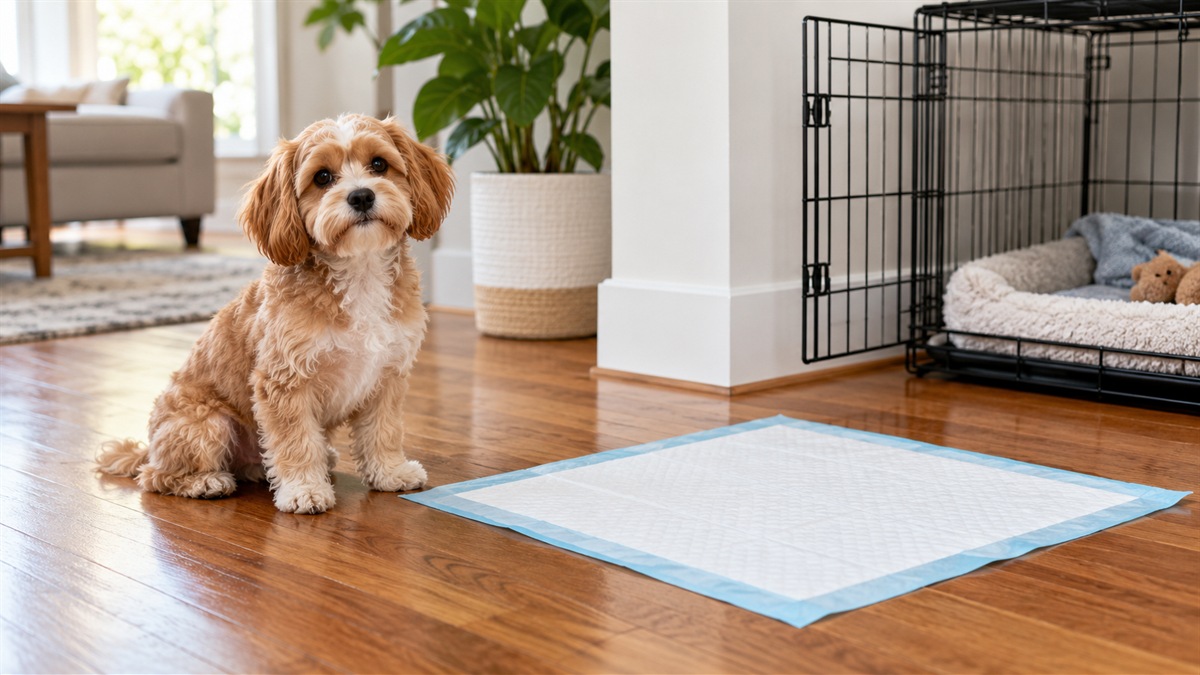
A disposable pad does its job in one place, and that place decides the size. A puppy that uses one corner of a playpen needs a pad that covers the corner and a little more. A senior dog that rests in a crate needs a pad that covers where the dog lies, not only where it stands. A car seat needs a pad that the seat can hold without sliding.
The listings give two sizes that are easy to confuse, and the difference matters. The overall size is the footprint on the floor. The absorbent area is the part that takes the liquid. The Tevila bullets name both: a 28 by 34 inch overall size, and a 22.1 by 28.1 inch white pad inside it. A buyer who looks only at the overall size will think the whole footprint absorbs liquid, which the bullets do not say.
Measure the spot before you buy. Lay a tape across the crate floor, the playpen corner or the car seat, and compare the result with the overall size, not the absorbent size. If the dog’s usual spot is wider than the absorbent area, a pad with a bigger absorbent area or a larger overall size is the better match.
Where the pad goes
The Tevila bullets list the places a pad can go: dog crates, kennels, playpens, cages, car seats, litter boxes and carrier linings. They add that the pad can go under food and water bowls or in whelping boxes. Those are listing claims about placement, and each place asks something different of the pad.
A crate asks for a pad that lies flat on the crate floor. A pad that folds or bunches under the dog leaves part of the floor uncovered in the spot the dog is trying to use. A playpen asks for coverage across a larger floor, and the edge should lie flat so a puppy does not pull the pad up. A car seat asks for a pad that stays where it is put on a smooth surface. For a crate, a crate blanket is a different layer, and our guide to blankets over a dog crate at night covers that choice.
None of the three carded listings describes a slip-resistant back, so the pad’s position is a check you make each time you place it. Look at the pad after the dog has moved on it, and reset it if it has shifted.
The absorbent area in numbers
The overall size and the absorbent area are both listing figures, so the difference can be calculated. The Tevila overall size is 28 by 34 inches, which is 28 x 34 = 952 square inches. The absorbent pad is 22.1 by 28.1 inches, which is 22.1 x 28.1 = 621 square inches. The absorbent area is therefore about 65 percent of the overall footprint, since 621 divided by 952 is about 0.65.
That 35 percent border is not wasted. It is the part that keeps liquid from running off the edge, and the Tevila bullets describe a 2.95 inch blue border for that purpose, with a note that the border makes the pad easy to remove and dispose of. The border is a design feature and a handling feature at the same time. A dog that tends to stand on the edge of a pad will still land on the border, so the border matters even when the absorbent panel is smaller than the spot.
The YOPETKI 50 and KISENG listings both give a 34 by 28 inch size without a separate absorbent figure. For those two, the overall size is the only number the listing states, so the comparison with the Tevila absorbent area cannot be made from the listing alone.
Capacity figures and the cup problem
Capacity is the figure owners ask about first. Here the listings are mixed. The Tevila bullets give a 750 ml figure for the pad, and they describe it as holding “multiple pees” for all-day and overnight use. They do not give a number of uses. A 750 ml figure in cups is 750 divided by 236.6, which is about 3.2 US cups, so the figure is a starting point rather than a count of changes.
The YOPETKI 50 bullets give a different kind of figure. They say the water absorption capacity of each pad is “above 1200+ milliliters,” and they add in the same bullet that it can “hold up to 6 cups or more of liquid.” Converted, 1200 milliliters divided by 236.6 is about 5.1 cups. The bullet’s cup figure is higher than its own milliliter figure. The milliliter number is the more careful of the two, and it still describes a listing claim, not a measured result.
The KISENG bullets give no capacity figure at all. They describe the pad as locking liquid into gel “instantly,” with “no rewet” and “no wet paws,” but a buyer who needs a number to compare pads will not find one in this listing. In that case, the best substitute is the change habit: change the pad when it is wet, not when it is full, and watch the first few changes to see how quickly the pad fills at home.
Planning the pack
A pack size only matters once you know how many changes the dog needs in a day. The three listings here are all 50-count packs, so the comparison is simple. The planning example below is arithmetic, not a listing claim.
| Changes a day | Days a 50-count pack lasts | Weeks, to one decimal |
|---|---|---|
| 1 | 50 divided by 1 equals 50 days | 50 divided by 7 is about 7.1 weeks |
| 2 | 50 divided by 2 equals 25 days | 25 divided by 7 is about 3.6 weeks |
| 3 | 50 divided by 3 is about 16.7 days | 16.7 divided by 7 is about 2.4 weeks |
The table shows why the change rate matters more than the pack label. A dog that needs three changes a day uses a 50-count pack in under three weeks, and a crate or playpen with a puppy can use a pack faster than a senior dog that wets once or twice a day. Settle the change rate by keeping a short record for a few days before you buy a month’s supply.
A pack also needs storage. A single pack of 50 is a bulk item, so plan a place for it that stays dry and out of a puppy’s reach. The listings do not give storage instructions beyond the pack count, and the pages we opened do not add any.
Puppies, senior dogs and travel
The three listings name different users, and the wording is worth reading closely.
The YOPETKI 50 bullets say its pad is “ideal for puppies, big dogs, senior dogs or multiple pets indoor,” and they add that the pads “help reduce the frequency of pad changes.” The KISENG bullets say the pad is “suitable for puppies, adult dogs, and senior pets for daily puppy training.” The Tevila bullets go wider: they name puppy potty training, adult indoor relief, whelping, senior dog incontinence, overnights, and car travel or hotel stays, and they add that the pad fits any indoor area and can be placed under bowls.
Those are listing claims about use. The senior-dog use needs a closer look. AKC’s senior house-training page says that “although it can be tempting to dismiss house-training accidents as a normal part of aging, they are often a sign of an underlying medical, physical, or cognitive issue.” That sentence matters for the pad decision, because a pad is a way to manage accidents, not a diagnosis. The same page lists pee pads among the tools that “can help some dogs manage accidents, particularly when medical or mobility issues limit their ability to get outside in time.”
For a puppy, the pad has a training role. For a senior dog, it has a management role. For travel, it is a backup. Pick the listing that matches the job, and check the vet question first if the dog is an adult that has started having accidents. If the pad is for a bed rather than a crate, our guide to blankets that protect a bed from a dog covers the bed layer.
Disposal and the bin
The Tevila bullets describe the blue border as easy to remove and dispose of, which is the only disposal detail in the three listings. The YOPETKI and KISENG listings say nothing about disposal. A used pad holds urine, so keep it in a lidded bin, and follow your local rules for household waste. Our research file does not include a disposal source, so the rules for your area are the ones to check.
How we chose
We set four rules from the listing data. The item had to be a disposable pad, not a reusable one or a bed. Its bullets or specification lines had to give at least one detail beyond the title. It had to state a size or a count. And it had to describe the pad’s construction or its capacity in a way a buyer could compare. Three items met all four rules: Tevila, YOPETKI 50 and KISENG.
The order of the cards is not a ranking. None of the three listings gives a measured result for capacity, leak control or the number of uses per pad, so the choices do not say which pad performs best in use. They say which pad the listing describes in the most useful detail for sizing and pack planning.
Listings without a card. Nine of the twelve items are not carded here, for three reasons. The Magic Pet Bed is a memory-foam bed with peelable layers, not a pad. Five items are reusable and washable: the Sunheir two-pack, the LOOBANI two-pack, the CoolShields four-pack, the Eterish two-pack and the Bartuke silicone mat. Reusable pads belong in a washing routine, not a disposal one. The CoolShields listing also gives a title size of 18 by 24 inches and a specification size of 25.59 by 48 inches, so the two do not agree. The Honey Care 100-count charcoal pad, the COCOYO 50-count pack and the Amazon Basics 5-count pack are title-only, with no bullets or specification lines in our file.
What we could not verify
- Capacity in use. No listing gives a number of changes per pad, and the Tevila bullets say “multiple pees” without a count.
- The YOPETKI capacity. The bullets give 1200 milliliters and six cups in the same sentence, and the figures do not match.
- The KISENG no-rewet claim. The bullets say the pad locks liquid into gel instantly with no rewet and no wet paws, but the listing gives no method or figure for that.
- The Tevila layer makeup. The bullets say six layers and a quilted surface, and the listing has no material specification line to confirm the layers.
- The YOPETKI material. The specification lists wood pulp, non-woven fabric and polyester, while the bullets describe a PE backing film. The two descriptions are not broken down by layer.
- Item weight. The YOPETKI listing gives an item weight, but no per-pad weight, so the figure cannot be linked to a single pad.
- Travel and hotel use. The Tevila bullets name car seats and hotel stays, but the pages we opened do not address those uses, so we do not repeat the claim as a fact.
- Whelping and post-surgery use. The Tevila bullets name both. The pages we opened do not cover those uses, so we leave them with the listing.
FAQ
What size disposable pee pad should I buy for a dog?
Start with the spot. Measure the crate floor, playpen corner or seat the dog uses, then compare the measurement with the overall size and the absorbent area. Tevila gives both numbers, and its absorbent panel is about 65 percent of the overall footprint. For the other two listings, only the overall size is stated.
How many pads does a dog need in a month?
Count the changes first. At one change a day, a 50-count pack lasts about 50 days. At two changes a day it lasts 25 days. At three a day it lasts about 16.7 days. The planning figures are arithmetic, not a listing claim, so adjust them to what you see at home.
Are disposable pads good for a senior dog?
They can help manage accidents. AKC’s senior house-training page lists pee pads among the tools that can help a dog manage accidents when mobility or medical issues limit getting outside in time. The same page says new accidents in a house-trained senior dog are often a sign of an underlying medical, physical or cognitive issue, so ask your vet first.
Can I use a disposable pad in the car or on a trip?
The Tevila bullets name a car seat and hotel stays, and the YOPETKI and KISENG bullets name travel or backup use. The listings do not give a car-specific fit, a securing method or a number of changes for a trip, so plan the pad size against the seat before you travel.
Do disposable pads need a special bin?
The listings do not say so. The Tevila bullets describe the border as easy to remove and dispose of. Keep used pads in a lidded bin and follow the waste rules for your area.
Bottom line
Choose the size from the spot the dog uses, not from the pack label, and plan the pack from the number of changes you expect in a day. Read capacity figures in both units, and remember that a listing’s cup figure and its milliliter figure may not agree. For a new accident pattern in an older dog, see a vet first, and use the pad as the tool for the mess while the cause is found.
Three pads from our file
1. Disposable XL Dog Pee Pads 28×34 50 ct, Puppy Potty Training & Senior Dogs (Best for a 750 ml absorbent pad in a 50-count pack)
Specs from the listing (checked ):
- Number of Layers: 6
- Unit Count: 50 Count
- Item Dimensions L x W: 34″L x 28″W
- Age Range (Description): all age
Pros
- The bullets state a 750 ml absorbent pad inside a 28 by 34 inch overall size, which gives a starting figure for capacity
- The bullets describe a quilted quick-dry surface and a six-layer absorbent core that the listing says turns liquid into gel
- The bullets name a 2.95 inch blue border that the listing says makes the pad easy to remove and dispose of
Cons
- The bullets say the pad holds multiple pees but give no number of uses per pad, so the capacity per change is not stated
- The bullets list whelping and post-surgery recovery as uses, and the pages we opened do not cover those uses
- The listing has no material specification line, so the backing and layers are described only in the bullets
Best for: A puppy or small adult dog that needs a disposable pad for a crate, a playpen or a car seat
Skip if: You need the full footprint to absorb, since the absorbent panel is 22.1 by 28.1 inches inside the 28 by 34 inch overall size
View on Amazon (affiliate link)
2. 50 Count Dog Pee Pads Extra Large- 28″ x 34″, Super Absorbent Leak-Proof XL Puppy Pads 50 Pack (Best for a 50-count pack in the large 28 by 34 inch size)
Specs from the listing (checked ):
- Number of Layers: 6
- Unit Count: 50 Count
- Item Dimensions L x W: 34″L x 28″W
- Material: Wood Pulp, Non-woven Fabric & Polyester
Pros
- The bullets describe a 28 by 34 inch pad that the listing says covers more space than standard sizes
- The bullets describe a six-layer build with a PE protective film on the bottom, and the specifications list the material as wood pulp, non-woven fabric and polyester
- The bullets list crate training, travel and backup use, which fits a crate, a car trip or a spare pad in the house
Cons
- The capacity is given as above 1200 milliliters and as six cups, and the two figures do not agree: 1200 milliliters is about 5.1 cups
- The bullets say the backing creates an impermeable barrier with zero seepage, a claim the listing does not measure
- The listing gives an item weight but no per-pad weight, so the figure cannot be compared with a single pad
Best for: A household that needs a 50-count pack in the same large size for a crate, a playpen or a spare room
Skip if: You need a capacity figure that agrees with itself, since the two figures in the bullets do not match
View on Amazon (affiliate link)
3. 50-Pack 34″ x 28″ Dog Pee Pads, 6-Layer Leak-Proof Puppy Pads (Best for a six-layer 50-count pack with a PE film)
Specs from the listing (checked ):
- Number of Layers: 6
- Unit Count: 50 Count
- Material: Polyethylene (PE), Polymer
- Item Dimensions L x W: 34″L x 28″W
Pros
- The bullets describe a premium PE leak-proof film that the listing says stops leaks, stains and odors
- The bullets describe a thick, tear-resistant pad that the listing says will not tear or leak in use
- The size is 34 by 28 inches, the same overall size as the other two, and the listing names puppies, adult dogs and senior pets as users
Cons
- The bullets make a no-rewet and no-wet-paws claim without a method or measurement behind it
- The specification lines list the material as polyethylene and polymer only, so the six layers are not broken down
- The bullets call the pad thick but give no thickness figure
Best for: A buyer who wants a 50-count pack in the large size with a plain PE construction
Skip if: You want a stated capacity before you buy, since the listing gives none in its bullets or specifications
View on Amazon (affiliate link)
Sources
- AKC, Why Is My House-Trained Senior Dog Suddenly Having Accidents?: accidents as a sign of medical, physical or cognitive issues; pee pads as one of the tools to manage accidents; diaper and belly band guidance on regular change (opened 2026-10-20)
- WSU Veterinary Hospital, Urinary Incontinence in Dogs: more common in middle- to senior-aged dogs and females; severity from small leaks to large volumes (opened 2026-10-20)
- Merck Veterinary Manual, Noninfectious Diseases of the Urinary System in Dogs: wet fur and urine scalding of the skin around the genital area (opened 2026-10-20)