Best Blankets for Dogs That Shed: Washing and Grooming Guide
As an Amazon Associate we earn from qualifying purchases. Details
Updated 19 October 2026 | Author: Editorial team, bestdogsstuff.com
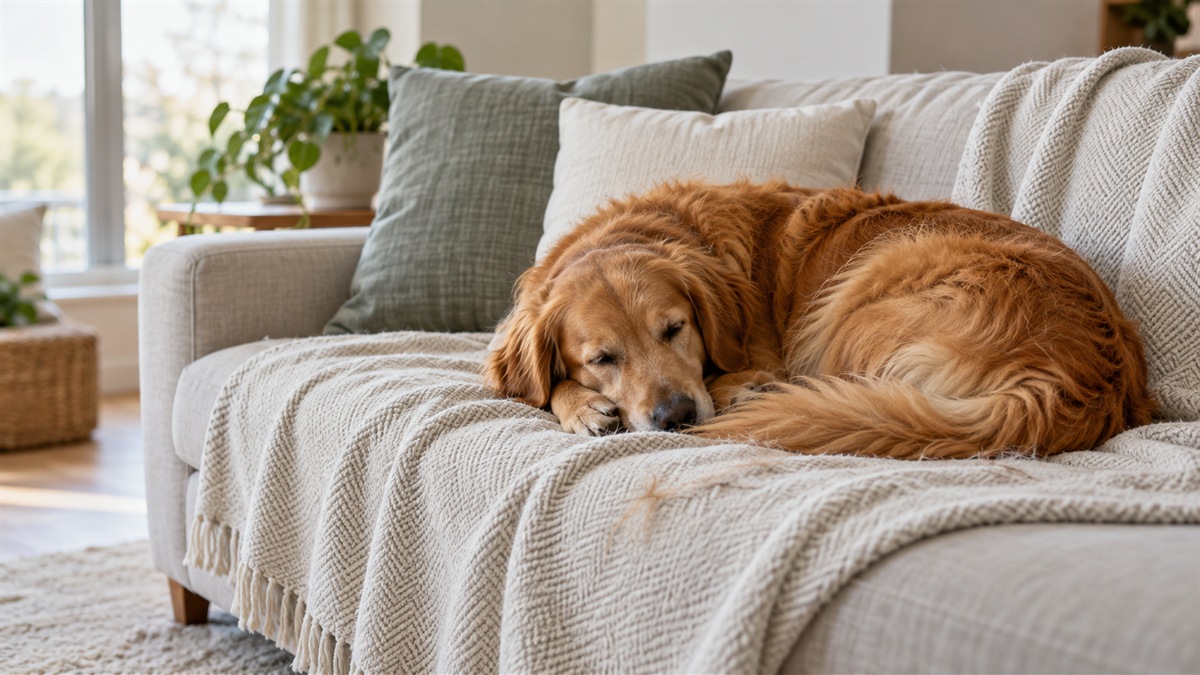
The best blankets for dogs that shed are the ones you can wash often, because a blanket is one of the places where a shedding dog’s hair ends up. The person typing best blankets for dogs that shed usually wants to keep the couch, the bed and the car seat clear of hair without a constant battle. The pages we opened from AKC, the ASPCA and Texas A&M agree that brushing is the main way to control shedding, and AKC and Texas A&M add bathing as a second step. None of them ranks blanket fabrics, so this guide covers what they do support.
Quick answer
- Choose a blanket you can wash often. AKC’s bedding advice favors machine-washable beds and mats.
- Brush the dog several times a week during shedding. Texas A&M suggests three to four times a week for 5 to 10 minutes, and AKC says heavy shedders may need daily brushing at peak season.
- Match the brush to the coat. Short coats use bristle brushes or grooming gloves, and long or double coats need tools that reach the undercoat.
- Bathe on a schedule that avoids drying out the skin. Texas A&M suggests weekly baths in shedding season, and AKC warns that bathing too often can dry the coat.
Why the blanket is only one part of shedding control
Shedding is a property of the dog before it is a property of the blanket. AKC says that “Shedding depends largely on breed and coat type, but it can be managed with the right grooming routine and tools.” It also notes that “Coat type plays a major role in how much dogs shed each year,” and that dogs with thick double coats are more likely to shed year-round. A blanket does not change that pattern. It only collects what the dog has already shed.
Seasonal shedding follows its own rhythm. AKC says that “the heaviest shedding usually occurs in spring and fall.” During those periods the blanket will collect more hair, and the grooming routine has to increase to match.
Coat type and the tool that suits it
The tool matters more than the blanket when the goal is less loose hair in the house. The table below lists the coat types the pages we opened describe and the tools they name for each.
| Coat type | Tool the sources name | Source |
|---|---|---|
| Short coat | Natural-bristle brushes and grooming gloves | AKC shedding page |
| Long or double coat | Tools that reach the undercoat, such as undercoat rakes | AKC shedding page and AKC brush-type page |
| Thick or deshedding coat | Brushes made for deshedding | Texas A&M shedding page |
| Curly coat | Slicker-style brush with rows of wire pins | Texas A&M shedding page |
AKC’s brush-type page describes undercoat rakes as tools with “one or two rows of metal pins designed to penetrate through to the undercoat to remove loose fur.” It adds that the undercoat should be brushed along with the top coat on a double-coated dog. Texas A&M’s veterinary technician says that “Grooming tools are not one size fits all,” which is the right way to read the table: pick the tool for the coat, not the blanket for the tool.
How often to brush a shedding dog
Brushing is the lever the sources agree on. Texas A&M recommends “brushing your dog at least three to four times a week for 5 to 10 minutes,” which it says can help soften the coat and reduce the hair that is shed. AKC says that “dogs that shed heavily may need brushing several times a week or even daily during peak shedding periods.”
The arithmetic is simple. Three sessions of 5 minutes is 15 minutes a week at the low end: 3 x 5 is 15 minutes a week. Four sessions of 10 minutes is 40 minutes a week at the high end: 4 x 10 is 40 minutes a week. A dog that sheds heavily in peak season needs the high end or more, which is the point of AKC’s “daily” language. A dog that sheds lightly can stay at the low end.
AKC’s shedding page also names a second, optional tool. “Some dogs also do well with specialized grooming tools like pet vacuums,” which can collect loose hair during a grooming session. The pages we opened do not rank pet vacuums against brushes, so treat that as one option among several.
Bathing and washing
Bathing is the second lever. Texas A&M’s technician says, “You should also consider bathing your dog weekly during shedding season and two to three times a month during the months they shed less.” The same page adds that “Choosing the right shampoo will also reduce shedding, skin irritation, and dry, flaky skin.” AKC’s shedding page describes a shedding-control shampoo as a way to “help remove loose hair and maintain coat condition.”
Bathing has a limit, and the pages we opened name it. AKC’s grooming page warns that “Bathing too frequently can strip natural oils from the skin and coat, leaving them dry and brittle.” That is why the schedule above is a range rather than a daily habit. Weekly during peak season and a few times a month otherwise is the pattern the sources describe.
For the blanket itself, the sources give a bedding rule rather than a fabric rule. AKC’s crate guidance says to add “a cozy, machine-washable bed or mat within the crate” for dogs that do not regularly chew fabric, and notes that “Many crates come with coordinating beds that you can remove and wash.” A blanket that comes off and goes in the machine fits that same logic. Wash it on the schedule that suits how fast hair builds up in your home.
If you are also looking at blankets for a crate or a bed at night, see our guide to blankets over a dog crate at night and our guide to dogs that chew on blankets at night. Those posts cover different problems from shedding.
When shedding is more than normal
Most shedding is normal. The AKC page is clear that some signs point to something else: “Shedding may be excessive if it includes bald patches, inflamed skin, or a sudden increase in hair loss.” Texas A&M adds that “dogs may shed excessively or have a dry coat and skin because of a medical condition,” and it lists causes such as allergic skin conditions and flea or tick reactions. In those cases the advice is to “consult your veterinarian for guidance.”
A blanket and a brush cannot fix a medical cause. If the hair loss is patchy or the skin is irritated, the next step is a veterinary visit, not a new blanket.
A season-by-season routine the sources support
Shedding changes through the year, so the routine should change too. The table below sets out what the pages we opened say for the heavy seasons and the lighter months. It is a summary of the sources, not a schedule any one of them writes out.
| Period | What the sources say about shedding | What the sources say about brushing and bathing |
|---|---|---|
| Peak spring and fall | The heaviest shedding usually occurs in spring and fall (AKC) | Brushing several times a week or even daily (AKC); bathing weekly during shedding season (Texas A&M) |
| Other months | Lighter shedders still benefit from consistent grooming (AKC) | Bathing two to three times a month in the months the dog sheds less (Texas A&M); brushing three to four times a week for 5 to 10 minutes is the figure Texas A&M gives without a season split |
The arithmetic for the peak period is short. Weekly baths over a four-week stretch give 4 x 1 is 4 baths. The lighter months call for 2 to 3 baths a month, so the peak period adds 4 – 3 = 1 bath a month at the high end of that range and 4 – 2 = 2 baths a month at the low end. For brushing, the Texas A&M figure is the floor to start from, and AKC’s “several times a week or even daily” is the signal to go higher in peak season.
Common mistakes
- Bathing more often than the coat tolerates. AKC’s warning that “Bathing too frequently can strip natural oils from the skin and coat, leaving them dry and brittle” applies even when the goal is less hair.
- Brushing only the top coat. AKC says to “Remember to brush the undercoat, as well as the top coat, if your dog is double-coated.” Skipping the undercoat leaves most of the loose hair in place.
- Using one brush for every coat. Texas A&M’s point that “Grooming tools are not one size fits all” applies to a short coat and a double coat alike.
- Treating every spike in hair as normal. AKC’s signs of excessive shedding include bald patches and inflamed skin, and those call for a veterinarian, not a new blanket.
- Relying on the blanket to catch the hair. The blanket collects hair that has already come off. The sources place shedding control in grooming, so a blanket only helps if it is washed on schedule.
How we chose
We set the scope around the question a reader of this keyword actually asks: how to keep a shedding dog’s hair out of the blanket and the house. We then looked for pages that give specific, checkable claims about shedding, grooming tools, bathing and washing. We opened AKC pages, an ASPCA page and a Texas A&M College of Veterinary Medicine page, and we dropped any claim we could not match to the saved page text. We gave priority to university and AKC material and did not use Wikipedia.
We did not rank blanket fabrics or brands, and this post has no product cards. The research folder has no product data for this keyword, so nothing here comes from a listing. The coat table and the brushing and bathing figures come only from the pages we opened.
What we could not verify
- Which blanket fabric sheds the least or holds the least hair. The pages we opened do not compare fabrics.
- Whether a blanket changes how much a dog sheds. The sources describe shedding as a result of breed, coat type and season, not of bedding.
- A laundry schedule for blankets. The pages give a bathing schedule for the dog and a washable-bed rule for crates, but no schedule for washing a blanket.
- Hair counts or shedding percentages. None of the pages we opened gives a figure for how much hair a dog or a blanket sheds.
- Whether a given fabric is safe for a chewing dog. The pages we opened do not address fabric choice for chewers.
- Any product’s stated fabric, size or care label. This guide does not check listings and does not repeat listing claims.
FAQ
Does a blanket make a dog shed more?
The pages we opened do not say that a blanket changes how much a dog sheds. AKC describes shedding as depending largely on breed, coat type and season, and says it can be managed with the right grooming routine and tools.
How often should I brush a dog that sheds heavily?
Texas A&M recommends brushing three to four times a week for 5 to 10 minutes. AKC says heavy shedders may need brushing several times a week or even daily during peak shedding periods.
How often should I bathe a shedding dog?
Texas A&M suggests bathing weekly during shedding season and two to three times a month during the months the dog sheds less. AKC warns that bathing too frequently can dry out the skin and coat, so do not bathe more often than the coat and skin tolerate.
When is shedding a sign of a health problem?
AKC says shedding may be excessive if it includes bald patches, inflamed skin or a sudden increase in hair loss. Texas A&M also links excessive shedding to medical causes. Consult a veterinarian for guidance in those cases.
Is a washable blanket better than a fabric that cannot be washed?
The pages we opened point toward washable bedding, since AKC’s crate guidance favors machine-washable beds and mats for dogs that do not regularly chew fabric. They do not rank fabrics against each other, so the washing schedule is the part you can act on.
Is a pet vacuum worth using on a shedding dog?
AKC says that “Some dogs also do well with specialized grooming tools like pet vacuums,” and that these tools can help collect loose hair during grooming sessions. The pages we opened do not compare pet vacuums with brushes, so it is a reasonable add-on rather than a replacement for brushing.
Bottom line
Pick a blanket you can wash often, brush the dog on the schedule the sources describe, and bathe on a schedule that does not dry out the coat. The fabric itself is the part this guide cannot rank.
Sources
- AKC, dog shedding: what to expect and how to manage it: shedding depends on breed and coat type and can be managed with grooming; heaviest shedding in spring and fall; brushing several times a week or daily at peak; excessive shedding signs
- Texas A&M College of Veterinary Medicine, Brushing Up For Shedding Season: brushing three to four times a week for 5 to 10 minutes; bathing weekly in shedding season; choosing the right brush and shampoo; medical causes of shedding
- ASPCA, Dog Grooming Tips: regular brushing reduces the amount of hair in the home; ask a veterinarian or groomer which brush suits the hair type
- AKC, types of dog brushes: undercoat rakes reach the undercoat; brush the undercoat on a double-coated dog
- AKC, dog grooming at home: bathing too frequently can dry the skin and coat
- AKC, how to choose the best crate for your dog: machine-washable bed or mat; removable and washable crate beds