Best Way to Travel With Small Dog in Car: Restraint, Heat, and Trip Prep
As an Amazon Associate we earn from qualifying purchases. Details
The best way to travel with small dog in car trips is to secure the dog in a crate or a harness attached to a secured seat belt in the back seat, never let it ride in the front, and never leave it alone in a parked car. The American Kennel Club and the ASPCA agree on these points. The sources we opened also describe how to prepare a dog for the trip, which matters for a small dog that may be nervous about a moving vehicle. This guide sets out the steps in order and states where the sources are silent, including on size-specific advice.
Quick answer
- Restrain the dog. The ASPCA calls a crate “the safest option for your pet in case of an accident,” and says a harness attached to a secured seat belt in the back seat is the alternative.
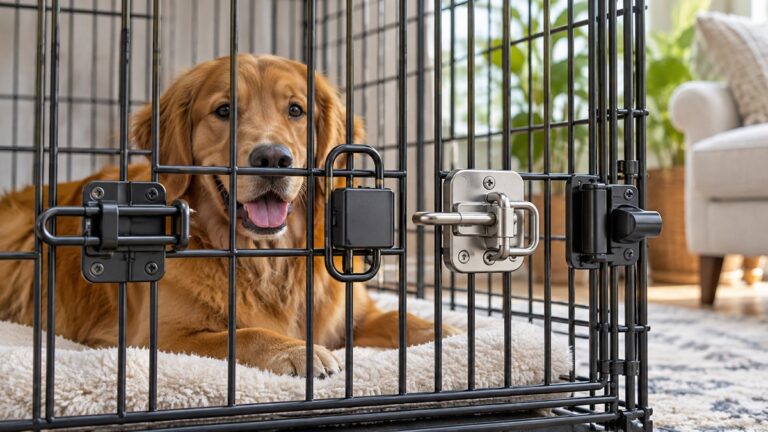
- Never use a wire or collapsible crate. The ASPCA says these “can collapse or break open causing serious injuries or death in the event of an accident.”
- Keep the dog out of the front seat. The ASPCA warns that airbags “are not designed with pets in mind.”
- Never leave the dog alone in a parked car, even with the windows cracked.
Why restraint comes first
The AKC’s travel guide says that “a dog crate is an excellent way to keep your dog safe in the car,” and the ASPCA says a crate is the safest option in an accident. For readers who do not have a crate, the ASPCA’s alternative is a harness attached to a seat belt, kept in the back seat.
The ASPCA’s guide adds two safety details. First, the crate must be secured so that it will not “slide or shift in the event of an abrupt stop.” Second, a dog should not put its head out the window. The ASPCA’s car advice states plainly that if the owner decides to forgo a crate, “do not allow your pet to put their head out the window.”
Restraint is a rule for the whole trip, not only the start. Set up the restraint before the car leaves the driveway.
Step 1: Choose a crate or a harness
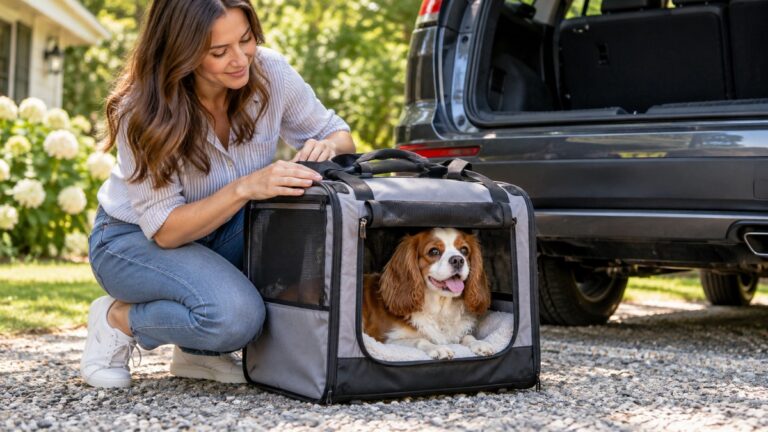
Choose the restraint before the first practice drive. The ASPCA’s car guidance says a crate should be “large enough for your pet to stand, sit, lie down and turn around,” and that it should be “well-ventilated.” A small dog’s crate is not the same size as a large dog’s crate, so measure the dog and check the crate’s inside height and length, not only its footprint in the car.
Avoid any wire or collapsible crate. The ASPCA says: “never use a wire or collapsible crate when transporting your pet, they can collapse or break open causing serious injuries or death in the event of an accident.” A well-ventilated crate or carrier is the option the ASPCA names.
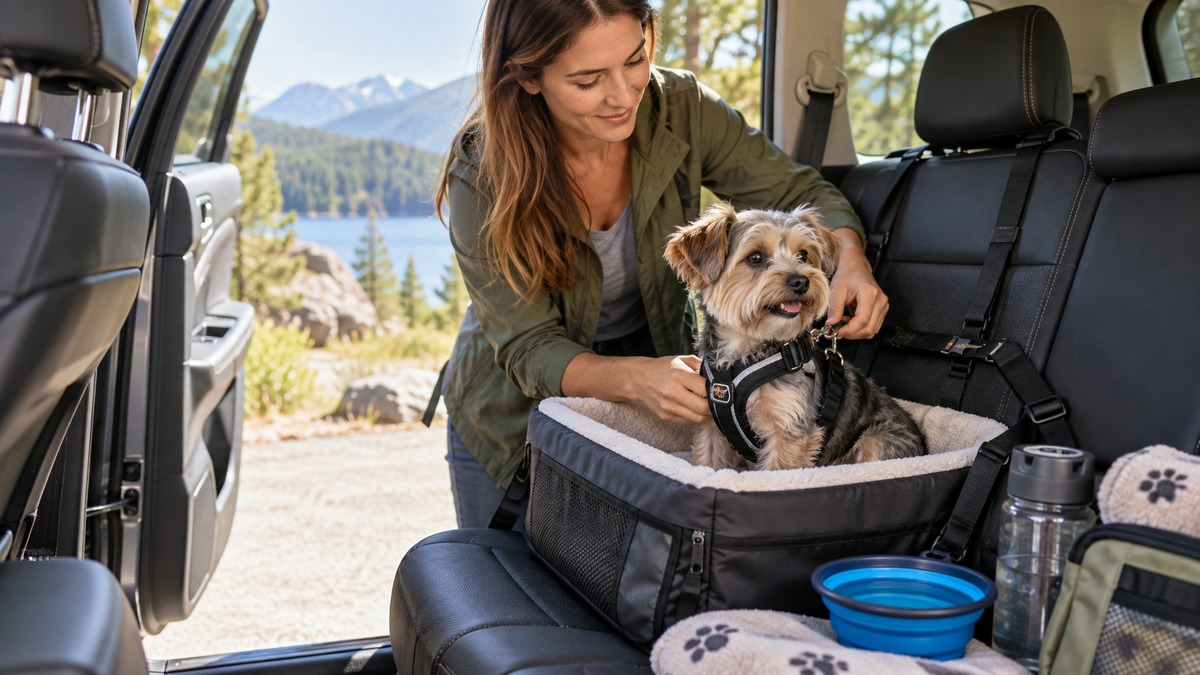
If a crate will not fit in the car, the ASPCA’s alternative is a harness “attached to a secured seatbelt” in the back seat. The AKC’s travel guide tells owners to use “a dog seatbelt, car seat, or safety harness” while the dog rides in the car.
Harness choice matters for walking a small dog. Our guides to the step-in harness for small dogs and the small dog no pull harness cover fit and style for walking, and the sources here do not separately address car harness fit for a small dog.
Step 2: Set the seat position
The ASPCA says to keep pets “in the back seat.” It also warns that airbags “are not designed with pets in mind and serious injury could occur if your pet is secured in the passenger seat during an accident.” Put the crate or the harness in the back seat, and keep the front seat clear of the dog, including its bed or travel bag.
The ASPCA’s guidance is that the crate should not slide or shift during a sudden stop. A crate that moves in a stop is a safety problem even if the dog is inside.
Step 3: Practice short rides first
A small dog that has never ridden in a car may be anxious. The AKC recommends getting the dog comfortable “by letting them sit in it with you without leaving the driveway, and then going for short rides.” Practice with the same crate or harness that will be used on the trip. Build up the length of each ride over several sessions.
Short practice drives let owners see how the dog reacts to movement, turns, and braking before the longer journey.
Step 4: Plan feeding and water for the trip
Feeding timing matters for motion comfort. The ASPCA advises a light meal “three to four hours prior to departure,” and it says to “always opt for bottled water,” because drinking water from an area the dog does not know “could result in stomach discomfort.” The AKC says to avoid carsickness by letting your dog travel “on an empty stomach,” while making sure it has plenty of water.
These two sources differ slightly on the meal. The ASPCA suggests a light meal three to four hours before leaving, and the AKC suggests travel on an empty stomach. Where two sources differ, this guide shows both. Owners should follow the guidance their dog’s veterinarian gives for that individual dog. The sources we opened do not say which schedule suits a small dog best.
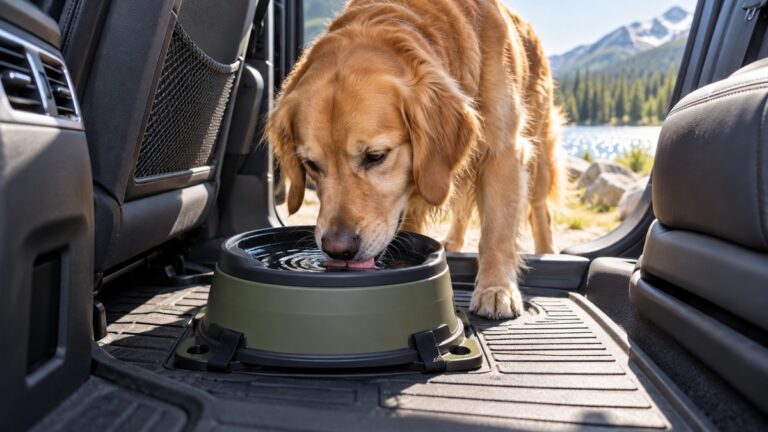
Bring water from home, and carry a bowl for stops. Offer water at each break, and keep the dog in its restraint while it drinks.
Step 5: Build in breaks
The AKC says to “stop frequently for exercise” on long drives. A short walk on a leash at each rest stop lets a small dog stretch, toilet, and settle before getting back in the car. Keep the leash on for every stop, and clip the dog back into its crate or harness before the car moves.
Plan breaks at intervals that suit the dog. The sources we opened do not give a specific number of hours between stops, so set the schedule based on the dog’s needs.
Step 6: Keep the car ventilated
Ventilation is part of the trip plan. The AKC’s guide says to “keep the car well-ventilated to ensure your dog stays comfortable,” and that if the dog is in a crate, “make sure that fresh air can flow into the crate.” Choose a well-ventilated crate, as the ASPCA advises, and do not block its vents.
Ventilation does not make a parked car safe. See the next step.
Step 7: Never leave the dog alone in a parked car
This is the rule the sources state most clearly. The AKC says: “You should never leave a dog alone in a parked car, even if the windows are cracked.” Its heat article adds that “dogs can develop heatstroke in minutes,” and that “opening windows does not prevent dangerous temperature increases.”
The ASPCA says the same thing: “never leave your animal alone in a parked vehicle.” The ASPCA adds that “on a hot day, even with the windows open, a parked automobile can become a furnace in no time, and heatstroke can develop.”
The AKC’s article gives a number. It says that “the inside of a vehicle parked in 70-degree Fahrenheit weather can reach 100 degrees Fahrenheit in just 20 minutes.” Plan every stop so that the dog is not left alone in the car, including short stops.
Common mistakes to avoid
Letting the dog ride loose in the cabin. The ASPCA’s advice is a crate or a harness on a secured seat belt in the back seat. Set that up before the car moves.
Using a wire or collapsible crate. The ASPCA warns that these can collapse or break open in an accident. Choose a well-ventilated crate.
Putting the dog in the front seat. The ASPCA’s warning about airbags applies to any dog in the front seat.
Letting a dog ride with its head out the window. The ASPCA says not to allow this.
Leaving the dog in the car during a quick stop. Even with the windows cracked, a parked car can heat quickly. The AKC’s heat article makes this point directly.
Skipping practice drives. A dog that has not practiced the restraint may resist it on the day of the trip. Build up the ride length first.
What we could not verify
The sources we opened do not give advice that is specific to small dogs. The guidance in this guide applies to dogs in general, and the crate and harness sizing rules are not broken down by weight or height range.
The sources do not say how to choose a harness that fits a small dog’s chest and neck for car use, and they do not compare crash-tested products. This guide does not recommend a product.
The sources do not give a specific number of hours between stops or a maximum drive length for a small dog.
The sources do not give a rule for dogs with motion sickness beyond the feeding timing above, and they do not name any medication for it. Speak to a veterinarian before using any medication.
How we chose
This guide answers one question: what is the best way to travel with a small dog in the car, using steps the sources support. We based the steps on four pages we opened on 2026-10-23: the AKC’s complete guide to traveling with a dog, the AKC’s article on dogs in hot cars, the ASPCA’s travel safety tips, and the ASPCA’s road trip do’s and don’ts. Where two sources differ, such as on feeding time, the guide shows both. The guide does not rank or recommend any product, and it does not give a price or a rating.
FAQ
Is a crate or a harness better for a small dog in the car?
The ASPCA calls a crate the safest option in an accident. It names a harness attached to a secured seat belt in the back seat as the alternative if the owner forgoes a crate. The sources we opened do not compare the two for a small dog specifically.
Can a small dog ride on my lap?
No. The ASPCA warns against keeping a pet in the front seat, because airbags can injure a pet during an accident. Keep the dog restrained in the back seat.
Can I leave my small dog in the car with the windows cracked?
No. The AKC says a dog should never be left alone in a parked car, even with the windows cracked, and that opening windows does not prevent dangerous temperature increases.
How do I help a nervous small dog get used to the car?
Start with short practice rides, using the same crate or harness planned for the trip. The AKC suggests first sitting in the car without leaving the driveway, then going for short drives.
What should I pack for a dog on a car trip?
The ASPCA’s travel guide lists food, a bowl, a leash, waste bags, medication, and grooming supplies in its travel kit. Bring bottled water from home, as the ASPCA recommends.
Bottom line
For a small dog in the car, use a crate that is large enough to stand, sit, lie down, and turn around in, secured in the back seat. If there is no crate, use a harness attached to a secured seat belt in the back seat. Keep the dog out of the front seat, keep its head inside the car, and never leave it alone in a parked vehicle. The sources do not give size-specific sizing, break intervals, or medication guidance, so for those questions ask a veterinarian.
Our step-in harness guide for small dogs and small dog no pull harness roundup cover harness choice in more detail.
Sources
- https://www.akc.org/expert-advice/travel/complete-guide-to-traveling-with-your-dog/
- https://www.akc.org/expert-advice/health/dogs-in-hot-cars/
- https://www.aspca.org/pet-care/general-pet-care/travel-safety-tips
- https://www.aspca.org/news/traveling-pets-follow-these-expert-dos-and-donts-keep-them-safe