Best Way to Wash Your Dog at Home
As an Amazon Associate we earn from qualifying purchases. Details
The person typing “best way to wash your dog at home” wants a bath routine that works in a bathroom or laundry room, that does not upset the dog, and that leaves no soap behind. The short answer is to brush first, wet the dog with warm water, lather with a shampoo made for dogs, rinse every trace of soap out, and then dry the dog well. The American Kennel Club describes the same basic sequence, and it adds two points that people often miss: use dog shampoo rather than people shampoo, and rinse until no soap is left.
Quick answer
- Brush the coat before you wet it so loose hair and tangles do not turn into mats in the water.
- Use warm water, not hot, and use a shampoo made for dogs. The AKC says never to use shampoo made for people.
- Keep water and soap away from the eyes and inside the ears. The AKC says to avoid both.
- Rinse thoroughly. The AKC says it is very important to rinse out every bit of soap.
- Towel the dog as dry as you can, then finish with a dog-specific dryer on a warm, gentle setting held at least a foot away, or let the dog stay in a warm place until fully dry.
Bath steps at a glance
The table below puts each step next to what the sources we opened say about it. Where a source gives no number or no detail, the table says so.
| Step | What to do | What the sources say |
|---|---|---|
| Gather supplies | Shampoo, a washing brush or washcloth, towels, cotton balls | The AKC lists these items and mentions mineral oil for the eyes |
| Protect eyes and ears | Keep water and soap out of the eyes and inside the ears | The AKC says to avoid both; it describes mineral oil and cotton balls |
| Water temperature | Use water that is warm, but not hot | The AKC gives no number in degrees |
| Tub depth | Fill to about knee-high on the dog | The AKC describes this depth |
| Shampoo | Use a gentle dog shampoo | The AKC rules out shampoo made for people |
| Rinse | Rinse until no soap is left | The AKC calls removing all soap a very important part of the bath |
| Towel dry | Absorb as much water as possible | The AKC describes towel drying; a grooming article describes absorbent towels |
| Dryer | Use a dryer made for dogs, warm and gentle, at least a foot away | The AKC says not to use the hottest setting and to keep the dryer a foot away |
| Final dry | Keep the dog in a warm place until fully dry | The AKC gives this as the last step |
How we chose
This guide is built from three public sources: two pages from the American Kennel Club and one article from a grooming trade publication. We opened each source directly and checked the quotes against the page text before using them. The sources are listed at the end of this guide.
We looked for steps that the sources agree on, the reasons they give for those steps, and the points where they are silent. This guide does not recommend a product, a brand, or a price. Where a step calls for a type of item, such as a dog shampoo or a dog towel, we name the type and leave the choice to you.
We did not use bathing advice from a product seller as a source for the steps in this guide. Where the sources do not give a number, such as how often to bathe, we say so in What we could not verify.
Step-by-step home bath
Step 1: Gather everything before the water runs
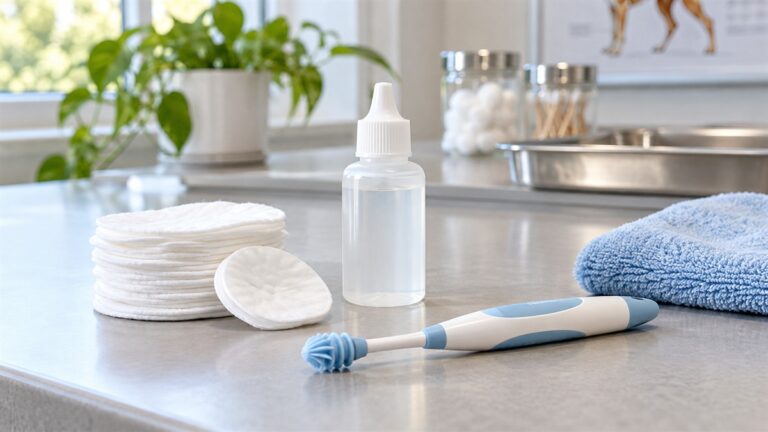
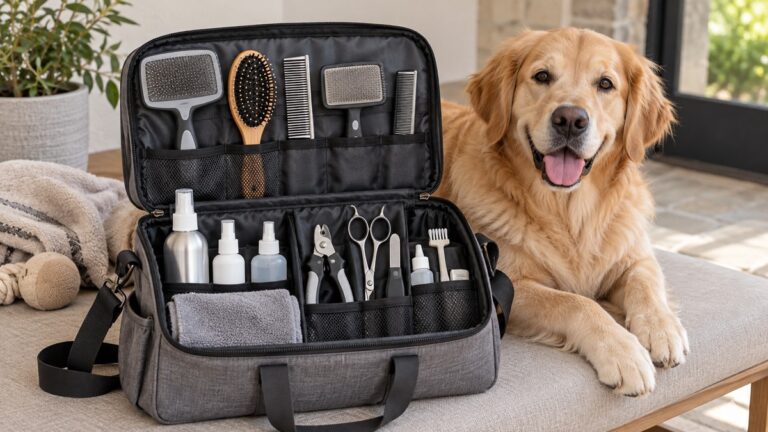
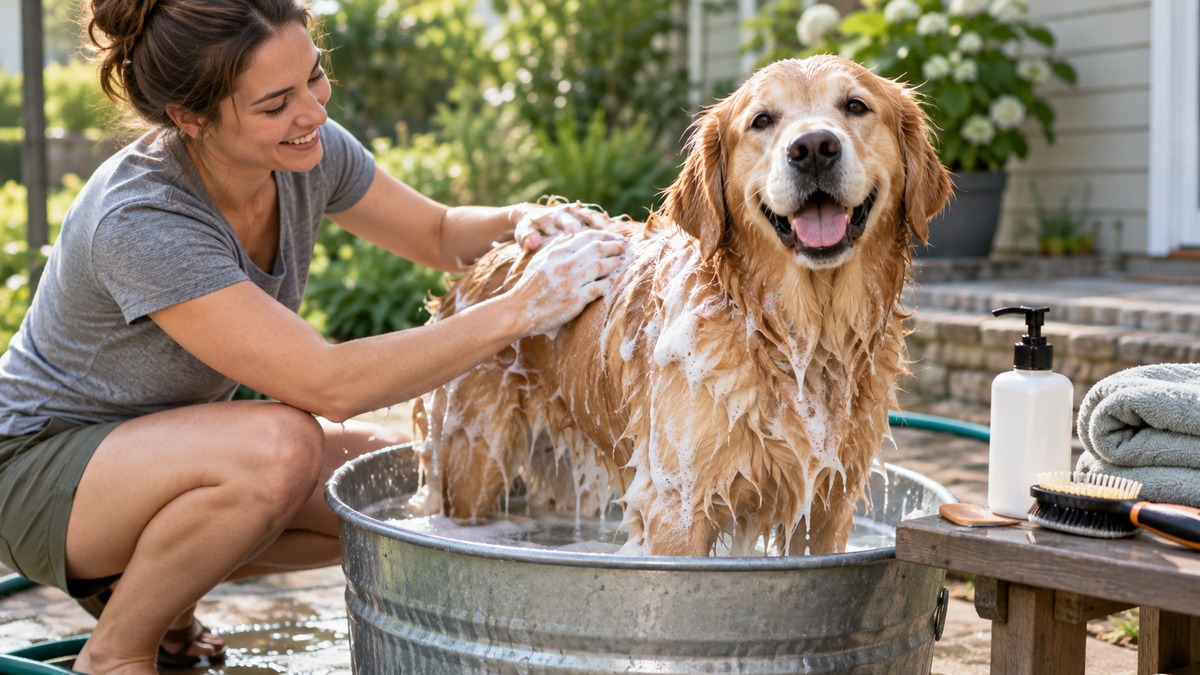
Have all of your supplies in reach before you put the dog in the tub. The AKC’s bathing guidance says to gather everything you need before turning on the water. A typical list, according to the AKC, includes shampoo, a washing brush or a washcloth, towels, cotton balls, and mineral oil.
The AKC describes using mineral oil and cotton balls to protect the eyes and ears. The sources we opened do not describe other eye or ear products, so this guide does not recommend any.
Step 2: Brush before you wet the coat
Brush the coat before the bath to remove loose hair. The AKC bath guidance mentions a washing brush for use in the bath, and this guide treats a dry brush-out before the water as ordinary grooming practice rather than a point the sources prove.
Step 3: Set the water temperature and fill the tub
The AKC says to make sure the water is warm, but not hot, before you put the dog in. It describes putting the dog in the tub or washbasin and filling it to about knee-high on the dog.
The sources we opened say warm water, not hot, but they do not give a set temperature in degrees.
Step 4: Wet the dog to the skin
Wet the dog thoroughly with warm water. The AKC’s shampoo guidance begins with wetting the dog to the skin before any soap goes on. Use a cup or a handheld sprayer, and work from the neck back, keeping the water away from the face. Protect the eyes, and keep water out of the ears, as described in Step 1.
Step 5: Lather with a shampoo made for dogs
Apply a gentle dog shampoo and work it into a lather. The AKC says to lather with a gentle dog shampoo and to never use shampoo made for people. If you are choosing one, see the best dog shampoo guide for a comparison.
Work the shampoo through the coat with your fingers or a washing brush.
Step 6: Rinse until no soap is left
The AKC says to rinse thoroughly with warm water and that it is very important to rinse out every bit of soap. Keep rinsing until no soap remains in the coat.
If you use a conditioner, the AKC says some owners apply a small amount and rinse it out as well.
Avoid the eyes and the inside of the ears throughout the rinse, which the AKC specifically calls out.
Step 7: Towel the dog as dry as you can
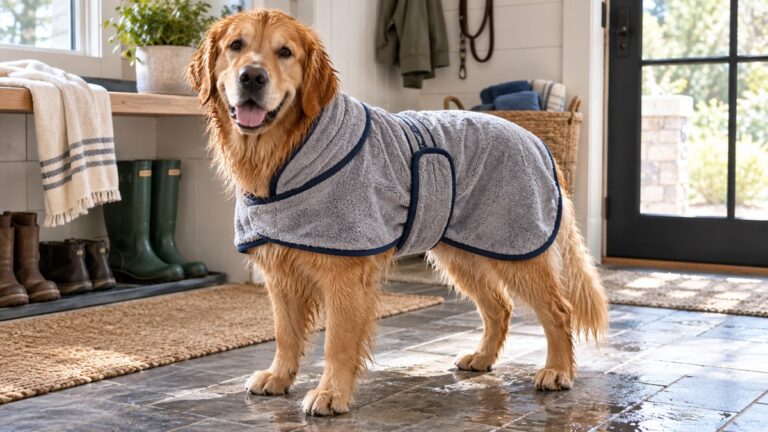
After the rinse, let the dog shake, then press the coat with a towel. The AKC says to absorb as much water as possible with a towel after the dog has shaken off. A grooming trade article makes the same point: use absorbent towels to remove as much water as possible from the coat before any heated drying. Use one towel or several, and replace a damp towel with a dry one as needed. For a comparison of towels that suit this step, see the absorbent dog towels guide.
Step 8: Finish the dry
The AKC describes two options for the last part of drying:
- A dog-specific dryer on a warm, gentle setting. The AKC says to brush the dog dry while using a blow dryer made for dogs, set on a warm, gentle setting. It also says to hold the dryer at least a foot away so you do not burn the skin.
- A warm place. The AKC says to keep the dog in a warm place until fully dry.
If you use a dryer, the AKC’s guidance is clear that you should not use the hottest setting, and you should hold it at least a foot away. A grooming trade source adds that heated air can overheat a dog that is in an enclosed space, so stay with the dog and keep moving the dryer.
Common mistakes
Using people shampoo. This is the first mistake to avoid, and the AKC rules it out.
Leaving soap in the coat. The AKC says every bit of soap should come out. A quick rinse is often not enough, especially on a thick coat.
Getting water and soap in the eyes or ears. The AKC says to avoid the eyes and the inside of the ears.
Using water that is too hot. The AKC says warm, not hot, and gives no degree figure.
Stopping at a damp coat. The AKC describes towel drying, then brushing and a dryer or a warm place, until the dog is completely dry.
Holding a dryer too close. The AKC says to keep a dryer at least a foot away. Closer distances risk burns, according to the AKC.
What we could not verify
- How often to bathe. The sources we opened do not give a bathing schedule. Ask a vet or groomer for one that suits your dog.
- Exact water temperature in degrees. The AKC says warm, but not hot. It does not give a number, so this guide does not give one.
- Eye and ear products. The AKC mentions mineral oil and cotton balls. The sources we opened do not say which eye or ear products are right for every dog.
- Dog shampoo ingredients. The sources we opened say to use a gentle shampoo made for dogs. They do not list ingredients to look for or avoid.
- Skin conditions. The sources we opened do not cover bathing for dogs with skin problems. If your dog has a skin condition, ask your vet before a bath routine.
- Drying time. The sources do not give a time for how long a dog takes to dry fully. They say to keep the dog in a warm place until fully dry.
FAQ
How often should I wash my dog at home?
The sources we opened do not set a bathing schedule, so ask your vet or groomer for one that suits your dog.
Can I use shampoo made for people?
No, according to the AKC. It says to lather with a gentle dog shampoo and never use shampoo made for people.
What temperature should the water be?
The AKC says the water should be warm, but not hot. The sources do not give a number in degrees, so test the water on your own skin before the dog goes in.
Do I need to rinse the shampoo out completely?
Yes. The AKC says to rinse until every trace is gone, and it calls this part very important. The sources we opened do not say what a coat looks or feels like when soap is left in it, so this guide does not claim a result.
Is a blow dryer safe for a dog?
The AKC says a blow dryer made for dogs, on a warm, gentle setting, can help speed drying. It says not to use the hottest setting and to hold the dryer at least a foot away so you do not burn the skin.
What should I do if my dog is anxious in the bath?
The sources we opened do not give a method for calming an anxious dog. For ongoing fear during baths, ask a vet or a trainer.
Bottom line
Brush first, use warm water and a shampoo made for dogs, rinse until every trace of soap is gone, and dry the dog well with a towel and then a warm, gentle dryer held at least a foot away. Keep the water away from the eyes and the inside of the ears, and do not use people shampoo.
Sources
- https://www.akc.org/expert-advice/health/the-soap-and-water-of-dog-ownership/ (American Kennel Club, “The Soap and Water of Dog Ownership”, opened 2026-10-23)
- https://www.akc.org/expert-advice/health/its-bath-time-towels-brushes-dog-shampoo-and-more/ (American Kennel Club, “It’s Bath Time! Towels, Brushes, Dog Shampoo, and More”, opened 2026-10-23)
- https://www.groomertogroomer.com/10-tips-for-danger-free-drying/ (Groomer to Groomer Magazine, “10 Tips for Danger Free Drying”, opened 2026-10-23)